
Overview
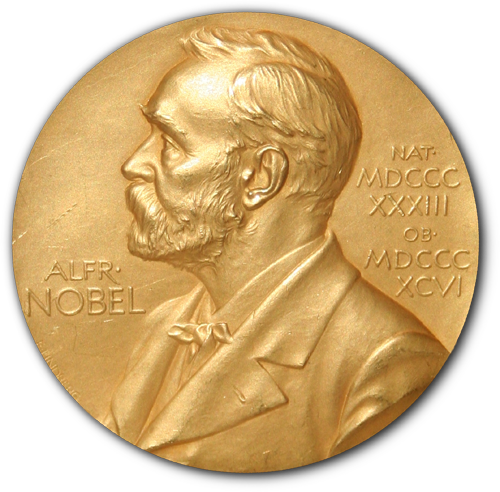
The Nobel Prize in Physics is awarded annually by the Royal Swedish Academy of Sciences to individuals who have conferred the greatest benefit on humankind during the preceding year [1]. First awarded in 1901, the prize has recognised 229 individuals as of 2025, including Francis Halzen in 2026 for his decisive contributions to the IceCube Neutrino Observatory [2,3]. Each recipient receives a medal, a diploma and a monetary award presented in Stockholm on 10 December [1]. The prize has been awarded to only five women, with Maria Skłodowska-Curie the first in 1903, and John Bardeen the only laureate to win twice, in 1956 and 1972 [2]. William Lawrence Bragg remains the youngest recipient at 25, while Arthur Ashkin was the oldest at 96 in 2018 [2]. These facts illustrate the prize's longevity, its role in recognising diverse contributions from neutrino astronomy to quantum physics, and its enduring prestige.
The award ceremony takes place each year on 10 December in Stockholm, marking the anniversary of Alfred Nobel's death [1]. The 2026 Nobel Prizes were distributed across six categories, with Physics going to Francis Halzen (Belgium/United States) [4]. Halzen's recognition reflects a broader trend of awarding discoveries that open new observational windows on the universe, following in the tradition of earlier prizes for X-rays, cosmic rays and particle physics.
Historical context
The first Nobel Prize in Physics was awarded in 1901 to Wilhelm Conrad Röntgen of Germany for his discovery of X-rays, a breakthrough that launched medical imaging and atomic physics [2]. Since then, the Royal Swedish Academy of Sciences has followed a rigorous selection process, typically honouring one to three individuals per year. The prize has survived world wars, political shifts and changing scientific paradigms, consistently recognising work that advances fundamental knowledge. In recent decades, the scope has expanded to include astrophysics, cosmology and particle astronomy, reflecting the growing importance of these fields.
Record holders and milestones
The Nobel Prize in Physics has recognised extraordinary individuals across its history. John Bardeen is the only laureate to win the prize twice, in 1956 for the transistor and in 1972 for the BCS theory of superconductivity [2]. William Lawrence Bragg was the youngest recipient, awarded in 1915 at age 25 jointly with his father for their work on crystal structure analysis [2]. At the other end of the spectrum, Arthur Ashkin held the record as the oldest laureate at 96 years old when he received the 2018 prize for optical tweezers [2]. These milestones highlight the prize's reach across generations and its role in recognising both early-career breakthroughs and lifelong scientific careers.
Women Nobel laureates in Physics
Only five women have been awarded the Nobel Prize in Physics. Maria Skłodowska-Curie received the prize in 1903, shared with Pierre Curie and Henri Becquerel for their research on radioactivity [2]. Maria Goeppert-Mayer followed in 1963 for her work on the nuclear shell structure of atoms [2]. Donna Strickland received the prize in 2018 for her groundbreaking contributions to laser physics [2]. Andrea Ghez was awarded in 2020 for her discovery of a supermassive compact object at the centre of the Milky Way [2]. Anne L'Huillier received the 2023 prize for her experimental methods that generate attosecond pulses of light [2]. Their achievements underscore the growing, though still limited, representation of women in the field of physics recognised by the Nobel Committee.
The 2026 Nobel Prize in Physics and IceCube Neutrino Observatory
Francis Halzen was awarded the 2026 Nobel Prize in Physics for decisive contributions to the IceCube Neutrino Observatory and the discovery of high-energy neutrinos of astrophysical origin [3,4,5]. Halzen first presented his vision for detecting neutrinos at the South Pole in 1988, laying the foundation for an entirely new type of astronomy [5]. The IceCube Neutrino Observatory is a cubic kilometre of Antarctic ice equipped with light sensors that detect the telltale flash produced when a neutrino strikes an atomic nucleus [3,5]. On rare occasions, this interaction produces fast-moving charged particles that emit light, allowing scientists to estimate the direction the neutrino came from [3]. The Royal Swedish Academy of Sciences noted that Halzen's vision and scientific leadership have been fundamental for the IceCube Neutrino Observatory [3]. Halzen realised that ice at the South Pole could be used to track particles known as neutrinos, transforming a vast expanse of ice into a particle detector [5]. His work has opened a new window onto the universe, allowing the study of violent astrophysical processes far beyond our Solar System [3].
How IceCube detects neutrinos
The IceCube Neutrino Observatory operates on a principle that leverages the unique properties of Antarctic ice as a detection medium. When a high-energy neutrino from outer space interacts with an atomic nucleus in the ice, it produces fast-moving charged particles [3]. These particles travel through the ice and emit a brief flash of light, known as Cherenkov radiation [3]. Thousands of optical sensors suspended on long cables and frozen into the ice detect this light [3]. By measuring the pattern and timing of the photons, scientists can reconstruct the neutrino's energy and trace its direction back to its astrophysical source [3]. This method has enabled the identification of neutrinos originating from violent cosmic events such as gamma-ray bursts and active galactic nuclei.
Significance and future directions
The 2026 Nobel Prize in Physics awarded to Francis Halzen marks a pivotal moment in astroparticle physics, recognising the transformation of a cubic kilometre of Antarctic ice into a functioning neutrino telescope [3,5]. Halzen's contributions have not only led to the detection of high-energy neutrinos from astrophysical sources but have also established a new field of astronomy that complements traditional electromagnetic observations [3]. As IceCube continues to collect data, the observatory promises to reveal previously unknown aspects of the universe, from the nature of dark matter to the mechanisms powering the most energetic phenomena in the cosmos. The prize highlights the importance of long-term vision, scientific perseverance and the willingness to harness extreme environments for fundamental discovery.