
Foundations of Norwegian Energy Policy
Norwegian energy policy aims to provide a suitable framework for maintaining an efficient, climate-friendly and reliable energy supply system [2](high). The policy seeks to encourage modernisation of the energy supply system and adapt instruments to rapidly changing markets [2](high). Security of electricity supply depends on the capacity to ensure uninterrupted supply to end users [2](high), while the system must handle daily, seasonal and yearly consumption variations [2](high). A robust power grid is vital as all societal functions, business and industry and consumers rely on reliable power [2](high).
Renewable Advantages and Market-Based Operation
Norway benefits from abundant renewable energy resources and a well-functioning energy sector [2](high). Both production-side and demand-side flexibility positively affect security of supply [2](high). Price signals determine which short-term flexibility elements are used [2](high), and operation should be market-based as far as possible [2](high). Effective markets send the right price signals, promoting sound resource use, innovation and security of supply [2](high).
Prioritized Policy Areas
Improving security of supply is one of four prioritized main areas [2](high). Profitable development of renewable energy is another prioritized area [2](high). More efficient and climate-friendly energy use forms a third priority [2](high). Value creation based on renewable resources constitutes the fourth pillar [2](high).
Historical Context and Oil Discovery
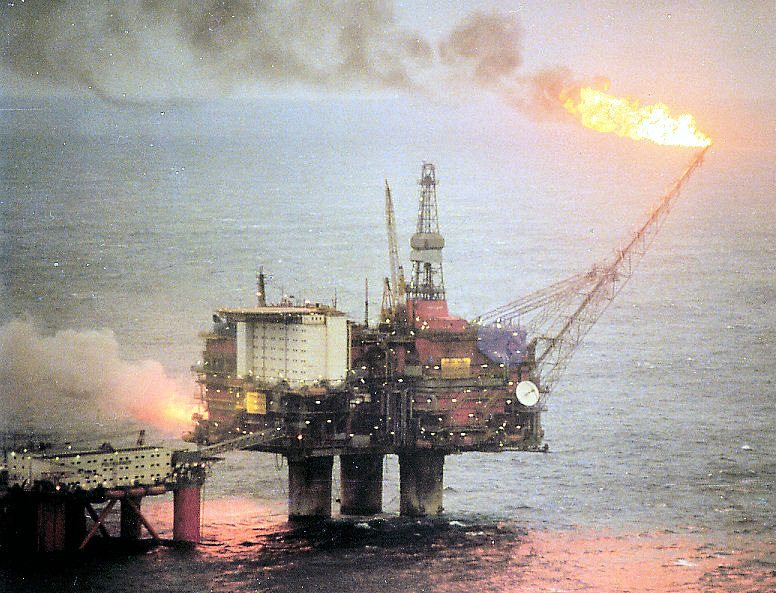
Norway's oil and gas legacy began with the discovery of oil in the Norwegian continental shelf in 1969 [5](high). The discovery of the Ekofisk field in the North Sea changed Norway's economy [5](high). Before the oil discovery, Norway was a relatively modest economy with a population reliant on fishing and agriculture [5](high). As recently as 1958, experts said there were no hydrocarbons on the continental shelf [5](high). Norwegian authorities initially had little faith in the country's hydrocarbon potential [5](high).
Establishment as Global Player and Sovereign Wealth Fund
Norway quickly established itself as a global player in oil production, with the government maintaining strict control over energy resources [5](high). In 1990, the government created the Norwegian Government Pension Fund Global, known as the Oil Fund, to manage revenues from oil and gas production [5](high). Today this fund is one of the largest sovereign wealth funds in the world, valued at over $5 [5](high).
Transition Toward Energy Policy Priorities
The shift from oil-dependent growth to structured policy areas reflects changing priorities [2](high). The four prioritized areas—security of supply, renewable development, climate-friendly use and value creation—represent a framework balancing exploitation and sustainability [2](high). This transition was not immediate but evolved through decades of resource management [5](high).
Legal Challenges to Offshore Approvals
The Norwegian Supreme Court ruled that the state's approval process for three offshore oil fields contained errors [3](high). The Oslo County Court and Supreme Court ruled the energy ministry granted approval without examining projects as closely as required [3](high). Environmental organizations Greenpeace and Natur og Ungdom sued the state in 2023, charging the government had not determined the oil fields' global climate effects [3](high).
Court Rulings and Field Status
Two of the three fields, Breidablikk and Tyrving, are already in operation while the third, Yggdrasil, is due to start production next year [3](high). Operators Equinor and Aker BP cannot be held responsible for the state's errors, so both operations and Yggdrasil's development can continue [3](high). The state must improve its approval process for future fields and pay all court costs incurred by plaintiffs [3](high).
Reactions and Political Implications
Environmental organizations hailed the decision as fantastic news for the climate [3](high). Climate commentator Anders Bjartnes warned the ruling won't necessarily change Norwegian oil policy forever [3](high). It remains the Norwegian Parliament that makes major decisions regarding the continental shelf development [3](high). Energy Minister Terje Aasland of the Labour Party can push through projects as long as there is parliamentary support [3](high).
Climate Effects and Global Responsibility
The 2023 lawsuit charged that the government had not determined the oil fields' global climate effects [3](high). This highlights a growing legal focus on lifecycle emissions and international climate commitments [3](high). The court's focus on procedural errors rather than outright bans reflects nuanced climate jurisprudence [3](high).
Science and Policy Alignment
Determining global climate effects requires assessing Scope 3 emissions from exported fossil fuels [3](high). Norway's policy framework increasingly must reconcile domestic climate targets with fossil fuel exports [3](high). The Supreme Court ruling underscores that approval processes must include climate due diligence [3](high).
Long-Term Policy Uncertainty
Anders Bjartnes warned the ruling won't change oil policy forever [3](high). Parliament retains ultimate authority over the continental shelf [3](high). The government must balance legal compliance with energy security and economic interests [3](high). This creates ongoing policy uncertainty that future governments will need to navigate [3](high).
Energy Security and Grid Resilience
Security of electricity supply is closely linked to the system's capacity to ensure uninterrupted supply to end users [2](high). The power system must deal with daily, seasonal and yearly consumption variations [2](high). A robust grid is vital as all important societal functions depend on reliable power [2](high).
Flexibility Mechanisms
Both production-side and demand-side flexibility positively affect security of supply [2](high). Price signals play a decisive role in determining which short-term flexibility elements are actually used [2](high). Market-based operation ensures flexibility responds to economic incentives [2](high).
Integration of Renewables and Storage
Profitable development of renewable energy is a prioritized policy area [2](high). Norway's abundant renewable resources require grid infrastructure that can handle variability [2](high). Effective markets promote sound resource use and innovation in storage and grid management [2](high). The interplay between fossil fuel flexibility and renewable integration shapes overall system resilience [2](high).
Sovereign Wealth Fund and Economic Policy
The Norwegian Government Pension Fund Global was created in 1990 to manage oil and gas revenues [5](high). As one of the world's largest sovereign wealth funds, it reflects Norway's approach to intergenerational equity [5](high). The fund's size and performance influence national budget planning and long-term economic stability [5](high).
Fiscal Rules and Investment Strategy
The fund operates under strict fiscal rules limiting annual spending to the expected real return [5](high). This ensures petroleum revenues support rather than distort the broader economy [5](high). Investment follows global diversification mandates while excluding certain sectors based on ethical guidelines [5](high). The fund's value exceeding $5 underscores the scale of Norway's resource endowment [5](high).
Transition Challenges for the Fund
As Norway shifts policy priorities, the fund's role evolves [5](high). Reduced reliance on oil revenues may require adjustments to fiscal frameworks [5](high). The fund's continued growth depends on global market performance and responsible investment [5](high). Balancing climate goals with fund objectives presents ongoing policy considerations [5](high).
Political Framework and Parliamentary Authority
The Norwegian Parliament makes major decisions regarding the development of the continental shelf [3](high). Energy Minister Terje Aasland of the Labour Party can push through projects as long as there is support in parliament [3](high). This reflects a political system where energy policy requires broad consensus [3](high).
Party Politics and Energy Policy
The Labour Party's position shapes much of the current policy direction [3](high). Coalition dynamics and opposition influence the feasibility of new projects [3](high). Public opinion and environmental advocacy increasingly factor into parliamentary deliberations [3](high). The 2023 court rulings have added a judicial dimension to political decision-making [3](high).
Future Legislative Directions
The state must improve its approval process for future offshore fields [3](high). New legislation will likely require more rigorous climate impact assessments [3](high). Parliamentary scrutiny of energy projects is intensifying following the Supreme Court decision [3](high). These changes may slow project timelines but enhance regulatory legitimacy [3](high).
International Context and European Relations
Norway's energy policy does not exist in isolation [5](high). As a significant exporter, its decisions affect European energy markets and climate targets [5](high). The country balances EEA membership obligations with national energy interests [5](high).
European Energy Market Integration
Norway supplies natural gas and electricity to European markets [5](high). Energy policy decisions have ripple effects across the continent [5](high). The 2023 court rulings may influence how other jurisdictions approach fossil fuel approvals [5](high). Maintaining reliable supply while meeting climate commitments is a shared European challenge [5](high).
Climate Commitments and International Obligations
Norway's climate policy must align with Paris Agreement commitments [3](high). The Supreme Court's focus on global climate effects reflects this alignment [3](high). International pressure to phase out fossil fuels interacts with Norway's economic reality [3](high). The country's dual role as climate advocate and fossil fuel exporter creates unique diplomatic positions [3](high).
Reception and Significance of Recent Rulings
Environmental organizations hailed the court decision as fantastic news for the climate [3](high). The ruling represents a significant legal victory for climate litigation in Norway [3](high). It signals that procedural compliance is now as important as substantive energy policy [3](high). The decision has sparked debate about the future trajectory of Norwegian oil development [3](high).
Industry and Operator Response
Equinor and Aker BP cannot be held responsible for the state's errors [3](high). This protects ongoing operations and investment commitments [3](high). The industry must adapt to more stringent approval processes [3](high). Long-term project viability now depends on rigorous pre-approval climate assessments [3](high).
Broader Implications for Climate Litigation
The Norwegian case may influence similar litigation elsewhere [3](high). Courts are increasingly willing to examine the climate implications of fossil fuel approvals [3](high). The ruling balances economic development with environmental responsibility [3](high). Its significance lies in establishing procedural precedents rather than halting production outright [3](high).