
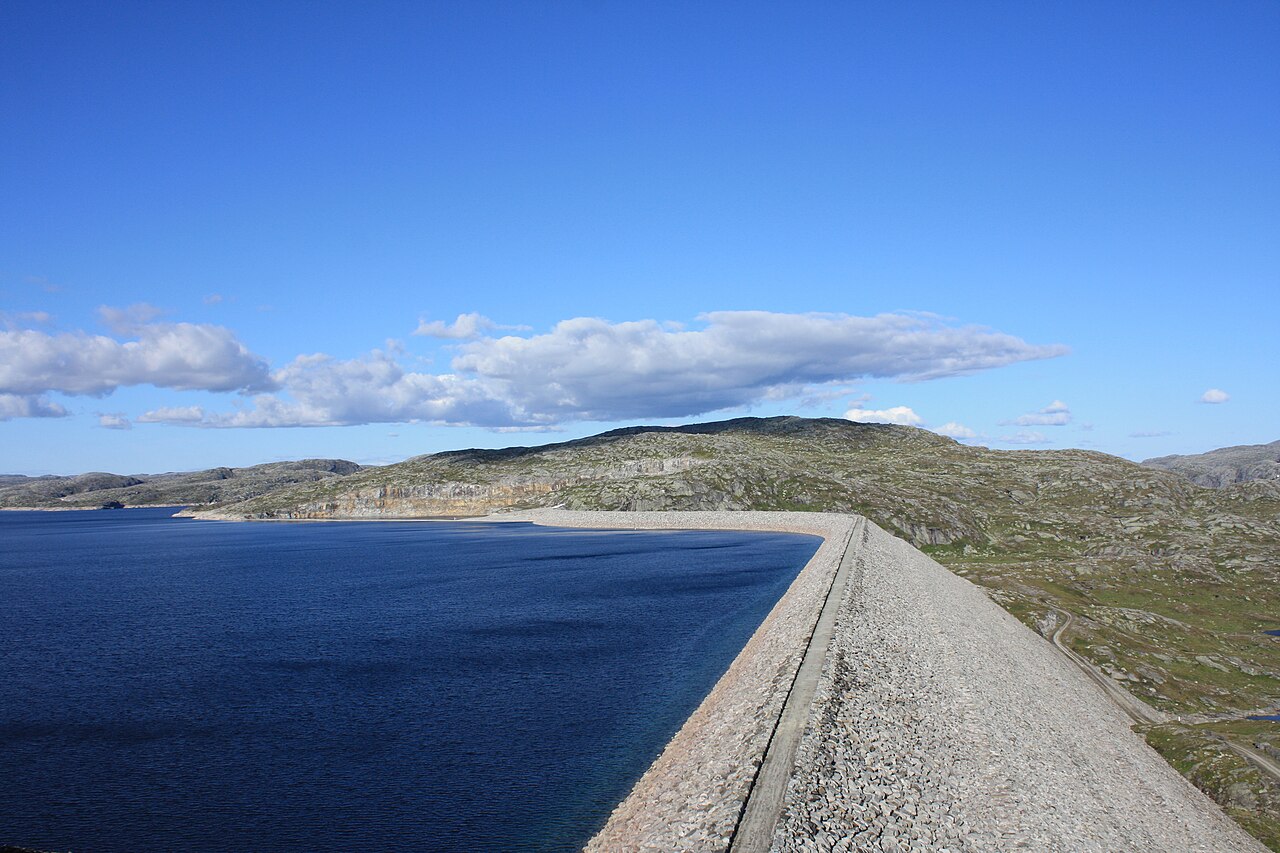
Historical Foundations and Early Development
Norway's renewable energy journey began with the commissioning of its first hydropower plant in 1891, marking the start of a century-long transformation toward domestic power generation [5]. This early investment positioned Norway advantageously as global energy markets shifted throughout the 20th century. The establishment of Statkraft in 1996 consolidated decades of state involvement into a single entity responsible for the majority of Norway's hydropower output [1][5].
Pre-Hydropower Energy Landscape
Before large-scale hydropower development, Norway relied primarily on biomass and limited fossil fuel imports for energy needs [1]. The nation's rugged terrain and abundant water resources made hydropower a natural progression from earlier wood-based heating and cooking practices [1]. Early private initiatives faced regulatory hurdles that ultimately favored state investment in infrastructure [5].
Policy Framework of the Early 20th Century
The Norwegian government established the legal framework for hydropower development through the Watercourse Regulation Act, which granted the state priority rights to water resources [1]. This legislative foundation enabled the massive public investment that would characterize Norway's energy sector for the next century [1]. By 1920, several large-scale projects were already in planning or construction [5].
The 1891 plant's legacy extends beyond immediate power generation; it established the principle that Norway's water resources constituted a national asset [5]. This philosophical foundation continues to shape contemporary debates about resource ownership and foreign investment in the sector [1].
Hydropower Dominance and Public Ownership Structure
Statkraft's Market Position
Statkraft, majority-owned by the Norwegian government, operates as Europe's largest renewable energy producer with nine of the country's largest hydroelectric plants under its management [1]. The company's 31 GW hydropower capacity in 2014 and 2019 represents approximately 95% of Norway's total electricity production [1]. This concentration means that Statkraft's operational decisions directly impact national energy security and export balances [1].
Public Ownership and Economic Implications
Approximately 90% of Norway's hydropower capacity is publicly owned, reflecting a political consensus that water resources should benefit the broader population rather than private shareholders [1]. This ownership structure has enabled the government to reinvest hydropower revenues into public services, infrastructure, and the broader renewable transition [1]. The model contrasts with many other nations where private utilities dominate generation [1].
Infrastructure and Reservoir Management
Norway's 87 TWh of combined reservoir capacity serves as seasonal storage, crucial for balancing the country's highly variable precipitation patterns [1]. Large reservoirs allow winter storage of summer-generated electricity, providing grid stability that would be impossible with run-of-river systems alone [1]. This infrastructure investment represents decades of planning around Norway's climate geography [1].
The 88% figure referring to plants with capacity over 40 GW demonstrates how Norway has concentrated its hydropower development in fewer, larger facilities rather than distributing capacity across many small installations [1]. This consolidation has improved operational efficiency but reduced geographical diversification of generation assets [1].
Electricity Production Mix and Capacity Statistics
Hydropower's Share of Total Generation
Hydropower plants with combined capacity over 40 GW account for approximately 88% of Norway's electricity production, while the total renewable share exceeds 98% when including wind power [1][5]. This near-total reliance on renewables creates a unique position in the European energy market, where Norway functions as a seasonal battery for neighboring grids [1]. The 132 TWh annual hydropower output represents roughly 95% of domestic production [1].
Wind Power Integration
Wind power contributes to the remaining portion of Norway's renewable electricity mix, with offshore wind representing the fastest-growing segment [5]. The complementarity between hydropower's dispatchability and wind power's variability creates a synergistic system that enhances grid stability beyond what either source could achieve independently [5]. Recent government policy has prioritized offshore wind development to leverage this complementarity [5].
Total Installed Capacity Trends
Total renewable energy capacity grew from 32,252 MW in 2014 to 40,161 MW in 2023, representing a 24.5% increase over the decade [1]. Hydropower capacity specifically increased from approximately 31 GW to nearly 35 GW over the same period [5]. This growth occurred despite mature technology status, suggesting incremental upgrades and new small-scale developments rather than wholesale capacity additions [1][5].
The near-98% renewable electricity share positions Norway uniquely for European decarbonization efforts, as neighboring countries can import Norwegian hydropower to balance their own variable renewable sources [5]. This interdependency has grown in importance as other European nations phase out fossil fuels [5].
Wind Power Development and Offshore Expansion
Onshore Wind Growth Trajectory
Norway possesses significant onshore wind power potential, particularly in coastal and mountainous regions where wind resources are strongest [1]. Early onshore developments faced opposition related to landscape preservation, but technological improvements and higher capacity factors have improved social acceptance [1]. The existing onshore fleet provides a foundation for subsequent offshore expansion [5].
Offshore Wind Policy and Targets
The Norwegian government has increased focus on building up offshore wind power capacities in recent years, recognizing the country's extensive North Sea and Norwegian Sea territories [5]. Policy frameworks have been established to auction development rights, with several major projects reaching final investment decisions in 2023 and 2024 [5]. These developments aim to position Norway as a significant European offshore wind exporter, similar to its hydropower role [5].
Grid Integration Challenges
Integrating variable offshore wind power into Norway's predominantly hydropower grid presents technical challenges related to frequency stability and transmission capacity [5]. The existing grid infrastructure was designed around unidirectional hydropower flows, requiring upgrades for bidirectional power exchanges with offshore sources [5]. Smart grid technologies and digital management systems are being deployed to address these challenges [5].
Norway's wind resources complement its hydropower advantage by providing generation during periods when hydro conditions are suboptimal, such as drought years or seasonal low-flow periods [1][5]. This complementary relationship enhances energy security beyond what either resource could provide independently [1][5].
Solar Energy Paradox and Silicon Industry
Limited Solar Resource Characteristics
Norway has limited solar energy resources due to high latitude and significant seasonal variation in daylight hours [1]. Solar photovoltaic generation capacity factors are substantially lower than in Mediterranean or even Central European locations [1]. This resource constraint has historically discouraged large-scale solar deployment in the Norwegian market [1].
Upstream Silicon Production Leadership
Despite limited domestic solar deployment, Norway is one of the world's largest producers of solar grade silicon and silicon solar cells [1]. This apparent paradox reflects Norway's strengths in materials science and chemical processing rather than end-use deployment [1]. The silicon industry leverages Norway's abundant renewable electricity for energy-intensive manufacturing processes [1].
Export-Oriented Solar Industry Strategy
Norwegian silicon producers serve primarily international markets, exporting manufactured materials to countries with stronger solar deployment incentives [1]. This strategy allows Norway to capture value-added stages of the solar supply chain while acknowledging its domestic resource limitations [1]. The industry benefits from low electricity costs derived from hydropower [1].
This dual position—limited domestic solar but leading silicon production—illustrates how Norway strategically positions itself across the renewable energy value chain, maximizing comparative advantages rather than attempting all technologies domestically [1]. The silicon industry's existence supports Norway's broader renewable energy economy even as solar generation remains minimal [1].
Wave and Tidal Energy Potential
Geographic Advantages for Marine Energy
Norway's extensive coastline, facing the North Atlantic, provides exceptional conditions for wave power development [1]. The country's rugged western coast experiences consistent wave patterns suitable for energy conversion technologies [1]. Several pilot projects have tested various wave energy converter designs in Norwegian waters [1].
Tidal Stream Resource Quality
Norway's numerous fjords and narrow inlets create high tidal current velocities, making the country favorable for tidal stream energy extraction [1]. Locations such as the Norwegian Saltfjord and various straits between islands demonstrate strong tidal resources [1]. Environmental impact assessments have been conducted for several proposed tidal sites [1].
Development Status and Commercial Viability
Wave and tidal energy remain in earlier development stages compared to Norway's mature hydropower sector [1]. Commercial viability depends on reducing capital costs and addressing marine environmental concerns [1]. Government support mechanisms, including research funding and test facilities, aim to accelerate commercial deployment [1].
The inclusion of wave and tidal potential in Norway's renewable energy portfolio diversification strategy recognizes the need for multiple renewable technologies to ensure long-term energy security [1]. These marine energies could particularly benefit remote coastal communities currently dependent on imported fossil fuels [1].
International Relations and Energy Exports
European Hydropower Market Role
Norway serves as a critical hydropower partner for European electricity markets, particularly during periods when other countries face generation shortfalls [5]. Cross-border transmission interconnections with Germany, the UK, and the Netherlands enable Norwegian hydropower to provide grid balancing services [5]. This role has grown in importance as European countries phase out nuclear and coal generation [5].
Energy Security and Geopolitical Implications
Norway's renewable energy dominance, particularly hydropower, provides the country significant leverage in European energy security discussions [5]. The ability to adjust hydropower generation offers a form of dispatchable renewable power that complements intermittent wind and solar sources across Europe [5]. This capability has geopolitical dimensions as European nations reduce reliance on fossil fuel imports from non-EU sources [5].
Export Infrastructure and Capacity
The 87 TWh of reservoir capacity and 35 GW of hydropower infrastructure enable significant electricity export potential when domestic demand is low [5]. Cross-border transmission capacity limits the actual volume of exports, but planned interconnection upgrades aim to increase export capability [5]. Norwegian TSO Statnett coordinates these cross-border flows with neighboring system operators [5].
This export function positions Norway as more than a domestic energy producer; the country serves as a critical infrastructure node in the European energy system, with its water resources contributing to continental grid stability [5]. The seasonal nature of hydropower storage means Norway can particularly support European grids during winter months when solar generation is lowest across the continent [5].
Climate Policy and Transition Trajectory
National Climate Targets
Norway has committed to reducing greenhouse gas emissions through various national climate plans, with the renewable energy sector playing a central role [5]. The near-total decarbonization of electricity generation through hydropower and wind power provides a clean foundation for electrifying transport, industry, and heating sectors [5]. This electrification strategy is a cornerstone of Norway's overall climate policy [5].
Renewable Energy Targets and Timelines
The Norwegian government has established ambitious targets for renewable energy capacity expansion, including specific goals for offshore wind development [5]. These targets reflect the recognition that while hydropower is mature, additional renewable capacity is needed to support economy-wide electrification [5]. The 2030 target framework includes significant offshore wind additions alongside continued hydropower optimization [5].
Electrification of Non-Energy Sectors
Norway's clean electricity mix enables ambitious plans to electrify road transport, fishing fleet operations, and industrial processes that previously relied on fossil fuels [5]. The high share of renewables means that electrification automatically reduces associated emissions, providing a double climate benefit [5]. This strategy has positioned Norway as a test case for rapid fossil fuel phase-out in developed economies [5].
The transition trajectory faces the challenge of maintaining hydropower reliability while integrating increasing amounts of variable wind and potential marine energy [5]. Grid flexibility, storage solutions, and demand-side management will be critical factors in determining the success of Norway's renewable energy transition in the coming decades [5].
Technological Innovation and Infrastructure
Hydropower Modernization Projects
Norway's existing hydropower fleet undergoes continuous modernization to improve efficiency, extend asset life, and incorporate digital monitoring systems [1]. Turbine upgrades and control system improvements have increased capacity factors without requiring new dam construction [1]. These investments represent the ongoing economic value of Norway's installed hydropower base [1].
Digital Grid Management
The integration of wind power and potential marine energy sources requires advanced grid management capabilities [5]. Norwegian system operators have implemented real-time forecasting, automated control, and wide-area monitoring systems to maintain grid stability [5]. These digital capabilities enhance the value of the existing hydropower fleet by enabling better balancing of variable renewables [5].
Research and Development Institutions
Norway hosts research institutions focused on renewable energy technologies, including the Norwegian University of Science and Technology (NTNU) and SINTEF Energy Research [1]. These institutions conduct research on turbine efficiency, grid integration, and new renewable technologies [1]. Government-industry-academia collaboration supports innovation across the sector [1].
The combination of established hydropower expertise and active research into emerging technologies positions Norway to maintain its renewable energy leadership as global transition accelerates [1]. The knowledge capital built over a century of hydropower development provides a foundation for innovation in other renewable sectors [1].
Comparative Perspective and Regional Context
Nordic Energy Cooperation
Norway's renewable energy system interacts with those of neighboring Nordic countries through various cooperation mechanisms [5]. The Nordic electricity market facilitates cross-border power flows, with Norwegian hydropower often providing balancing services for Sweden's nuclear and wind mix [5]. Finnish and Danish systems also participate in these coordinated electricity markets [5].
European Comparison Metrics
Norway's 98%+ renewable electricity share significantly exceeds the European Union average, which hovered around 40% in recent years [5]. This position reflects both Norway's natural resource endowments and its policy choices regarding public ownership and infrastructure investment [5]. Other European nations with fewer renewable resources look to Norwegian experiences for policy insights [5].
Development Pathway Uniqueness
The Norwegian renewable energy pathway differs from countries that pursued rapid solar or wind deployment without comparable hydropower resources [5]. Norway's approach of leveraging abundant water resources first, then adding variable renewables, represents a distinct development trajectory [5]. This pathway has implications for countries seeking to transition rapidly while maintaining grid reliability [5].
Understanding Norway's renewable energy system requires recognizing both its unique resource advantages and the policy frameworks that have shaped development [5]. The country's experience offers lessons for diverse contexts, though direct replication may not be feasible due to differing geographical and political conditions [5].