
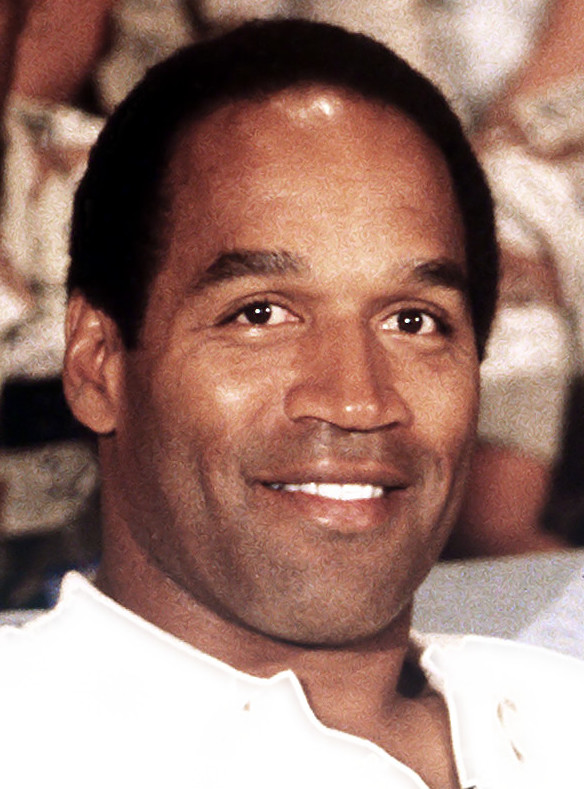
Background and Early Life
Orenthal James Simpson was born on July 9, 1947, in San Francisco, California [1]. His early years were shaped by the urban environment of the Bay Area, and he attended Galileo High School, where his athletic talent first became evident. Simpson's prowess on the football field earned him a scholarship to the University of Southern California, where he would later win the Heisman Trophy.
Family and Childhood
Simpson was the third of four children born to Eunice and Jimmy Simpson. His parents divorced when he was young, and he was raised primarily by his mother in the Potrero Hill neighborhood of San Francisco. Despite a troubled childhood that included bouts of juvenile delinquency, football became his stabilizing force and pathway to opportunity.
High School and College Recruitment
At Galileo High School, Simpson initially played as a defensive back and running back, earning All-City honors. His recruitment to USC came after a standout senior season, and he joined the Trojans in 1967. The transition to college football allowed Simpson to develop into one of the most dominant running backs in NCAA history.
Simpson's upbringing in post-war California coincided with significant social changes, and his success as a Black athlete in the 1960s occurred against the backdrop of the Civil Rights Movement. His achievements on the field would later be viewed through the complex lens of race, celebrity, and justice in America.
Heisman Trophy Era at USC
1968 Heisman Victory
Simpson won the Heisman Trophy in 1968, becoming the first player from USC to win the award twice (he had placed second in 1967). His Heisman season featured 1,543 rushing yards and 13 touchdowns, showcasing the versatility and power that would define his professional career. The award cemented his status as a national celebrity.
College Statistics and Records
During his three years at USC (1967-1969), Simpson rushed for 2,243 yards and 22 touchdowns. His 1968 campaign is particularly noted for a 177-yard performance against Notre Dame and a 227-yard game versus Oregon State. These statistics represented a new standard for running back play in college football.
Legacy at USC
Simpson's success at USC helped establish the program's reputation for producing elite running backs. He remains one of the most celebrated figures in Trojan football history, and his jersey number 32 was eventually retired by the university. The Heisman Trophy he won in 1968 remains one of the most iconic moments in college football history.
The 1960s college football landscape was dominated by powerful programs, and Simpson's play helped bridge the era between the single-wing formations of the past and the modern spread offenses. His combination of size, speed, and vision made him a prototype for the every-down running back.
Professional Football Career
NFL Draft and Early Career
Simpson was selected first overall by the Buffalo Bills in the 1969 NFL Draft, marking the beginning of a professional career that would span nine seasons. His rookie season showed promise with 697 rushing yards, but it was his subsequent teams that would fully showcase his talents. The Bills' option offense of the early 1970s was tailored to maximize Simpson's unique skill set.
Buffalo Bills Tenure (1969-1977)
During his eight seasons with the Buffalo Bills, Simpson established himself as one of the premier running backs in NFL history. He led the league in rushing yards four times (1972, 1973, 1975, 1976) and rushing touchdowns twice (1973, 1975). His 1973 season was particularly historic, as he became one of only a few players to rush for over 2,000 yards in a 14-game season.
San Francisco 49ers Final Season
Simpson was traded to the San Francisco 49ers in 1978, where he played one final season before retiring. He rushed for 1,013 yards that year, continuing to demonstrate his durability and skill even as he approached his early thirties. His career total of 11,236 rushing yards ranked third in NFL history at the time of his retirement.
Simpson's professional achievements earned him five Pro Bowl selections and five First-team All-Pro honors from 1972 to 1976. He was named NFL Most Valuable Player in 1973 and was a key figure in the Bills' offense during their competitive years. His playing style combined power running with surprising agility for a player of his size.
1994 Murder Arrest and Criminal Trial
June 1994 Arrest
Simpson was arrested on June 17, 1994, for the murders of his ex-wife Nicole Brown Simpson and her friend Ronald Lyle Goldman. The news of his arrest sent shockwaves through American society, given his status as a former football star and celebrity. The arrest came after a highly publicized low-speed highway chase involving Simpson in a white Ford Bronco, viewed by millions on live television.
The People v. Simpson Trial
The criminal trial, known as The People of the State of California v. Orenthal James Simpson, began in 1995 and became one of the most famed criminal trials in American history. The prosecution presented evidence including DNA evidence, blood found at the crime scene, and Simpson's history of domestic violence. The defense, led by Robert Shapiro, F. Lee Bailey, and Johnnie Cochran, focused on challenging the handling of DNA evidence and suggesting alternative theories.
October 1995 Not Guilty Verdict
On October 3, 1995, the jury delivered a not guilty verdict, acquitting Simpson of the criminal charges. The verdict was reached after a lengthy trial that featured dramatic moments including the famous glove demonstration in court. The acquittal meant Simpson could not be retried for the same crimes due to double jeopardy protections.
The trial featured extensive television coverage and became a cultural phenomenon, dividing America along racial and socioeconomic lines. The prosecution's case relied heavily on DNA evidence, while the defense successfully raised reasonable doubt about crime scene evidence and police conduct. The outcome reflected deep divisions in American society regarding race, celebrity, and the justice system.
Civil Liability and Later Legal Issues
1997 Wrongful Death Civil Trial
In 1997, a civil jury found Simpson liable for the deaths of Nicole Brown Simpson and Ronald Lyle Goldman by a preponderance of the evidence. Unlike the criminal trial, the civil trial had a lower burden of proof, and the jury awarded $33.5 million in damages to the victims' families. This civil ruling meant Simpson was legally responsible for the deaths even though he was acquitted criminally.
Financial Impact and Asset Seizure
The civil judgment led to significant financial consequences for Simpson, including the seizure of many of his assets. The families of the victims were entitled to collect from any future earnings Simpson might receive. This included potential royalties from his book deals and other income sources. The civil case effectively ensured that the victims' families would receive compensation regardless of the criminal outcome.
If I Did It and 2006 Book Controversy
Simpson authored the book "If I Did It" in 2006, which hypothetically described the murders from his perspective. The book was initially scheduled for publication but faced intense public backlash and was ultimately pulled from release. The title and concept were widely criticized as exploitative, and the project became a symbol of Simpson's continued engagement with the case that defined his later legacy.
The civil liability and book controversy illustrate the complex ways in which the legal system and public opinion intersected in Simpson's life. While he avoided prison time for the murders in the criminal trial, the civil judgment and public reaction ensured that the case remained a defining element of his public identity.
2007 Las Vegas Robbery and Imprisonment
2007 Armed Robbery Conviction
In 2007, Simpson was arrested and charged with armed robbery and kidnapping in connection with a confrontation in a Las Vegas hotel room. The incident involved Simpson and several accomplices attempting to retrieve sports memorabilia that he claimed had been stolen from him. The case was prosecuted as a felony, and Simpson was convicted on multiple counts.
Prison Sentence and Parole
Simpson was sentenced to 33 years in prison, with the possibility of parole after nine years. He served his sentence at the Lovelock Correctional Center in Nevada. In 2017, after serving nine years, Simpson was granted parole, reflecting good behavior and prison programming participation. His parole conditions included mandatory counseling and regular check-ins with parole officers.
2024 Release and Death
Simpson was released from prison in 2024 after being granted parole. His release came after serving the minimum term for his robbery conviction. Later in 2024, Simpson died of cancer at his home in Las Vegas, Nevada, at the age of 76. His death marked the end of a life that had been dominated by both athletic achievement and legal controversy.
The progression from Heisman winner to convicted felon represents one of the most dramatic trajectories in American public life. Simpson's later imprisonment for a crime distinct from the murders for which he was acquitted illustrates how his legal troubles continued even after the high-profile criminal trial concluded.
Cultural Impact and Media Representation
Trial as Cultural Moment
The O. J. Simpson trial remains one of the most significant media events of the 1990s, with an estimated 150 million people watching the verdict announcement. The trial's coverage revealed deep divisions in American society regarding race, the justice system, and celebrity privilege. Television networks interrupted regular programming to provide live coverage, making it a defining television event of the decade.
Racial Divisions in Public Opinion
Public opinion regarding Simpson's guilt or innocence often fell along racial lines, with many Black Americans expressing skepticism about the prosecution's case and many white Americans more readily accepting the conviction narrative. This division reflected broader tensions in American society regarding policing, evidence handling, and historical racial injustice. The trial became a Rorschach test through which Americans viewed larger societal issues.
Legacy in True Crime and Entertainment
The Simpson case spawned countless books, documentaries, and television series, including the FX anthology "American Crime Story: The People v. O. J. Simpson." The case influenced how true crime is produced and consumed, establishing many conventions of the genre. Its impact on popular culture continues decades later, with new generations encountering the story through various media formats.
Simpson's life story serves as a cautionary tale about the intersection of fame, wealth, and legal trouble. His journey from celebrated athlete to convicted felon and ultimately to a figure of both sympathy and condemnation reflects the complexities of American celebrity culture. The case continues to be referenced in discussions about celebrity justice, DNA evidence, and the limits of the legal system.
Athletic Achievements and Records
Heisman Trophy and College Honors
Simpson's 1968 Heisman Trophy victory was the pinnacle of his college career, recognizing him as the most outstanding player in American college football. His college statistics of 2,243 rushing yards and 22 touchdowns over three seasons at USC established him as a generational talent. The Heisman remains the most prestigious individual award in college football, and Simpson's win cemented his place in the sport's history.
NFL Rushing Records and Honors
Simpson's professional achievements include leading the NFL in rushing yards four times (1972, 1973, 1975, 1976) and rushing touchdowns twice (1973, 1975). His 1973 season stands as one of the greatest individual rushing seasons in NFL history, as he rushed for 2,003 yards in just 14 games. He was a five-time Pro Bowl selection and five-time First-team All-Pro, recognizing his consistent excellence over multiple seasons.
Career Statistics and Ranking
Simpson finished his NFL career with 11,236 rushing yards and 76 touchdowns. At the time of his retirement, his career rushing yardage ranked third in NFL history, and he remains one of only a few players to average over 100 yards per game for their career. His combination of power, speed, and durability made him a prototype for the modern every-down running back.
The sheer volume of Simpson's athletic achievements contrasts sharply with his later legal troubles, creating a complex legacy that continues to be debated. His on-field accomplishments were extraordinary by any measure, yet they exist within the same life story that includes murder accusations, a highly publicized trial, and imprisonment. This duality makes his story particularly compelling for sports historians and casual fans alike.
Legal Principles and the Justice System
Criminal vs. Civil Burden of Proof
The Simpson case became a textbook example of the difference between criminal and civil burden of proof. In the criminal trial, the prosecution must prove guilt "beyond a reasonable doubt," while in the civil trial, the standard is "by a preponderance of the evidence." This fundamental legal difference explains why Simpson could be acquitted criminally yet found liable civilly for the same deaths.
DNA Evidence and Forensic Science
The trial featured some of the most extensive use of DNA evidence up to that point in American legal history. The prosecution's DNA evidence was central to their case, while the defense challenged the collection, handling, and contamination possibilities of the samples. The case influenced how future trials would approach forensic evidence and led to increased public awareness of DNA technology's capabilities and limitations.
Double Jeopardy and Legal Protections
Simpson's acquittal in the criminal trial meant he could not be retried for the same charges due to the Fifth Amendment's double jeopardy protection. This legal principle ensures that individuals cannot be subjected to multiple prosecutions for the same offense, reflecting a fundamental protection within the American justice system. The civil trial circumvented this protection by using a different legal standard and proceeding as a civil rather than criminal matter.
The Simpson case demonstrated how different legal standards can produce seemingly contradictory outcomes, with implications for how society understands justice, evidence, and legal procedure. The interaction between criminal and civil proceedings in his case remains a subject of legal education and discussion.
Later Life and Final Years
Post-Release Activities
After his 2017 parole, Simpson largely remained out of the public eye, residing in Las Vegas. He gave occasional interviews and appeared at public events, though he never regained the level of fame he enjoyed during his football career. His post-prison life was marked by the natural limitations that come with age and a criminal record, as well as the ongoing public fascination with his story.
Health Struggles and Death
Simpson was diagnosed with cancer in his final years, and he died of the disease on April 10, 2024, at his home in Las Vegas, Nevada. He was 76 years old at the time of his death. His passing was noted by various media outlets, with some focusing on his athletic achievements and others revisiting the controversy that defined his later years.
Family Relationships
Simpson was survived by his children, including his daughter Arnelle Simpson, who had been a consistent presence throughout his legal troubles. His family relationships were complex, shaped by both his achievements and his controversies. The Simpson family continues to grapple with the legacy of his actions and their impact on multiple generations.
Simpson's death at 76 closed the chapter on a life that had spanned nearly eight decades of American history. From his early days in San Francisco to his Heisman victory, from the 1994 arrests to his final years in Las Vegas, his life intersected with many of the major cultural and legal themes of his era. His passing marked the end of a uniquely complex American story.
Comparative Context in Sports History
Running Backs of the Era
Simpson's statistical achievements must be viewed within the context of 1970s NFL football, which featured different offensive schemes and defensive approaches than the modern game. His 1973 season of 2,003 yards occurred in a 14-game schedule, compared to the 17-game schedule of the modern era. His five seasons leading the league in rushing yards during this period demonstrates his dominance within his specific competitive context.
Heisman Winners with Controversial Legacies
Simpson joins a small group of Heisman Trophy winners whose post-college lives have been marked by significant controversy. This group includes figures like Johnny Manziel and Cam Newton, though each case is distinct. The phenomenon raises questions about how society reconciles athletic achievement with later behavior, and whether sporting achievements should be celebrated independently of an individual's later actions.
NFL Careers Cut Short by Legal Issues
While Simpson's NFL career ended through trade and retirement rather than being forcibly terminated by legal issues, his later conviction did impact his legacy and post-football opportunities. Other athletes have seen their careers impacted by legal troubles, creating a broader pattern of how the justice system intersects with professional sports. Simpson's case remains one of the most prominent examples of this intersection.
The relationship between athletic excellence and personal conduct continues to be a subject of debate in sports culture, and Simpson's case provides a complex data point for this ongoing discussion. His Pro Bowl selections and All-Pro honors exist alongside his criminal trial, creating a multifaceted legacy that sports historians continue to analyze.