
Foundations and Early Regulatory Attempts
Campaign finance in the United States operates at federal, state, and local levels, accepting contributions from individuals, corporations, political action committees, and occasionally the government itself [1]. The federal framework began with the Federal Election Campaign Act of 1971, which represented the first major statutory effort to bring transparency and limits to electoral spending [2]. Despite these early provisions, the legislation has faced repeated judicial scrutiny, with numerous amendments and key provisions struck down by the Supreme Court over subsequent decades [2].
Pre-1971 Landscape and Voluntary Disclosure
Enforcement Structure and Early Amendments
The Rise of Spending and Escalating Costs
Campaign spending has risen steadily at least since 1990; a U.S. House winner in 1990 spent on average $407,600 (equivalent to $1 million in 2025), while the 2022 winner spent on average $2.79 million ($3.07 million in 2025) [1]. This upward trajectory reflects growing financial demands on candidates at all levels of government. In the Senate, average spending for winning candidates went from $3.87 million ($9.54 million in 2025) in earlier elections to $26.53 million ($29.19 million in 2025) in 2022 [1], illustrating the disproportionate cost increase for higher-office races.
House vs. Senate Spending Disparities
Historical Context of Cost Growth
The 2020 Spending Surge and Record-Breaking Cycles
In 2020, nearly $14 billion was spent on federal election campaigns, making it the most expensive campaign in U.S. history and more than double what was spent in the 2016 election [1]. This dramatic increase underscores how each election cycle pushes the financial envelope further, driven by heightened competitiveness, increased fundraising capacity, and the expanding role of outside spending.
Comparison with Prior Election Cycles
Factors Behind the 2020 Record
Citizens United and the Transformation of Independent Spending
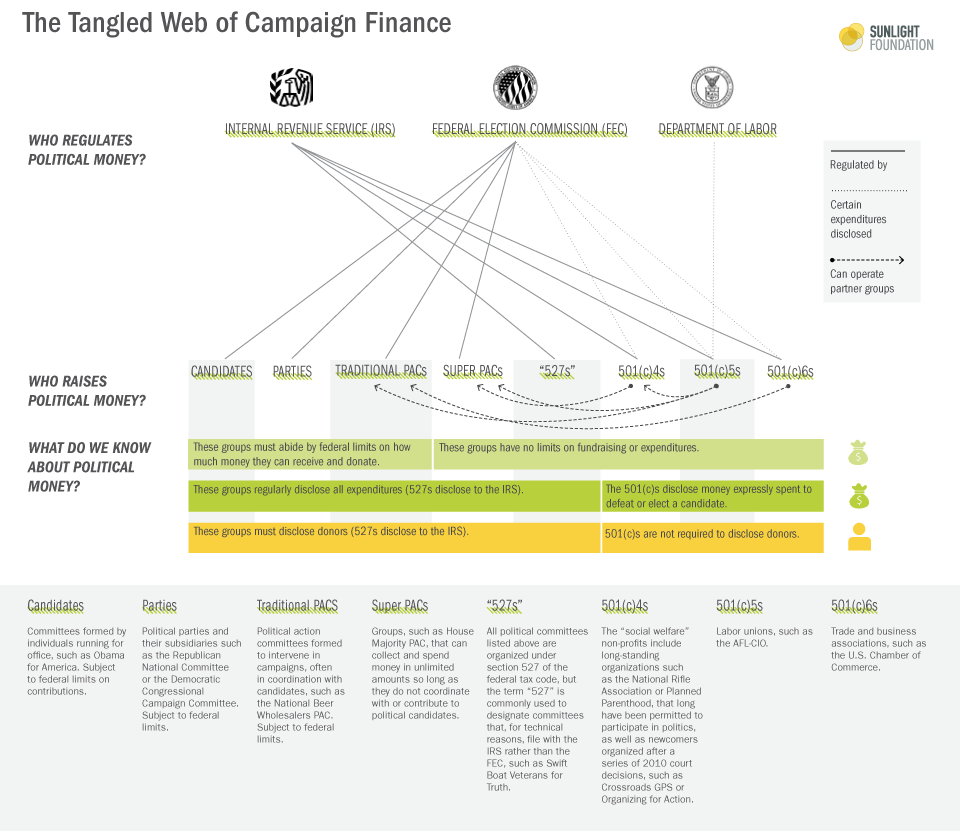
The protection granted under the First Amendment allows some political organizations to raise unlimited amounts of money and subsequently run political campaigns in favor of or against candidates [2]. In Citizens United v FEC (2010), the Supreme Court affirmed that corporate personhood grants for-profit, non-profit, and other associations the right to freedom of speech under the First Amendment [2]. This ruling fundamentally altered the landscape by enabling entities previously restricted from direct electoral advocacy to spend unlimited sums independently.
Corporate and Association Speech Rights
Immediate Consequences for PAC Formation
Super PACs, Dark Money, and Regulatory Evasion
Since the 2010 Citizens United decision, the number of Political Action Committees (PACs) has increased dramatically [2]. Super-PACs are not regulated in the same way as individuals making contributions; they may conduct their own political campaigns and receive funding from both individuals and corporations, with no funding caps [2]. This structural distinction has created a parallel spending ecosystem where substantial sums operate with minimal disclosure requirements.
Funding Sources and Disclosure Gaps
Impact on Candidate Messaging and Voter Perception
2025-2026 Election Cycle Financial Totals
As of the 2025-2026 election cycle, Congressional candidates collected $2.8 billion and disbursed $2 billion in campaign funds [3]. Political parties received $1.4 billion and spent $1 billion during the same cycle [3], demonstrating the continued central role of party infrastructure in electoral finance. These figures reflect the massive scale of resources funneled through official campaign channels during recent election periods.
PAC Receipts and Expenditure Patterns
Contributions to Federal Candidates in the 2025-2026 Cycle
Party Dynamics and Individual Donor Behavior
Democratic and Republican party committees reported receiving $413.6 million and $367.7 million, respectively, from individuals during the 2025-2026 cycle [3]. This asymmetry in individual giving patterns reflects broader partisan fundraising dynamics and the varying capacity of each party's base to mobilize financial resources. Additionally, Democratic and Republican House candidate committees transferred $34.7 million and $26.9 million, respectively, from their campaign accounts to their national congressional party committees [3], illustrating internal reallocation mechanisms within the party finance system.
Comparative Analysis of Party Receipts
Transfer Mechanisms and Resource Pooling
Categorization of Political Contributions and Public Financing
Political contributions are categorized into three primary types: individual donations, corporate contributions, and public financing [4]. Individual donations enable constituents to directly influence candidates they prefer and are typically motivated by personal conviction and grassroots support [4]. This direct link between voter preference and financial backing remains a cornerstone of the U.S. electoral system, even as other funding sources grow in relative weight.
Corporate Contributions and Public Interest Tensions
Structure and Objectives of Public Financing
Contemporary Landscape and Structural Influences
The current landscape of political funding is marked by the substantial influence of Super PACs and dark money, with corporate donations and PACs frequently eclipsing contributions made by ordinary citizens [4]. Political contributions are categorized into three primary types: individual donations, corporate contributions, and public financing [4]. Individual donations enable constituents to directly influence candidates they prefer and are typically motivated by personal conviction and grassroots support [4]. Corporate contributions can substantially enhance a campaign's financial resources but may pose the risk of prioritizing corporate interests over the public good [4]. These dynamics create a tension between the theoretical principle of equal political voice and the practical reality of disproportionate financial influence.
Super PACs and Dark Money in Practice
Implications for Electoral Competition and Policy Priorities
Sources & citations
- Campaign finance in the United States
- Letter to the Editor: Unregulated Campaign Financing Makes American Politics More Polarized - The Bottom Line
- Statistical Summary of 18-Month Campaign Activity of the 2025-2026 Election Cycle | FEC
- The influence of money in U.S. politics – iNews One
- iNews One – Page 3 – Coupon Codes For Up To 50% Off