
Origins and Early Foundations (1907–1914)
Real Betis Balompié traces its lineage to two clubs founded in the first decade of the 20th century. Sevilla Balompié emerged in 1907 among students at the Polytechnic School in Seville, while Betis Foot-ball Club was established two years later in 1909 [3]. These formative years placed football within Seville’s student and middle‑class circles before the city’s larger clubs consolidated power.
Sevilla Balompié and the Polytechnic Roots
Sevilla Balompié was the first of the two precursors, created in 1907 by students from the Polytechnic School [3]. The club’s early identity was tied to education and the emerging sport of football in Andalusia’s capital, providing a foundation that would later merge with a rival local side.
Betis Foot-ball Club’s Inception
Betis Foot-ball Club followed in 1909, also rooted in Seville’s growing football culture [3]. The club’s name directly referenced the ancient Iberian tribe, the Betis, signaling a regional pride that would become a hallmark of the merged entity.
The five‑year gap between the two foundations illustrates how football proliferated organically across Seville before organized competition structures emerged. Both clubs competed in regional tournaments and friendly matches, building the local fanbase that would later sustain a merged institution.
The 1914 Merger and Birth of Real Betis
The pivotal moment arrived on 12 September 1914, when Sevilla Balompié and Betis Foot-ball Club merged to form a single representative side [3]. The merger was driven by the desire to consolidate talent and resources to compete more effectively against established clubs in Andalusia and beyond.
Naming and Identity
The new club adopted the name Real Betis Balompié, earning the prefix "Real" (Royal) in recognition of its growing stature [3]. The green-and-white striped kit, derived from Betis Foot-ball Club’s colours, became the visual emblem of the merged side.
Competitive Beginnings
Post‑merger, Real Betis entered the regional and national football structures, navigating the early Spanish football pyramid. The merger allowed the club to pool players from both predecessor sides, creating a stronger squad for regional championships.
The 1914 merger also marked the club’s entry into the Copa del Rey competition, Spain’s oldest knockout tournament. Early appearances tested the team against larger, more established clubs, but the merger provided a unified platform for growth.
Rise Through the Divisions and Early Success
Real Betis experienced movement across the first, second, and third divisions of Spanish football [3]. This trajectory reflects the club’s financial and sporting fluctuations during the mid‑20th century, as it fought to establish itself in the top flight.
Third Division and Promotion
The club’s early decades included spells in the third division, where it developed talent and built infrastructure. Promotion to the second division represented a significant step toward the club’s ultimate ambition of top‑flight football.
First Division Establishment
Real Betis secured a place in the first division, joining Spain’s elite clubs. The club’s ability to maintain top‑flight status required consistent performance and financial stability, both of which were tested over the following decades.
The club’s divisional movement also meant exposure to different styles of competition and varying levels of financial reward. Each promotion and relegation cycle shaped the club’s identity and its relationship with the Seville fanbase.
Domestic Honours: Liga and Copa del Rey
Real Betis’s trophy cabinet reflects its competitiveness in Spanish football. The club has won one Campeonato de Liga de Primera División [3], a singular achievement that remains a highlight in its history.
Liga Title
The Primera División title came during a period when Betis was able to assemble a squad capable of challenging the traditional powerhouses of Spanish football. The championship remains a source of pride for the supporters and is celebrated as the club’s sole league honour.
Copa del Rey Triumphs
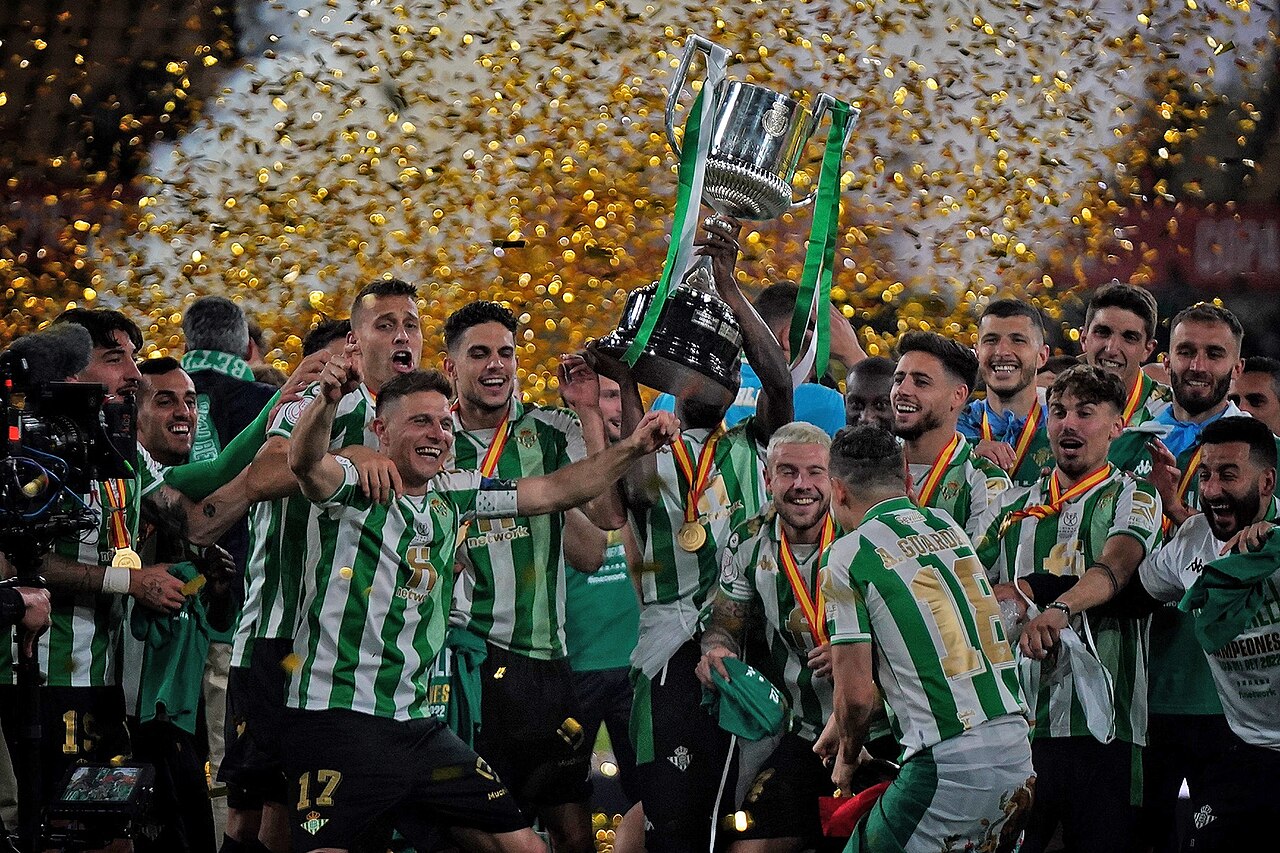
Real Betis has won three Copas del Rey [3], establishing the club as a notable knockout‑cup competitor. These victories came across different eras, demonstrating the team’s ability to perform in high‑pressure elimination matches.
The three Copa del Rey titles span the post‑civil war period and the modern era, suggesting a sustained capacity to compete in cup competitions even when league performance varied. Cup success often provided European qualification, further raising the club’s profile.
Record‑Breaking Seasons and Statistical Milestones
Real Betis holds distinctive records in Spanish football’s statistical history. The club holds the record for most points and goals in a single first‑division season, achieved during 1996–97 [3]. This remarkable feat underscores an attacking‑minded side that set unprecedented offensive standards.
1996–97 Season Offensive Record
The 1996–97 campaign stands as the most productive season in the club’s top‑flight history, with both point accumulation and goal‑scoring output reaching record levels. The season’s statistics remain a reference point for what Betis’s attacking setup can achieve when functioning at full capacity.
22‑Game League Season Record
Real Betis also holds the record for most points in a 22‑game league season, set during 1934–35 [3]. This record reflects an era when Spanish football employed a shorter round‑robin format, and Betis maximized its points per game during that compressed schedule.
These two records—one from the modern 38‑game era and one from the historical 22‑game format—showcase the club’s ability to optimize offensive output across different competitive structures. They also highlight how rule changes and season formats have shaped what is measurable.
Stadium and Home Ground
Benito Villamarín has served as Real Betis’s home stadium for decades, providing the venue where the club’s supporters gather to cheer the team. The stadium’s location in the west of Seville places it within easy reach of the city’s diverse neighbourhoods.
Stadium Development
Over the years, Benito Villamarín has undergone renovations to modernize facilities, increase capacity, and improve the match‑day experience. These upgrades reflect the club’s commitment to maintaining a competitive home environment while respecting the stadium’s historical character.
Match‑Day Atmosphere
The stadium’s atmosphere is shaped by the club’s passionate fanbase, known for creating a vibrant environment during both successful and challenging periods. Fan support has been a consistent factor in the team’s performance at home.
The relationship between the club and its stadium is reciprocal: improved facilities attract supporters, and strong fan support incentivizes further investment in the ground. This dynamic has sustained Benito Villamarín as a central element of Betis identity.
Relegation Battles and Resilience
Real Betis has experienced the challenges of relegation, having spent time in the second and third divisions [3]. These periods of adversity tested the club’s infrastructure, player development, and ability to rebound at the first‑division level.
Relegation and Promotion Cycles
The club’s movement between divisions illustrates the competitive balance of Spanish football, where financial resources, managerial decisions, and player performance all influence a team’s trajectory. Betis’s ability to return to the top flight after relegation demonstrates organizational resilience.
Youth Development During Lower‑Division Stints
Lower‑division periods have often been utilized to integrate youth academy graduates into the first team. This approach not only reduces transfer costs but also maintains a connection between the academy and the senior squad, a philosophy Betis has upheld across eras.
Relegation battles also serve as a crucible for tactical experimentation, as managers seek solutions to regain top‑flight status. The experiences gained during these campaigns often inform the club’s long‑term strategy.
European Competitions and International Exposure
Real Betis’s participation in European competitions has been limited but meaningful, as domestic cup successes have occasionally earned the club a place in continental tournaments [3]. These appearances have exposed the team to different playing styles and raised its profile beyond Spain.
UEFA Cup and European Campaigns
European competition appearances have typically come via Copa del Rey victories, which grant the winner a spot in the Europa League or, historically, the UEFA Cup. These matches have provided test‑cases for Betis’s tactics against foreign opposition.
Impact on Club Profile
Even limited European exposure has contributed to the club’s brand recognition and attracted supporters outside Seville. Facing international clubs also offers players the chance to develop experience that benefits the team when it returns to domestic competition.
The club’s European journeys, though brief, have been sources of pride and have demonstrated that Betis can compete on a stage beyond the domestic context. These campaigns often coincide with periods of squad strength and tactical preparation.
Cultural Identity and Fanbase
Real Betis occupies a unique place in Seville’s football culture, often positioned as the city’s second‑largest club behind Sevilla FC. This positioning has fostered a passionate, loyal fanbase that identifies strongly with the club’s working‑class roots and regional pride [3].
The Green and White Identity
The club’s green‑and‑white striped kit and its nickname, "Verde", are central to its visual identity. The colours distinguish Betis from Seville’s other major side and create a strong visual brand that supporters recognize globally.
Fan Traditions and Rivalries
Supporter traditions include chants, tifos, and community involvement that extend beyond the stadium. The Seville derby, though not the focus of this article, remains a key fixture in the local calendar and shapes the broader football culture of the city.
The club’s identity is also tied to its motto, "Siempre Betis" (Always Betis), which encapsulates the enduring loyalty of the fanbase. This sentiment has persisted through decades of trophies, relegations, and managerial changes.
Key Figures in Club History
The club has been home to players who became fan favourites due to their skill, longevity, or connection to the Seville region. These individuals often serve as ambassadors for the club’s values and are remembered in Betis’s historical narratives.
Legendary Players
Managers and Tactical Evolution
Managers have influenced Betis’s playing style across different eras, from defensive solidity to attacking football. The club’s willingness to adapt tactically has been a factor in its ability to remain competitive across changing football landscapes.
The contributions of these figures—on and off the pitch—have helped define what Real Betis represents within Spanish football. Their legacies continue to influence the club’s direction and its relationship with the supporter base.