
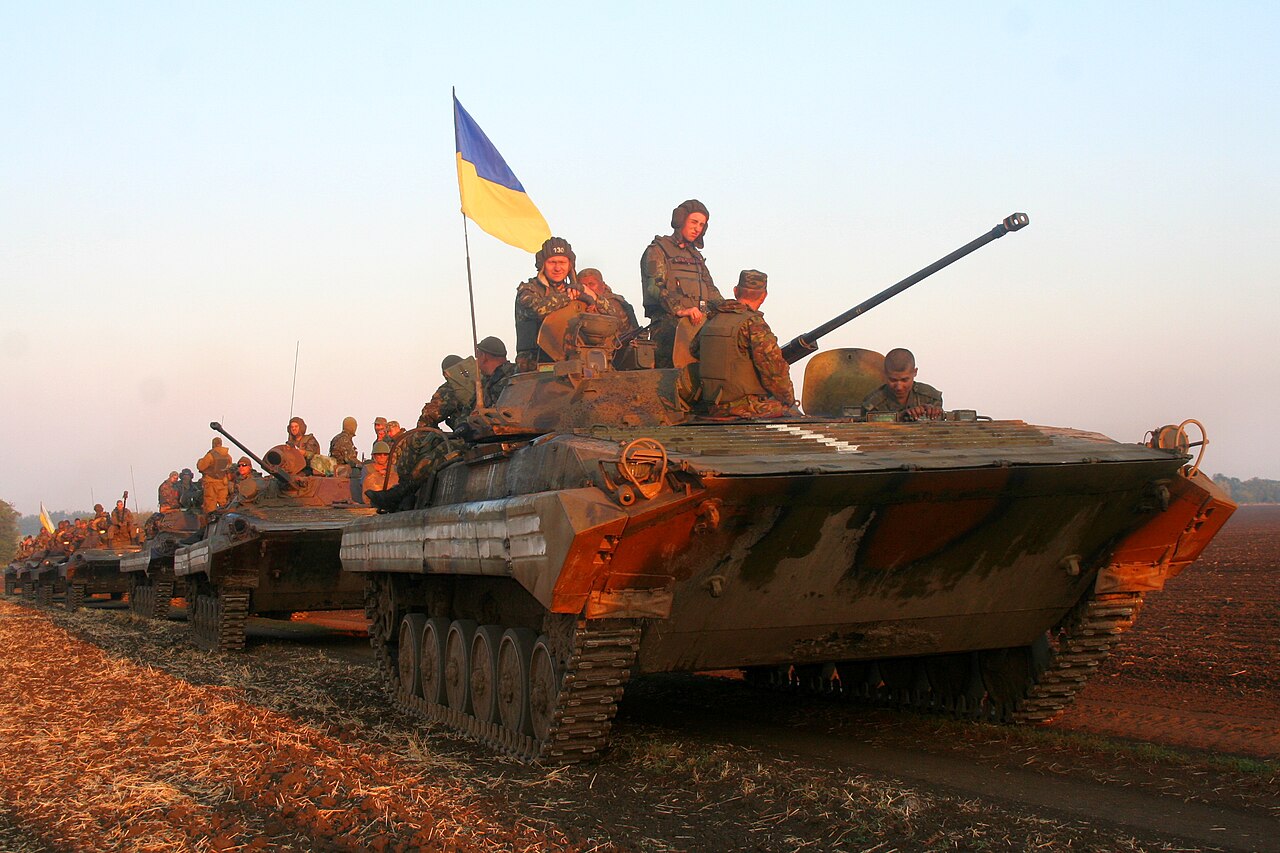
Background: The 2014 Revolution and Initial Conflict
The Russo-Ukrainian war began in February 2014 following Ukraine's Revolution of Dignity, which ousted the pro-Russian president Viktor Yanukovych and signaled a shift toward Western integration [3]. This political upheaval created a power vacuum that Russia exploited almost immediately [3].
Annexation of Crimea
In February 2014, Russia occupied and annexed Crimea from Ukraine, incorporating the peninsula into the Russian Federation despite international condemnation [3]. This marked the first territorial acquisition by force in Europe since World War II and established a precedent for the conflict's trajectory [3].
Donbas Separatist Warfare
Russian separatist armed groups started a war in the eastern Donbas region against Ukraine's military, receiving support from Russian forces including weapons, training, and direct combat involvement [3]. The conflict quickly settled into a pattern of trench warfare, artillery duels, and periodic ceasefire agreements that largely failed to halt hostilities [3].
Escalation and International Recognition of Occupation
In 2018, Ukraine declared the Donbas region to be occupied by Russia, formally asserting that the territory was under Russian control rather than merely contested by local separatists [3]. This declaration shifted Ukraine's diplomatic framing from 'internal unrest' to 'foreign occupation' and aligned international partners more firmly against Russia [3].
Minsk Agreements and Ceasefire Failures
The Minsk I and Minsk II ceasefire agreements, brokered by France and Germany, sought to end hostilities in Donbas but ultimately failed to implement key provisions including withdrawal of heavy weapons, Ukrainian border control, and political status for Donetsk and Luhansk [3]. Each ceasefire collapse resulted in renewed fighting and increased casualties on both sides [3].
Military Buildup and Recognition of Independence
Throughout 2021 and early 2022, Russia massed over 150,000 troops near Ukraine's borders, conducting large-scale military exercises that the West interpreted as preparation for invasion rather than defensive posturing [4]. In February 2022, Russia recognized the independence of Donetsk and Luhansk People's Republics, providing a casus belli for the subsequent large-scale invasion [4].
Full-Scale Invasion: 24 February 2022
On 24 February 2022, Russia invaded Ukraine, starting the largest and deadliest war in Europe since World War II [4]. The invasion unfolded on multiple axes, targeting Kyiv, Kharkiv, Kherson, and other major cities, with the initial objective reportedly regime change in Kyiv [4].
Initial Advance and Ukrainian Resistance
Ukrainian forces, bolstered by Western-supplied weapons and intense domestic mobilization, mounted unexpected resistance that stalled Russian columns and forced a reorientation of Russian objectives from regime change to controlling the Donbas region [4]. The resilience of Ukrainian defenders, particularly in Kyiv and Chernobyl sectors, surprised Western intelligence assessments [4].
Shifting War Aims and Atrocities
As the invasion stalled, Russian forces shifted to indiscriminate missile and artillery strikes against Ukrainian infrastructure, causing widespread power outages and civilian casualties [4]. Reports of atrocities in Bucha, Mariupol, and other locations revealed systematic targeting of civilians, prompting international war crimes investigations and additional sanctions [4].
Western Response and Sanctions Regime
The 2022 invasion triggered an unprecedented sanctions regime targeting Russian banks, oligarchs, and export controls on technology and energy equipment [4]. The European Union, United States, and G7 nations coordinated to disconnect selected Russian banks from SWIFT, freeze central bank reserves, and restrict technology transfers that sustain Russia's war machine [4].
Military Aid to Ukraine
Western countries provided substantial military aid to Ukraine including artillery systems, air defense platforms, main battle tanks, and long-range strike capabilities [4]. This assistance transformed Ukraine's defensive capabilities and enabled counteroffensives that reclaimed territory in Kharkiv and Kherson oblasts during 2022 [4].
Humanitarian Impact and Displacement
The war caused the largest refugee crisis in Europe since World War II, with over 8 million Ukrainians fleeing the country and millions internally displaced [4]. Infrastructure destruction of housing, schools, and energy systems created a prolonged humanitarian emergency requiring international aid coordination [4].
Counteroffensives and Frontline Dynamics
Ukraine's counteroffensives in 2022 and 2023 recovered significant territory including Kharkiv, Kherson, and areas in Donetsk and Luhansk oblasts, though Russian forces maintained defensive lines in eastern regions [4]. The fluid front lines saw intense fighting around Bakhmut, Avdiivka, and other strategic towns that became symbols of the war's grinding attrition [4].
Naval Warfare and Grain Export Deal
The Black Sea became a theater of naval warfare with Ukraine employing drones and missiles to target Russian fleet assets, while Russia imposed a blockade on Ukrainian grain exports [4]. The Black Sea Grain Deal, mediated by the United Nations and Turkey, temporarily restored export corridors but faced repeated violations and suspensions [4].
Drone Warfare Innovation
Both sides extensively deployed commercial and military drones for reconnaissance, targeting, and strikes, representing the first large-scale drone war in modern conflict [4]. Ukraine's homemade naval drones successfully damaged Russian warships in Sevastopol, demonstrating asymmetric capabilities that challenged traditional naval dominance [4].
Political Dimensions and Negotiations
Throughout the conflict, various peace proposals emerged from different actors including Turkey, China, and the Vatican, though none produced a sustainable ceasefire [4]. Negotiation positions hardened over time, with Ukraine insisting on territorial integrity including 1991 borders while Russia demanded recognition of annexed territories and neutral status for Ukraine [4].
Nuclear Risks and Energy Politics
The war raised nuclear concerns regarding the Zaporizhzhia Nuclear Power Plant, which came under Russian control and experienced shelling that risked a nuclear disaster [4]. Energy politics shifted dramatically as Europe reduced Russian gas dependence, accelerating renewable energy transitions and seeking alternative suppliers [4].
Information Warfare and Propaganda
Both sides engaged in sophisticated information warfare, controlling narratives through social media, state television, and international outlets [3]. The conflict became known as the 'first TikTok war' with citizen footage shaping global perceptions, while both Russian and Ukrainian governments employed propaganda to mobilize domestic support and influence international opinion [3].
Human Cost and Casualty Estimates
The war has caused immense human casualties, with tens of thousands of military personnel killed or wounded on both sides, though exact figures remain disputed and often classified [4]. Civilian deaths confirmed through open-source investigation number in the tens of thousands, with the true toll likely higher due to underreporting from active combat zones [4].
Economic Impact on Ukraine
Ukraine's economy contracted sharply in 2022 but received substantial international financial assistance to maintain government functions and critical services [4]. Reconstruction needs estimated in the hundreds of billions of dollars reflect widespread infrastructure damage to cities, utilities, and industrial capacity [4].
Russian Economic Consequences
Russia faced severe economic sanctions, capital flight, and technology restrictions that impacted its war economy, though the country redirected trade toward Asia and maintained energy exports to friendly markets [4]. The long-term effectiveness of sanctions on Russia's war-making capacity remains a subject of ongoing analysis [4].
Geopolitical Significance and Future Trajectory
The Russia-Ukraine war represents a watershed moment in European security architecture, ending the post-Cold War era of presumed stability and prompting NATO expansion with Finland's membership and Sweden's application [4]. The conflict has reshaped global power dynamics, testing the resolve of the rules-based international order [4].
Long-Term Conflict Scenarios
Analysts project various conflict trajectories ranging from frozen conflict similar to Korea's armistice to continued high-intensity warfare, depending on Western resolve, Russian capabilities, and Ukrainian resilience [4]. The 2024 political cycles in key donor countries introduce uncertainty about sustained aid levels [4].
Historical Precedents and Lessons
The war's outcome will likely influence future security doctrines, deterrence strategies, and the balance of power between Russia and the West for decades, with parallels to historical conflicts regarding territorial revisionism and alliance commitments [4]. How the international community responds to aggression will shape global norms regarding sovereignty and territorial integrity [4].