
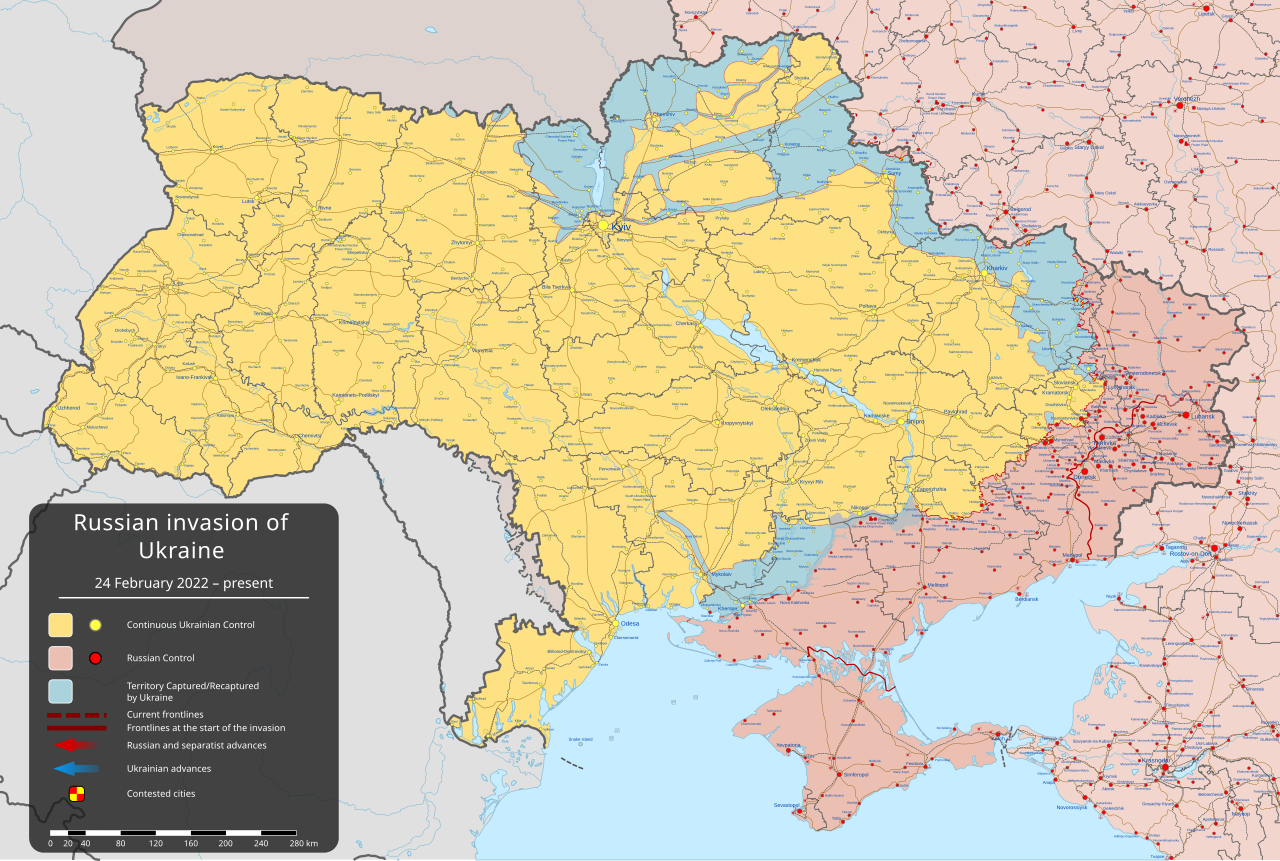
Origins of the Conflict
Covert Operations in Crimea
The conflict’s earliest flashpoint occurred in February 2014 when Russian forces, disguised as local soldiers, entered the Ukrainian autonomous republic of Crimea and seized key installations without an official declaration of war [1]. This clandestine approach allowed Russia to alter the status quo while limiting immediate international retaliation, setting a tactical precedent that resurfaced in later operations across Ukraine.
International Legal Status
The covert nature of the Crimean operation prompted the United Nations General Assembly to adopt a resolution affirming Ukraine’s territorial integrity and rejecting the legitimacy of the subsequent referendum, thereby framing the annexation as a violation of international law [1]. This early diplomatic rebuke established a legal baseline that later tribunals would reference when assessing subsequent Russian actions.
Expansion into Eastern Ukraine
Proxy Forces and Territorial Gains
In April 2014, Russian-backed proxy militias moved into the Donbas region, capturing towns and establishing self‑declared republics that functioned as footholds for Moscow’s broader strategic aims [1]. The use of locally recruited fighters enabled Russia to maintain plausible deniability while extending its influence deep into Ukrainian territory.
Impact on Regional Stability
The Donbas incursion destabilized the eastern border, creating a protracted low‑intensity conflict that strained Ukraine’s armed forces and diverted resources from other national priorities. This frozen front later provided a justification for a larger offensive, illustrating how early territorial gains can embed long‑term security dilemmas.
Russian Military Mobilization
Scale and Composition
A systematic buildup of Russian troops began in early 2021, concentrating mechanized divisions, artillery brigades and logistical support units along Ukraine’s northern, eastern and southern borders [4]. Satellite imagery and open‑source intelligence documented the unprecedented concentration of forces, signaling a shift from hybrid tactics to conventional war planning.
Strategic Intent
Analysts infer that the 2021 buildup aimed to secure rapid operational depth, overwhelm Ukrainian defenses and achieve swift political objectives before external actors could mount a coordinated response. The timing of the buildup, coupled with diplomatic pressure on Kyiv, suggests a calculated effort to exploit perceived windows of opportunity.
The 2022 Full‑Scale Invasion
Launch and Initial Objectives
On 24 February 2022, Russia launched a coordinated multi‑axis assault that targeted major Ukrainian cities, border crossings and critical infrastructure, marking the transition from proxy conflict to an all‑out war [1][4]. The operation combined airborne, ground and naval components to achieve rapid territorial penetration and to pressure the Ukrainian government into capitulation.
Immediate Military Outcomes
The opening days saw intense fighting around strategic hubs, resulting in significant equipment losses on both sides and prompting a massive civilian displacement. The rapid escalation also forced neighboring states to activate contingency plans, underscoring the invasion’s capacity to destabilize the broader European security environment.
International Criminal Court Investigation
Scope of the ICC Inquiry
The International Criminal Court opened a formal investigation into alleged crimes against humanity, war crimes, the systematic abduction of Ukrainian children and acts of genocide perpetrated during the 2022 conflict [2]. This mandate expands the court’s jurisdiction to cover both direct combat actions and broader patterns of civilian targeting.
Implications for International Law
The ICC’s involvement signals a renewed willingness to hold high‑level officials accountable for violations of the Geneva Conventions, potentially reshaping norms around state responsibility in modern conflicts. By documenting evidence of child abductions, the court also highlights the long‑term societal damage that such crimes inflict.
Arrest Warrants for Russian Leaders
Targets of the Warrants
In a historic move, the ICC issued arrest warrants for President Vladimir Putin and five senior Russian officials, accusing them of orchestrating the alleged war crimes and genocide identified in the investigation [2]. The warrants represent the first time a sitting head of state has faced such direct legal action from the court.
Political Repercussions
The issuance of the warrants has intensified diplomatic tensions, prompting Russia to denounce the ICC’s legitimacy while encouraging allied nations to shield the indicted officials from extradition. This standoff illustrates how international legal mechanisms can intersect with real‑world power politics.
Ceasefire Negotiations
Diplomatic Proposals
Multiple international actors, including the United Nations and the Organization for Security and Co‑operation in Europe, have presented ceasefire frameworks aimed at halting hostilities and facilitating humanitarian access [2]. These proposals typically call for an immediate cessation of offensive operations and the establishment of protected corridors for civilians.
Russian Position
Russia has repeatedly refused calls for a ceasefire, arguing that its military objectives remain unmet and that any pause would advantage Ukrainian forces [2]. This refusal underscores a strategic calculus that prioritizes battlefield gains over diplomatic de‑escalation.
Humanitarian Consequences
Displacement and Child Abductions
The ICC investigation’s focus on the forced removal of Ukrainian children highlights a disturbing pattern of demographic manipulation, which has contributed to a surge in internally displaced persons and cross‑border refugees seeking safety [2]. The scale of child abductions amplifies the conflict’s long‑term social trauma.
War Crimes Documentation
Beyond the specific charge of child abduction, the ICC’s evidentiary collection includes reports of indiscriminate shelling, unlawful detention and extrajudicial killings, building a comprehensive record that may serve future accountability mechanisms.
Information Warfare and Propaganda
Disinformation Tactics
The covert 2014 operations set a template for later information campaigns, where state‑controlled media and social platforms disseminated contradictory narratives to obscure the reality on the ground. This approach aimed to sow confusion among international observers and to legitimize Russian actions domestically.
Media Control Strategies
By synchronizing military moves with coordinated messaging, Russian authorities attempted to frame the 2022 invasion as a defensive operation, thereby mitigating potential backlash and reinforcing internal support for the war effort.
Regional Security Architecture
NATO’s Eastern Flank
The 2021 troop buildup prompted NATO members bordering Russia to accelerate force deployments and conduct joint exercises, reinforcing collective defense commitments under Article 5. This response reflects a broader shift toward deterrence in the face of perceived Russian aggression.
EU Sanctions Framework
In parallel, the European Union expanded its sanctions regime to target Russian financial institutions, energy exports and individuals linked to the war, leveraging economic pressure as a tool to influence Moscow’s strategic calculations.
Prospects for Conflict Resolution
Negotiation Pathways
Given Russia’s consistent rejection of ceasefire proposals, any viable pathway to peace will likely require a combination of diplomatic incentives, security guarantees for Ukraine and a credible enforcement mechanism for international legal rulings.
Long‑Term Stability
Sustainable stability in the region will depend on addressing the root causes identified in the 2014 annexation and Donbas seizures, rebuilding trust among neighboring states, and ensuring accountability for war crimes through institutions such as the ICC.