
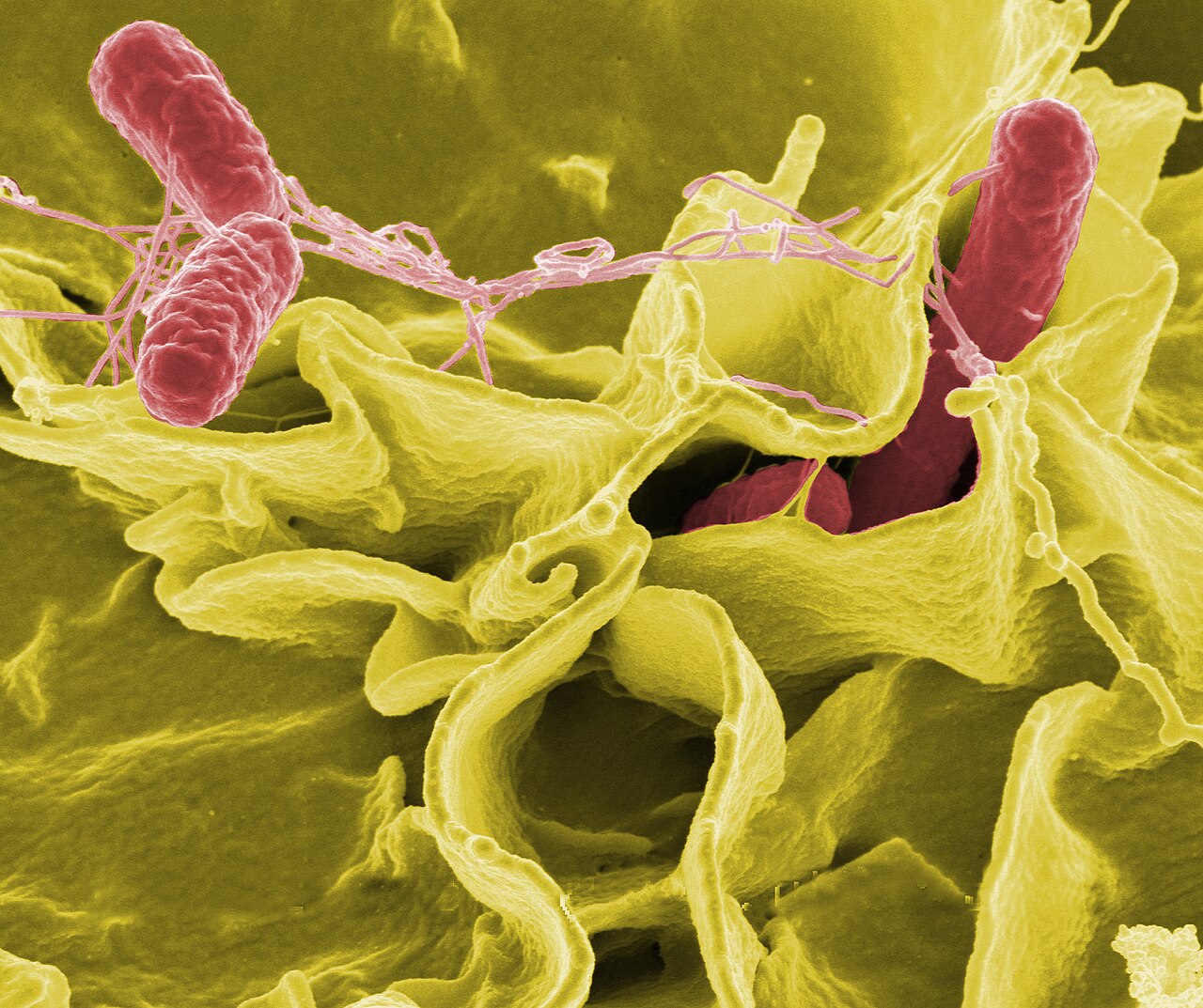
Overview of Salmonella Biology and Transmission
Salmonella is a genus of bacteria that causes infection in the intestines of animals and humans, with most human infections arising from contaminated water or food [5]. The bacteria naturally reside in the intestines of animals and humans and are released through stool, facilitating environmental spread and cross-contamination [5]. This biological mechanism underpins the primary routes of transmission that public health officials monitor during outbreak investigations.
Bacterial Characteristics and Habitat
Salmonella species are facultative anaerobes capable of surviving in diverse environments, particularly within the gastrointestinal tracts of reptiles, birds, and mammals. The bacteria's ability to persist in intestinal tracts means that animal husbandry practices and food processing environments can become reservoirs for contamination. Understanding these ecological niches helps trace contamination pathways from farm to fork.
Pathogenesis and Clinical Presentation
When Salmonella bacteria ingested by humans colonize the intestinal lining, they trigger inflammatory responses that result in salmonellosis, characterized by diarrhea, fever, and abdominal cramps. The severity of illness varies depending on the bacterial strain, the host's immune status, and the quantity of organisms consumed. Most healthy individuals recover without specific treatment, though vulnerable populations may experience complications requiring medical intervention.
Strain Identification and Outbreak Tracking
Salmonella Altona Outbreak Investigation
The Salmonella Altona strain was identified in a multistate outbreak investigation spanning from January 20, 2026, to August 6, 2026, with illnesses reported across multiple jurisdictions. This timeline represents one of the larger documented outbreaks of that year, prompting coordinated response efforts between federal, state, and local health agencies to identify the source and implement control measures.
Genetic fingerprinting of the Altona strain enabled investigators to link cases that shared indistinguishable DNA patterns, a standard method for determining whether illnesses are part of a common source outbreak versus sporadic infections. The extended duration of this outbreak, spanning several months, suggested a persistent contamination source rather than a single-point event, potentially involving distributed food distribution networks.
Salmonella Newport and Hartford in Oyster Samples
In October 2026, Salmonella Newport and Salmonella Hartford were identified in oyster samples during a separate outbreak investigation, highlighting the role of shellfish as a vehicle for bacterial transmission. Oysters, as filter feeders, can concentrate bacteria from surrounding waters, including Salmonella shed into aquatic environments through various routes. This finding underscores the importance of water quality monitoring in shellfish harvesting areas.
The detection of multiple distinct strains (Newport and Hartford) in the same seafood product suggests complex contamination scenarios that may involve multiple source points or environmental conditions favorable to bacterial survival. Public health officials traced consumption patterns and distribution networks to assess risk and issue appropriate advisories.
Historical Context of Salmonella Outbreaks
Evolution of Outbreak Detection Methods
The identification of Salmonella strains in outbreaks has evolved significantly with advances in genomic sequencing and subtyping techniques. Earlier investigations relied on phenotypic characteristics and limited typing methods, whereas modern surveillance employs whole-genome sequencing to distinguish between strains with precision. This technological progression has improved the ability to detect outbreaks earlier and link cases across geographic boundaries.
Notable Historical Outbreaks
Throughout history, Salmonella outbreaks have been associated with diverse food vehicles including eggs, poultry, fresh produce, and now increasingly recognized shellfish products. Each outbreak has contributed to the refinement of food safety protocols, surveillance systems, and consumer advisories. The 2026 outbreaks documented by CDC illustrate ongoing challenges in preventing contamination in complex food systems.
Regulatory Response and Industry Impact
Salmonella outbreaks trigger regulatory actions including recalls, enhanced inspection protocols, and guidance for industry practices. The food industry has implemented various control measures from farm-level interventions to final product testing. These responses, while sometimes burdensome for producers, represent important risk mitigation strategies that have contributed to reduced outbreak sizes over time, though Salmonella remains a persistent food safety challenge.
Transmission Routes and Risk Factors
Foodborne Transmission Pathways
Human infection with Salmonella most commonly occurs through consumption of contaminated foods, particularly raw or undercooked poultry, eggs, and now shellfish products. The bacteria can contaminate food at multiple points during production, processing, and preparation. Cross-contamination in kitchen environments also represents a significant transmission route, especially when proper handwashing and surface sanitization practices are overlooked.
Water and Environmental Contamination
Contaminated water represents another important transmission pathway for Salmonella, particularly in regions with inadequate water treatment infrastructure. Agricultural runoff, sewage overflows, and improperly managed animal waste can introduce Salmonella into water sources that subsequently affect crop irrigation or recreational water exposure. The October 2026 oyster outbreak exemplifies how marine contamination can directly impact food safety.
Population Susceptibility and High-Risk Groups
Certain populations face elevated risk of severe salmonellosis, including infants, elderly individuals, pregnant people, and those with compromised immune systems. These groups are more likely to experience complications such as dehydration, bloodstream infection, or reactive arthritis. Public health messaging often emphasizes extra precautions for these vulnerable populations, including avoiding high-risk foods and ensuring thorough cooking practices.
Diagnosis, Treatment, and Public Health Response
Clinical Diagnosis and Laboratory Testing
Salmonella infection is typically diagnosed through stool culture or other laboratory tests that identify the bacteria. The increasing use of whole-genome sequencing in public health laboratories has improved strain typing and outbreak investigation capabilities. Patients experiencing persistent diarrhea, high fever, or signs of dehydration should seek medical attention for appropriate testing and potential treatment guidance.
Treatment Approaches and Antimicrobial Considerations
Most Salmonella infections resolve without specific antibiotic treatment, as the primary management involves fluid replacement to address diarrhea and dehydration. Antibiotic treatment is generally reserved for severe cases or patients at high risk of complications. The appropriate use of antibiotics is important given concerns about antimicrobial resistance patterns in some Salmonella strains, though most outpatient infections are self-limiting.
Surveillance and Outbreak Investigation Methodology
Public health agencies employ sophisticated surveillance systems that combine clinical case data, laboratory subtyping, and epidemiological traceback to identify outbreak sources. The investigation process typically involves interviewing ill persons about food consumption histories, collecting product samples for testing, and tracing distribution chains. The Altona outbreak investigation spanning January to August 2026 and the October 2026 Newport/Hartford oyster investigation demonstrate the ongoing nature of these surveillance efforts.
Prevention Strategies and Consumer Guidance
Food Handling and Preparation Practices
Effective prevention of Salmonella infection relies on consistent application of safe food handling practices. This includes thorough cooking of poultry and eggs to recommended internal temperatures, avoiding consumption of raw or undercooked animal products, and practicing proper hand hygiene before food preparation and after handling raw ingredients. Separate cutting boards and utensils for raw and ready-to-eat foods help prevent cross-contamination.
Shellfish Safety and Water Quality
The identification of Salmonella in oyster samples highlights the importance of shellfish safety and the role of water quality in preventing contamination. Consumers should purchase shellfish from reputable sources that monitor water quality and adhere to harvesting area restrictions. Individuals with heightened health risks should exercise particular caution with raw shellfish consumption, as filter-feeding shellfish can concentrate pathogens from their environment.
Public Health Advisories and Staying Informed
During active outbreak investigations, public health agencies issue advisories regarding specific products, regions, or food types implicated in outbreaks. Consumers can stay informed through official channels including public health department websites, FDA alerts, and CDC outbreak updates. Prompt recognition of symptoms and timely medical consultation remain important components of individual and community health protection strategies.
Genomic Analysis and Strain Differentiation
Whole Genome Sequencing Applications
Whole genome sequencing has revolutionized Salmonella outbreak investigation by providing unprecedented resolution for strain differentiation. This technology allows public health officials to distinguish between closely related strains and determine whether cases are connected through a common source. The ability to analyze genetic relatedness has proven invaluable in investigating the Altona outbreak and identifying the Newport and Hartford strains in oyster samples during the October 2026 investigation.
Pattern Analysis and Epidemiological Linkage
Genomic data analysis enables the identification of genetic patterns that link clinical isolates from different patients, helping to establish outbreak scope and transmission dynamics. By comparing sequence types across geographic regions, investigators can determine whether outbreaks are geographically dispersed or localized. This analytical approach has become standard practice in modern foodborne disease surveillance.
Implications for Food Safety Policy
The increasing reliance on genomic surveillance has implications for food safety policy and regulatory frameworks. As sequencing capabilities become more widespread and cost-effective, regulatory approaches may evolve to incorporate genomic data into risk assessment and intervention decisions. The 2026 outbreak investigations provide contemporary data points for evaluating the effectiveness of current surveillance and response systems.
Ecological and Environmental Perspectives
Animal Reservoirs and Human-Animal Interaction
Salmonella bacteria naturally inhabit the intestinal tracts of numerous animal species, creating persistent reservoirs that can human populations through various exposure routes. Agricultural settings, petting zoos, and household pets can all serve as sources of transmission. Understanding the ecological dynamics of Salmonella maintenance in animal populations is essential for developing comprehensive control strategies that address both foodborne and non-foodborne transmission pathways.
Environmental Persistence and Survival
Salmonella can survive in environmental conditions for extended periods, particularly in moist environments and soil. The bacteria's ability to persist contributes to long-term contamination risks in agricultural fields, processing facilities, and domestic settings. Environmental factors such as temperature, pH, and moisture levels influence bacterial survival rates, informing storage and handling recommendations designed to minimize risk.
Water Quality and Shellfish Ecosystems
The detection of Salmonella Newport and Hartford in oyster samples during October 2026 underscores the interconnectedness of water quality and shellfish safety. Oysters and other filter-feeding shellfish serve as biological indicators of marine environmental health, concentrating pathogens present in surrounding waters. This relationship highlights the importance of comprehensive water quality monitoring programs that protect both shellfish harvesting areas and consumers of shellfish products.
International Dimensions and Global Health
Global Distribution and Cross-Border Spread
Salmonella represents a global health concern with outbreaks occurring across international borders, particularly in an era of globalized food trade. The movement of food products across countries can facilitate the spread of bacterial strains beyond their original geographic context. International collaboration through organizations such as the WHO and FAO supports coordinated surveillance and response efforts that transcend national boundaries.
Comparative Burden and Public Health Priority
Salmonellosis contributes significantly to the global burden of foodborne disease, with millions of cases estimated annually. The disease disproportionately affects resource-limited settings where surveillance capacity may be constrained and food safety infrastructure less developed. Developed nations with robust surveillance systems, such as those documented in the 2026 CDC investigations, benefit from enhanced detection capabilities that may reveal higher case counts than are apparent in regions with less comprehensive monitoring.
One Health Approach Considerations
The One Health framework recognizing the interconnectedness of human, animal, and environmental health is particularly relevant to Salmonella control efforts. Integrated approaches that address transmission across these domains can yield more effective outcomes than sector-specific interventions. The 2026 outbreak investigations exemplify how human case data, animal reservoir data, and environmental samples must be considered collectively for comprehensive risk assessment.
Emerging Research and Future Directions
Vaccine Development and Alternative Controls
Ongoing research explores vaccine candidates for Salmonella that could protect both animal populations and humans, potentially reducing the reservoir of infection at its source. Additionally, alternative control strategies such as probiotic competition, phage therapy, and enhanced breeding selection for resistance are under investigation. These innovations could complement existing food safety measures and provide new tools for outbreak prevention in future decades.
Advancing Surveillance Methodologies
The field of foodborne disease surveillance continues to evolve with technologies such as metagenomics, artificial intelligence-driven pattern recognition, and real-time data sharing platforms. These advances promise to shorten the time from outbreak detection to source identification, potentially reducing the number of illnesses associated with each event. The successful application of these technologies in the 2026 Salmonella investigations demonstrates their growing practical value.
Public Education and Behavior Change
Effective public health communication remains crucial for translating surveillance data into actionable consumer guidance. Research into risk perception, behavioral factors, and communication strategies informs the development of more effective educational materials. As new outbreak patterns emerge, such as the shellfish-associated detections of 2026, messaging must adapt to address evolving risk landscapes while maintaining emphasis on fundamental prevention practices.