
Overview
The Basic Law of Saudi Arabia designates the defense of Islam as a citizen's duty [2]. Foreigners acquiring Saudi nationality must be Muslim or convert to Islam, and proselytizing or promoting any non-Islamic religion is forbidden per a 2022 law [2]. These provisions reflect the state's deep integration of religious authority into governance and its limitations on religious freedom for both citizens and residents.
Origins and Early Islamic History
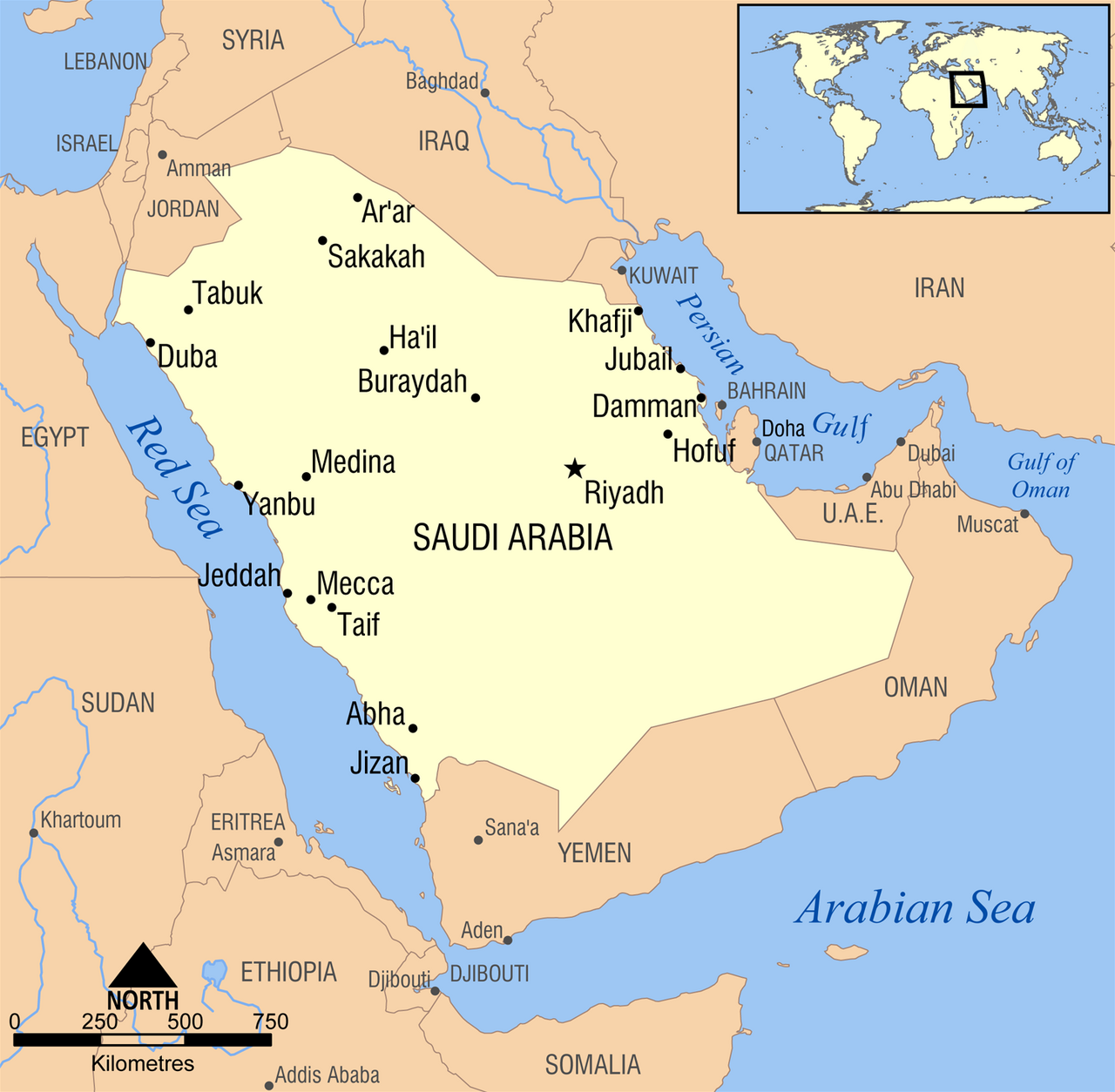
Islam originated in the 7th century in the Hejaz region of what is now Saudi Arabia, with the Prophet Muhammad receiving revelations in Mecca and establishing the umma in Medina [1]. The Kaaba in Mecca, the holiest site in Islam, is located in Saudi Arabia and serves as the qibla (direction of prayer) for Muslims worldwide [2]. From its early centuries, the region became the spiritual center of the Muslim world, hosting the annual Hajj pilgrimage that draws millions of visitors.
The Two Holy Mosques
Mecca's Masjid al-Haram houses the Kaaba, while Medina's Masjid an-Nabawi contains the Prophet's tomb. Both sites are administered by the Saudi government, which uses oil revenues to expand facilities and services for pilgrims. This stewardship has made the kingdom the de facto guardian of Islam's most sacred spaces.
- Hajj pilgrimage origins in pre-Islamic Arabia
- Islamic calendar begins with the Hijra from Mecca to Medina in 622 CE
- Early caliphal periods saw the Rashidun, Umayyad, and Abbasid eras expand beyond the peninsula
Wahhabi Ascendancy and State Formation
In the 18th century, Muhammad ibn Abd al-Wahhab formed a religious alliance with the Al Saud family, creating the ideological foundation of the modern Saudi state [4]. This Wahhabi interpretation of Sunni Islam called for a return to what it viewed as pure monotheism and rejection of innovations (bid'ah). The alliance enabled the Al Saud to consolidate control over the Najd and Hejaz regions, eventually establishing the Kingdom of Saudi Arabia in 1932.
The Hanbali school of jurisprudence became the official legal framework, integrating Wahhabi doctrines into courts and public life [2]. Religious education systems prioritize this interpretation, and the state funds mosques and Islamic institutions worldwide that adhere to Salafi teachings.
Geopolitical Expansion of Wahhabism
Since the 1970s, using oil wealth, the Saudi government has spent tens of billions of dollars exporting its strict form of Islam abroad [2]. This funding supported the construction of mosques, madrassas, and Islamic centers in Africa, Asia, and Europe, spreading the Hanbali-Wahhabi model and influencing local Muslim minorities. The strategy aimed to promote Saudi religious influence and counter revolutionary ideologies during the Cold War.
- 1979 Grand Mosque seizure in Mecca prompted stricter religious enforcement
- Saudi-funded mosques often feature Wahhabi theology and finance
- International Islamic University in Islamabad established with Saudi support
Modern Reforms and Social Changes
Since 2015, Crown Prince Mohammed bin Salman has introduced wide-ranging social reforms as part of Vision 2030 [2]. These include permitting cinemas, concerts, and amusement parks for the first time in decades, and allowing women to drive and attend sporting events [2]. The pace and scope of these changes reflect an effort to diversify the economy and modernize Saudi society.
However, the government retains tight controls on religious expression. The 2022 law prohibiting proselytizing of non-Islamic religions reinforces the state's religious monopoly [2]. Foreigners naturalizing as Saudi citizens must be Muslim or convert, and public practice of other faiths remains restricted [2]. These policies illustrate the distinction between social liberalization and religious conservatism.
Religious Tourism and Economic Diversification
The kingdom continues to invest heavily in Hajj and Umrah infrastructure, aiming to increase annual pilgrim capacity [2]. Simultaneously, entertainment sectors such as NEOM and the Red Sea Project are developed to attract non-religious tourism, reducing historical dependence on oil and religious spending.
- Vision 2030 targets 30 million annual Umrah pilgrims by 2030
- New tourist visas introduced in 2019 for non-religious travel
- Entertainment sector growth as percentage of non-oil GDP
Legal and Educational Framework
The Hanbali school remains the official version of Sunni Islam used in the legal and education systems [2]. Court procedures incorporate Islamic law (Sharia) principles, and school curricula emphasize Islamic history, the Arabic language, and the kingdom's religious heritage. This integration ensures that religious values permeate public institutions from primary education to the judiciary.
The Basic Law declares it the duty of every citizen to defend Islam [2]. This legal underpinning supports the religious police's historical role, although their powers have been significantly curtailed in recent reforms. The relationship between religious authority and state power continues to evolve as social norms shift.
Education System Reforms
Recent curriculum reviews aim to moderate religious content while maintaining core Islamic values [2]. The goal is to produce citizens capable of participating in a global economy without compromising the kingdom's religious identity. Textbook updates reflect attempts to balance traditional teachings with modern educational standards.
- Religious studies compulsory through secondary school
- History textbooks cover Islamic golden age contributions
- English language instruction expanded for workforce development
International Relations and Religious Soft Power
Saudi Arabia's religious outreach has shaped Sunni Islam's global landscape, particularly in Sunni-majority countries [2]. The kingdom's influence extends through the Organization of Islamic Cooperation (OIC), where it often plays a leading role in coordinating on religious matters. This soft power projection complements its political and economic diplomacy.
However, the export of Wahhabi theology has drawn criticism [2]. Some host countries and international observers argue that Saudi funding promotes a rigid, intolerant interpretation of Islam that can fuel sectarian divisions. The 2015 execution of Shia cleric Nimr al-Nimr strained relations with Iran and highlighted sectarian tensions within the broader Muslim world.
Sectarian Dynamics
While the majority of Saudi citizens are Sunni, the country has a significant Shia minority, primarily in the Eastern Province [4]. Historical tensions between Sunni and Shia interpretations have at times led to political and sectarian friction, particularly regarding regional influence between Saudi Arabia and Iran. The government officially follows Sunni Islam, but policies must navigate this sectarian landscape.
- Shia minority estimates range 10-15% of population
- Eastern Province hosts major oil fields and Shia communities
- Regional proxy conflicts often framed through sectarian lens
Pilgrimage Economy and Sacred Sites
The Hajj and Umrah pilgrimages constitute a cornerstone of Saudi's religious economy [2]. These rituals generate significant revenue and employ millions of workers, from logistics to hospitality. The Saudi government's management of these events has evolved from traditional organization to modern, large-scale operations using crowd control technology and health screening.
Beyond the annual pilgrimages, the kingdom has developed other sacred sites into tourist destinations. The Prophet's Mosque in Medina and the historical district of Al-Balad in Jeddah offer insights into Islamic history and architecture. These developments aim to extend the religious tourism season beyond the Hajj period.
Infrastructure Investment
Billions of dollars have been allocated to expand Holy Mosque capacity, improve transportation networks, and enhance pilgrim services [2]. The 2015 stampede at Mina led to safety reforms and the construction of the Jamarat Bridge. Ongoing projects include the Makkah Metro and expansion of the Prophet's Mosque to accommodate growing pilgrim numbers.
| Project | Estimated Cost | Status |
|---|---|---|
| Makkah Metro | $1.2 billion | Operational |
| Mosque Expansion | >$100 billion | Phased completion |
| Hajj Terminal Upgrades | Details classified | Ongoing |
- 2020 pandemic halted international pilgrimages
- 2021 resumption with reduced capacity and health protocols
- Digital platforms for pilgrim registration and guidance