
Overview and Geographic Span
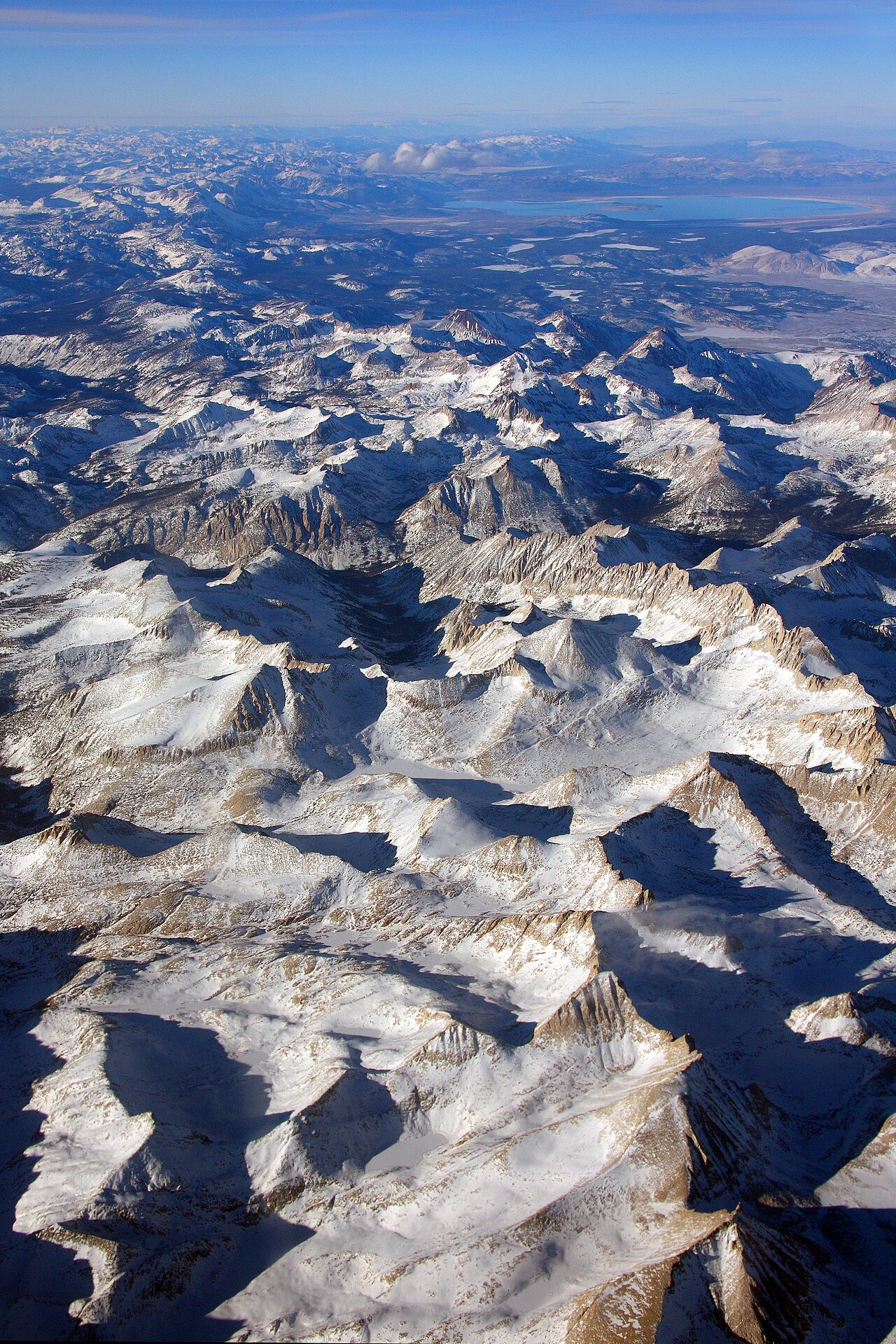
The Sierra Nevada forms a prominent north-south trending mountain range along the eastern edge of California, extending more than 250 miles from the Mojave Desert in the south to the Cascade Range in the north where California meets Oregon. This geographic spine defines much of the state's eastern boundary and creates a dramatic transition between the Central Valley lowlands and the Basin and Range province to the east. [3]
Northern and Southern Extents
The Sierra Nevada captures and stores water from winter snowfall that accumulates throughout the cold months, releasing it gradually through spring and summer melt. This natural storage system is critical for California's water supply, with major rivers including the American, Feather, Yuba, and Stanislaus all originating in the range. The snowpack typically reaches maximum depth in April, providing the summer water base that supports agriculture, municipalities, and hydroelectric generation across the state. [3][1]
Water Collection and Storage
Geological Formation and Physical Features
The granitic and metamorphic rocks of the Sierra Nevada contain deposits of gold, silver, and other minerals that sparked the mid-19th century gold rush. While modern mining operations are more regulated and limited, the historical extraction left lasting impacts on the landscape, including tailings piles, abandoned mines, and altered watersheds. The mining legacy also shaped settlement patterns and infrastructure development that continues to influence the region today. [3][1]
Mineral Resources and Mining Legacy
The California Gold Rush Era
The gold rush generated tremendous wealth for a few while providing economic opportunity for many others, stimulating the development of agriculture, manufacturing, and transportation infrastructure to support the growing population. The influx of diverse peoples including immigrants from Europe, Latin America, China, and other regions created complex social dynamics and contributed to California's reputation as a place of opportunity and diversity. The economic foundation laid during this period supported California's growth into the most populous U.S. state. [3][1]
Economic and Social Consequences
Giant Sequoias and Biodiversity
The sequoia forest ecosystem supports diverse wildlife including black bears, Pacific fishers, spotted owls, and various amphibian species that depend on the moist, shaded conditions of these high-elevation forests. Understory plants such as huckleberry, rhododendron, and wildflowers provide food and cover for numerous animal species. The complex structure of old-growth forests creates vertical habitat layers that support biodiversity at multiple levels, from canopy-dwelling species to ground-dwelling organisms. [3]
Associated Wildlife and Plant Communities
Water Resources and Power Generation
Major California cities including San Francisco, Los Angeles, and San Diego depend on Sierra Nevada water supplies delivered through aqueducts and pipeline systems. The State Water Project and Central Valley Project are the two largest water delivery systems that transport Sierra Nevada runoff to urban consumers. Water management decisions in the range directly affect tap water availability, drought resilience, and the cost of water services for millions of residents across the state. [3][1]
Urban Water Supply Networks
Climate Change and Modern Challenges
Competing demands for Sierra Nevada water among agricultural, urban, environmental, and tribal interests have intensified as water availability becomes more uncertain. Legal frameworks governing water rights, including the prior appropriation doctrine and recent tribal water settlements, shape how water is allocated during drought and surplus years. These policy debates often pit different stakeholder groups against each other while also recognizing the range's fundamental importance to California's long-term water security and ecological health. [3]
Water Rights and Policy Conflicts
Recreation and Public Access
Highway 395, Highway 89, and other scenic routes provide vehicle access to spectacular Sierra Nevada viewpoints including Yosemite Valley, Mammoth Lakes, and the Eastern Sierra. These routes allow visitors with limited hiking ability to experience the range's grandeur from comfortable vantage points. Scenic overlooks, visitor centers, and interpretive signage along these corridors educate travelers about the range's geology, ecology, and human history while managing traffic flow and resource protection. [3]
Scenic Byways and Viewpoints
Cultural Heritage and Indigenous Presence
Modern land management in the Sierra Nevada increasingly involves partnerships between tribal nations, federal land management agencies, and state organizations. These collaborations incorporate traditional ecological knowledge about fire management, water conservation, and species protection with scientific research and monitoring. Tribal co-management of areas such as Yosemite National Park and the establishment of tribal cultural centers and interpretive programs reflect growing recognition of Indigenous stewardship rights and contributions to range conservation. [3]
Contemporary Tribal Partnerships
Conservation and Management Efforts
Conservation organizations and government agencies continue to acquire and protect land within the Sierra Nevada to prevent development, preserve critical habitats, and expand protected areas. Land protection tools include easements, purchases, designations of wilderness areas, and additions to existing national parks and national forests. These protections ensure that future generations can experience the range's natural beauty, biological diversity, and recreational opportunities while maintaining the ecological functions that support broader California interests. [3][5]
Land Protection and Acquisition
Comparative Context and Regional Significance
Looking forward, the Sierra Nevada faces interconnected challenges of climate change, water scarcity, wildfire risk, and growing recreational pressure that will require innovative management approaches and sustained investment. Success will depend on integrating scientific research, traditional ecological knowledge, community engagement, and policy flexibility to adapt to changing conditions while maintaining the range's core functions and values. The next decades will likely determine whether the Sierra Nevada can continue to serve as California's water tower, biodiversity stronghold, and recreational destination for generations to come. [3]