
Defining the Genre and Its Dual Roots
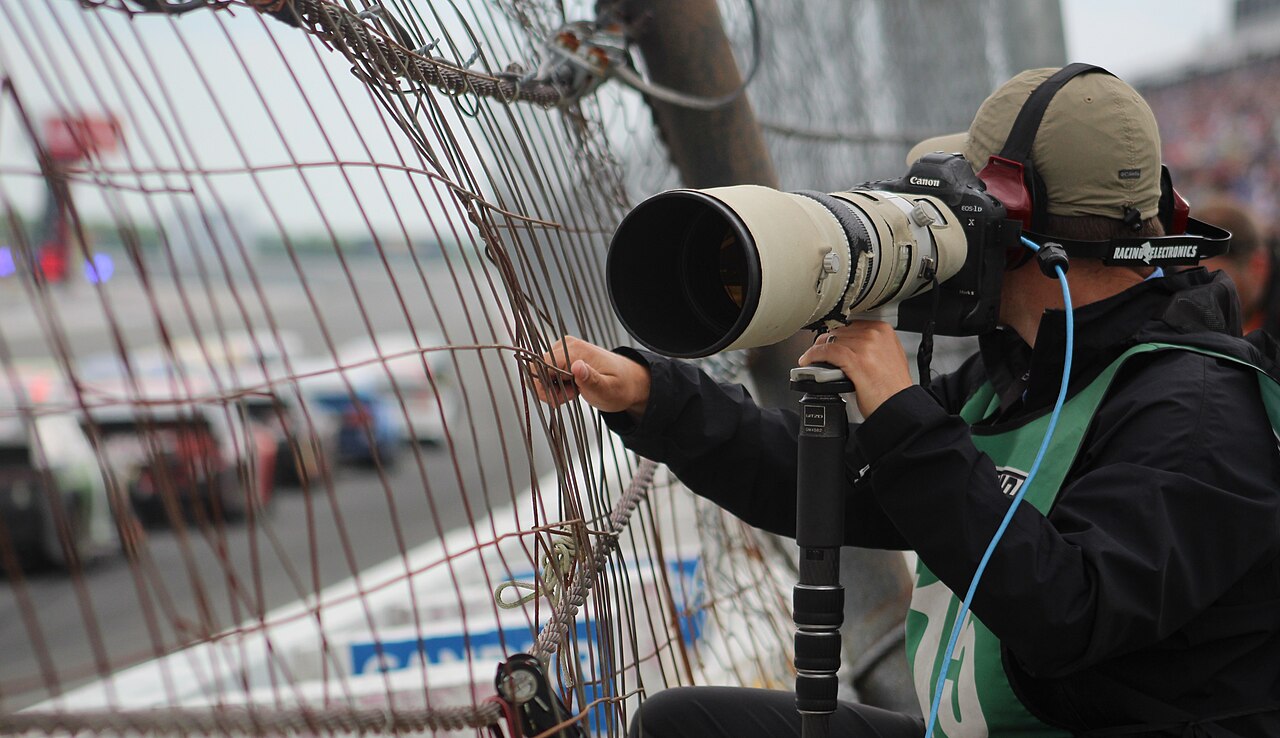
Sports photography is a genre of photography that covers all types of sports [1], functioning simultaneously as a branch of photojournalism and vernacular photography. Professional sports photography emerged as a branch of photojournalism, serving editorial purposes for newspapers, wire agencies, and sports magazines [1]. Meanwhile, amateur captures such as photos of children playing association football constitute a branch of vernacular photography, documenting everyday athletic activity outside formal media channels [1]. This dual origin establishes the field's broad scope.
Editorial vs. Vernacular Practice
The main application of professional sports photography is for editorial purposes [1], meaning images are produced to accompany news reporting, match reports, and feature articles. Amateur sports photography operates independently of editorial mandates, often captured by parents, enthusiasts, or local documentarians. The distinction determines workflow, distribution channels, and the intended public reach of the resulting images.
Historical Evolution of Coverage
Early sports photography was limited by bulky equipment and slow film speeds, restricting coverage to posed action shots. The transition to digital single-lens reflex and mirrorless systems expanded what could be captured in real time. This historical shift from staged to candid action defines the genre's modern identity.
Professional sports photographers typically work for newspapers, major wire agencies, or sports magazines [1], establishing a clear institutional pathway for aspiring image-makers. These outlets prioritize images that convey match outcomes, athlete emotion, and decisive moments that drive news cycles. The symbiotic relationship between photographers and media organizations ensures that significant sporting events are visually documented for posterity.
Equipment and Technical Foundations
Dedicated sports photographers rely on digital single-lens reflex (DSLR) or mirrorless cameras with high continuous shooting speeds [1] to capture fleeting athletic movements. The ability to shoot dozens of frames per second is essential for freezing split-second action such as a ball-contact or a game-winning play. This technical requirement separates sports photography from general photography genres.
Lens Selection and Focal Length Range
Interchangeable lenses ranging from 14mm to 400mm or longer in focal length are used [1] to accommodate different sporting scenarios. Wide-angle lenses capture team formations and crowd reactions, while telephoto lenses isolate athletes and compress perspective for dramatic close-ups. The versatility of lens selection allows a single photographer to cover multiple disciplines within one event.
Remote and Specialized Capture Systems
Remote cameras are used to capture shots from angles and locations that were previously impossible [1], including positions inaccessible to human operators. Drone photography offers a unique aerial perspective, adding depth and drama to sports photography [4]. These systems are particularly useful in sports with limited access or dangerous conditions [4], such as high-speed racing or extreme winter events. The deployment of remote equipment expands the visual vocabulary available to sports image-makers.
Mirrorless cameras are gaining momentum in sports photography due to superior speed, enhanced video capabilities, and improved shooting rates [4]. The technological advantages of mirrorless systems—including faster autofocus readout and more compact form factors—make them increasingly attractive to working professionals. This shift represents a significant evolution from the DSLR dominance that defined the early digital era.
Artificial Intelligence and Computational Advances
Artificial Intelligence is set to revolutionize sports photography through auto-tagging photos with metadata and identifying key moments [4]. Machine learning algorithms can analyze continuous burst sequences, select the sharpest and most compositionally strong frames, and automatically categorize images by sport, athlete, or action type. This automation reduces the post-production workload for photographers covering large events.
Metadata and Workflow Efficiency
AI-driven auto-tagging streamlines the process of organizing thousands of images from a single competition. By automatically applying relevant keywords and detecting significant events—such as a goal, a record-breaking performance, or a celebration—photographers can locate specific frames without manual review. This efficiency is critical for deadline-driven editorial environments.
Real-Time Analysis and Instant Highlights
Beyond post-capture tagging, AI enables real-time analysis during live events, identifying and flagging decisive moments as they unfold. This capability supports the production of instant highlight reels and social media content, meeting the demand for immediate visual consumption. The integration of computational photography with live broadcasting represents a new frontier for the discipline.
The convergence of AI and sports photography enhances both the creation and distribution of images, but it also raises questions about authorship and the role of the human photographer in an increasingly automated workflow.
360-Degree, VR, and Immersive Formats
360-degree and VR photography allows fans to experience the game from the athlete's perspective [4], transforming how sports imagery is consumed. These immersive formats place the viewer within the sporting environment, offering perspectives that traditional two-dimensional photography cannot replicate. The technology creates a sense of presence and spatial context around key actions.
Production Challenges and Equipment
Capturing 360-degree sports action requires specialized rigs, multiple synchronized cameras, and careful stitching workflows to avoid visible seams during fast movement. The technical demands of immersive sports photography are greater than traditional approaches, requiring planning for lens overlap and exposure consistency across multiple frames. Despite these challenges, the format is gaining traction in high-profile events.
Audience Engagement and Distribution
Immersive imagery is distributed through VR headsets, mobile apps, and web-based platforms, expanding the ways audiences interact with sports content. The format is particularly effective for sports where environment and movement are integral to the experience, such as cycling, skiing, or motor racing. As distribution technology improves, 360-degree sports photography is likely to become a standard component of sports media packages.
The rise of immersive formats coincides with broader industry shifts toward digital delivery and interactive media, signaling a transformation in how sports stories are visually told.
High Dynamic Range and Extreme Motion Capture
High Dynamic Range (HDR) photography is becoming more prevalent in sports, capturing a wider range of light and detail [4]. Sporting environments often feature extreme contrast—bright stadium floodlights against shadowed stands or outdoor daylight with deep shadows. HDR techniques preserve detail in both highlights and shadows, resulting in images that more closely represent the visual experience of being present at the event.
Technical Implementation in Live Sports
HDR sports photography typically involves bracketing exposures and merging multiple frames in post-production, a process that can be challenging during live events with moving subjects. Some modern cameras offer in-body HDR modes that capture and combine exposures sequentially, reducing the risk of subject movement between frames. The technique is especially valuable for indoor arenas and evening outdoor events.
Visual Impact and Viewer Experience
The increased detail range contributes to a more immersive and realistic viewing experience, particularly when images are published on high-dynamic-range displays. Viewers can see the texture of athlete uniforms, the expression on faces, and the geometry of the playing surface simultaneously. This technical capability elevates the storytelling power of sports imagery.
As display technology advances broadly, HDR sports photography ensures that published images remain visually compelling and technically accurate across a variety of viewing devices.
Slow Motion, Frame Rates, and Detail Revelation
Super slow-motion shots are possible with high-frame-rate cameras, revealing details the human eye would otherwise miss [4]. Cameras capable of 1000 frames per second or more can capture the instant of ball impact, the flex of a racket, or the precise moment of a foot-strike with extraordinary clarity. This capability is used both for artistic purposes and for technical analysis in sports broadcasting.
Broadcast and Coaching Applications
In television graphics, slow-motion replay is a standard feature that allows commentators to dissect tactical decisions and highlight technical execution. Coaches also use high-frame-rate footage to analyze athlete biomechanics, identifying areas for improvement in technique. The same source footage serves multiple purposes across media and training contexts.
Ethical and Practical Considerations
The use of extreme slow motion raises questions about the relationship between captured time and perceived reality. While the technical capability exists to stretch moments indefinitely, the ethical use of such footage depends on context and intent. In journalism, slow motion must be clearly labeled as replay to avoid misrepresenting the speed of live action.
The ability to reveal hidden details through high-frame-rate capture underscores the technical sophistication required of modern sports photographers and videographers.
Social Media, Instant Sharing, and the News Cycle
Social media integration and instant sharing capabilities are becoming increasingly important in sports photography [4]. The speed at which images can be transmitted from the field to global audiences has accelerated dramatically with wireless file transfer protocols and satellite uplinks. Photographers must now consider not only the editorial publication but also the immediate social media release of key images.
Platform-Specific Formatting and Aspect Ratios
Different social platforms favor different image specifications—vertical video for TikTok and Instagram Reels, square crops for feed posts, and wide landscapes for Twitter headers. Sports photographers adapt their composition and cropping strategies to meet these platform requirements without losing the essential visual impact of the original frame. This dual-output workflow has become a standard expectation.
Viral Moments and Cultural Amplification
The most shared sports photographs often capture unexpected emotional expressions, celebratory gestures, or dramatic backdrop elements that resonate beyond the sport itself. These viral images can shape narratives about athletes, teams, and competitions, extending the reach of a single frame far beyond its original publication context. The cultural amplification effect makes sports photography a powerful tool for image-making in the digital age.
The pressure to produce shareable content in real time influences shooting decisions, framing choices, and the prioritization of certain moments over others during live competition.
Sustainability, Digital Delivery, and the Future Workflow
Sustainability in sports photography is moving towards energy-efficient technologies and digital delivery of images [4]. The transition from film to digital reduced chemical waste, but the increasing file sizes of high-resolution raw files and the energy demands of data processing present new environmental considerations. Photographers and agencies are exploring ways to reduce carbon footprint through efficient workflow design, cloud-based delivery, and equipment lifecycle management.
Energy-Efficient Hardware and Practices
Modern mirrorless cameras and solid-state storage solutions consume less power than their film and early digital predecessors. Battery technology improvements allow for longer shooting sessions on a single charge, reducing the need for disposable power packs on location. Additionally, the shift toward tethered shooting and direct cloud uploads minimizes the need for physical media transport.
Digital Delivery and Remote Distribution
The industry standard for image delivery has shifted from physical transmission via courier to digital upload over high-speed connections. Photographers can now send select images to editors within minutes of capture, regardless of geographic location. This immediacy supports the 24-hour news cycle and reduces the logistical carbon cost of transporting storage media.
As environmental awareness grows across creative industries, sustainability practices in sports photography reflect a broader commitment to reducing the ecological impact of visual production.
Major Awards and Global Recognition
The World Sports Photography Awards is a global celebration of sports photography sponsored by Canon [3], serving as one of the most prestigious platforms for recognizing excellence in the field. The competition attracts entries from professional photographers worldwide, spanning all major sports and photographic styles. Winning or being shortlisted at the World Sports Photography Awards represents significant career validation and international exposure.
Category Diversity and Sport Inclusion
Categories in the World Sports Photography Awards include American Football [3], alongside disciplines such as athletics, swimming, team sports, and emerging formats. The breadth of categories reflects the genre's inclusivity and the organizers' effort to represent the full spectrum of global sporting culture. Each category has specific judging criteria that evaluate technical skill, composition, and the ability to convey the spirit of the sport.
Centenary Competitions and Archive Discovery
The ITTF Centenary Photography Awards were created to mark ITTF's centenary in 2026, combining professional competition with archive discovery [3]. This initiative encourages photographers to submit both new work and historical images from ITTF's extensive archives, celebrating the sport's history while recognizing contemporary talent. The dual focus on past and present creates a unique dialogue between generations of table tennis imagery.
The availability of World Sports Photography Awards 2026 winners [3] and the open entries for the 2027 edition with a deadline on 23rd November [3] demonstrates the ongoing relevance and competitive vitality of these recognition programs. These ceremonies not only honor individual photographers but also shape the visual standards and trends within the broader sports photography community.