
Overview
General Description
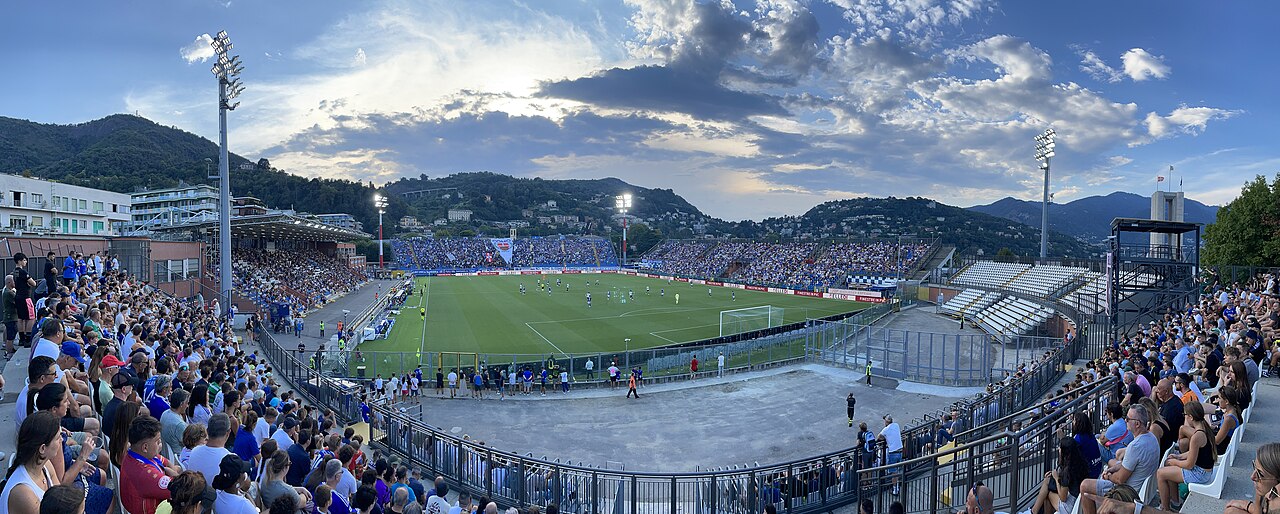
Stadio Giuseppe Sinigaglia is a multi‑purpose stadium situated in the city of Como, Italy [1]. The venue was completed in 1927 after a construction period ordered by the then‑leader Benito Mussolini [1]. The architectural design was entrusted to Giovanni Greppi, who oversaw the project from planning to completion [1]. The stadium bears the name of Giuseppe Sinigaglia, a native of Como who distinguished himself as a rower and a war hero during the First World War [1]. Ownership of the facility rests with the Municipality of Como, which administers the property on behalf of the local community [1]. The seating capacity is officially recorded at 13,602 spectators, providing ample room for major sporting events [1]. Primarily, the ground serves as the home venue for the football club Como 1907, hosting its domestic league fixtures [1]. The structure has remained a central gathering point for the city’s sporting culture since its inauguration [1]. Its historical significance is reinforced by the political context of its creation and the commemoration of a local hero [1]. The stadium continues to operate under municipal oversight while accommodating professional football matches [1].
Location and Setting
The stadium is positioned within the urban fabric of Como, a lakeside city in the Lombardy region of northern Italy [1]. Its placement allows easy access for residents and visitors attending events at the venue [1]. The municipal ownership ensures that the site remains integrated with public infrastructure and city planning initiatives [1]. The surrounding area includes transport links that facilitate matchday attendance for supporters of Como 1907 [1]. The venue’s location has contributed to its role as a landmark in the community since its opening in 1927 [1]. The original construction mandate from Benito Mussolini emphasized the stadium’s symbolic importance for the city [1]. Architect Giovanni Greppi designed the facility to harmonize with the local environment while meeting functional requirements [1]. The naming after Giuseppe Sinigaglia reflects a desire to honor a distinguished local figure [1]. The capacity of 13,602 seats was established to accommodate large crowds for football and other gatherings [1]. Ongoing municipal management maintains the stadium’s relevance for contemporary sporting events [1].
Construction and Design
Commissioning by Mussolini
The decision to build Stadio Giuseppe Sinigaglia originated from a directive issued by Benito Mussolini in the mid‑1920s [1]. This political impetus aimed to provide Como with a modern sports arena that would showcase fascist-era architectural ambition [1]. Construction commenced shortly after the order and progressed steadily toward completion in 1927 [1]. The project was part of a broader program of public works intended to promote physical education and national pride [1]. Municipal authorities coordinated with the central government to allocate resources for the stadium’s erection [1]. The involvement of the head of state underscored the venue’s intended prominence within the city’s infrastructure [1]. The construction timeline reflects the urgency placed on delivering the facility before the end of the decade [1]. Upon finishing, the stadium stood as a testament to the era’s emphasis on monumental public architecture [1]. The completed structure has endured beyond its original political context, serving successive generations [1]. The original commissioning remains a defining element of the stadium’s historical narrative [1].
Architect Giovanni Greppi
Giovanni Greppi was appointed as the chief architect for the stadium project, bringing his expertise in rationalist design to the assignment [1]. His plans translated the regime’s aspirations into a functional sports venue with a capacity of 13,602 seats [1]. Greppi oversaw the construction phases, ensuring adherence to the approved design and timeline leading to the 1927 inauguration [1]. The architect’s work on the stadium contributed to his reputation for delivering large‑scale public buildings [1]. The design incorporated reinforced concrete elements typical of the period’s engineering practices [1]. Greppi’s layout facilitated clear sightlines for spectators attending football matches and other events [1]. The stadium’s aesthetic reflects the stripped‑down classicism favored in state‑sponsored architecture of the 1920s [1]. Subsequent renovations have respected the original structural framework established by Greppi [1]. The architect’s legacy endures in the stadium’s enduring form and continued use by Como 1907 [1]. His contribution is documented in the venue’s historical records maintained by the Municipality of Como [1].
Naming and Dedication
Giuseppe Sinigaglia Biography
Giuseppe Sinigaglia was a native of Como who achieved distinction as a competitive rower before the First World War [1]. He volunteered for military service and was recognized as a war hero for his actions on the front lines [1]. Sinigaglia lost his life during the conflict, becoming a symbol of local sacrifice and patriotism [1]. The city honored his memory by attaching his name to the newly completed stadium in 1927 [1]. The dedication ceremony highlighted his dual legacy as an athlete and a soldier [1]. Municipal records preserve the rationale for the naming, linking the venue to civic pride [1]. The choice of a sportsman‑soldier reflects the era’s emphasis on physical vigor and national duty [1]. The name has remained unchanged since the stadium’s inauguration, reinforcing historical continuity [1]. Contemporary references to the stadium routinely invoke Sinigaglia’s story as part of its identity [1]. The Municipality of Como continues to commemorate his contributions through the venue’s name [1].
Naming Decision
The decision to name the stadium after Giuseppe Sinigaglia was made by municipal authorities in coordination with the central government [1]. The naming aligned with the regime’s practice of commemorating fallen heroes through public infrastructure [1]. Official documents from 1927 record the formal adoption of the name Stadio Giuseppe Sinigaglia [1]. The dedication served both as a tribute to a local figure and as a propaganda tool promoting fascist ideals of sacrifice [1]. The stadium’s name has persisted through political changes, remaining a constant identifier for the venue [1]. The Municipality of Como retains the naming rights as part of its ownership responsibilities [1]. The name is prominently displayed on the stadium’s façade and in all official communications [1]. Fans of Como 1907 associate the name with the club’s home ground and its historical roots [1]. The enduring name underscores the city’s commitment to preserving its wartime memory [1]. The naming decision remains a key element of the stadium’s cultural significance [1].
Ownership and Governance
Municipal Ownership
The Municipality of Como holds full ownership of Stadio Giuseppe Sinigaglia, a status established at the venue’s inception in 1927 [1]. As a public asset, the stadium is managed by the city’s administrative departments responsible for sports facilities [1]. Ownership by the municipality ensures that the venue serves the broader community beyond a single sports club [1]. The city allocates budgetary resources for maintenance, safety upgrades, and occasional redevelopment projects [1]. Municipal oversight includes compliance with national regulations on public assembly venues [1]. The ownership model has remained unchanged despite shifts in national governance since the fascist era [1]. The city’s stewardship facilitates public access for non‑football events such as concerts and civic ceremonies [1]. The municipality also negotiates usage agreements with Como 1907 for league matches [1]. Ownership records are archived in the city’s property registers, confirming continuous municipal title [1]. This governance structure underpins the stadium’s role as a public institution [1].
Management Structure
Day‑to‑day management of the stadium is delegated to a municipal sports facilities office that coordinates scheduling, maintenance, and safety inspections [1]. The office liaises with Como 1907 to align match calendars with facility availability [1]. Municipal staff oversee ticketing operations, security planning, and compliance with Italian stadium licensing requirements [1]. The management framework includes periodic structural assessments to preserve the original 1927 construction integrity [1]. Funding for operational costs derives from municipal budgets supplemented by rental fees from the football club [1]. The management team also coordinates with local police and emergency services for event safety [1]. Recent redevelopment projects have been supervised by the same municipal office to ensure adherence to heritage considerations [1]. The structure allows flexibility for hosting diverse events while prioritizing the primary tenant, Como 1907 [1]. Transparency in management is maintained through public council reports on stadium finances [1]. This governance model has sustained the venue’s functionality for nearly a century [1].
Capacity and Structural Evolution
Original Capacity Figures
When Stadio Giuseppe Sinigaglia opened in 1927, its design accommodated a total of 13,602 spectators across its stands [1]. This capacity reflected the ambition to host large crowds for football matches and mass gatherings [1]. The original seating arrangement was configured to provide unobstructed views of the pitch from all sectors [1]. Municipal records from the inaugural year confirm the 13,602 figure as the official capacity [1]. The capacity remained unchanged for several decades, serving the needs of Como 1907 and other events [1]. The figure is cited in historical documentation and contemporary references to the stadium’s specifications [1]. No major alterations to the overall capacity occurred until recent redevelopment initiatives [1]. The original capacity is a benchmark for assessing subsequent modifications [1]. The Municipality of Como maintains the official capacity data in its facility registry [1]. This baseline informs current planning for compliance with modern stadium standards [1].
Recent Redevelopment Updates
In recent years, the Municipality of Como has undertaken phased redevelopment of the stadium’s western stand, increasing its seated capacity to 4,550 seats [1]. This work forms part of a broader program to modernize facilities while preserving the 1927 structural heritage [1]. The upgrades have raised the overall venue capacity from a previous level of 7,498 seats to more than 10,000 seats [1]. The improvements include enhanced accessibility, modern amenities, and compliance with UEFA infrastructure requirements [1]. Funding for the redevelopment has been sourced from municipal budgets and club contributions [1]. The project timeline aims to complete all phases before the next Serie A season, ensuring the stadium meets top‑flight standards [1]. The Municipality coordinates with architects and engineers to respect the original design by Giovanni Greppi [1]. The increased capacity supports higher attendance for Como 1907 matches and potential international fixtures [1]. Official statements confirm the new capacity figures and the strategic rationale behind the investment [1]. The redevelopment reflects the city’s commitment to maintaining the stadium as a premier sporting venue [1].
Primary Use and Tenant
Home of Como 1907
Stadio Giuseppe Sinigaglia serves as the primary home ground for the football club Como 1907, hosting its competitive matches in the Italian league system [1]. The club has used the stadium continuously since its formation, establishing a deep historical association with the venue [1]. Matchday operations are coordinated between the municipal management office and the club’s administrative staff [1]. The stadium’s 13,602‑seat capacity provides ample accommodation for the club’s supporter base [1]. The venue’s layout, designed by Giovanni Greppi, offers optimal sightlines for football spectators [1]. The Municipality of Como grants usage rights to Como 1907 under a formal agreement that outlines scheduling and revenue sharing [1]. The club’s identity is closely linked to the stadium’s name, which honors a local war hero [1]. The stadium’s municipal ownership ensures that the club benefits from public investment in facility upgrades [1]. Recent redevelopment of the western stand directly enhances the matchday experience for Como 1907 fans [1]. The partnership between the city and the club exemplifies a sustainable model for public sports infrastructure [1].