
Origins and Early Vision (1930s)
Tehelné Pole emerged in the late 1930s as a flagship project for Czechoslovak sport infrastructure. The site was chosen on the outskirts of Bratislava to serve both local clubs and the national team, reflecting the city's growing importance in the First Republic's football landscape [2].
Design and Financing
Architect Kamil Gross drafted the original plans, blending Art Deco aesthetics with functional spectator sightlines. The project carried a price tag of 8 million Czechoslovak korunas, a substantial investment for the era [2].
Construction began in 1939 and the stadium opened on September 27, 1940, marking Bratislava's arrival as a host city for domestic and international fixtures [2].
The venue was conceived not only as a home ground for ŠK Slovan Bratislava but also as a stage for Czechoslovakia's national team, positioning Tehelné Pole at the heart of interwar Central European sport [2].
Record-Breaking Moments and Federal Era Status
The original stadium quickly became a stage for historic matches. Its record attendance of 70,000 was set on May 18, 1957, when Czechoslovakia faced Yugoslavia in a fiercely contested international [2].
Capacity Evolution
During federal times the venue was regarded as the second largest domestic stadium, with official capacity expanding to 50,000 spectators. This made it a barometer for national team popularity and a source of civic pride [4].
Despite the large overall capacity, the stadium featured seating for 13,000 spectators, reflecting the tiered seating arrangements that became standard in the post-war era [4].
The playing surface measured 105 by 68 metres of natural grass, dimensions that met international standards and allowed the venue to host competitive league fixtures and cup finals alike [1].
Renovations and Expansions (1960s–1990s)
1961 Expansion
A major renovation in 1961 added new terracing and upgraded facilities, increasing spectator comfort and safety standards. The expansion reflected the growing demand for matchday amenities during the socialist period [2].
1990s Upgrade
The stadium underwent another renovation in 1990, adapting the structure to post-communist expectations for modern stadium infrastructure. This included improved floodlighting and upgraded changing rooms [2].
Multi-Sport Use
Beyond football, Tehelné Pole hosted athletics events and occasional rugby matches, its versatile layout allowing the grass surface to be temporarily covered for other sports [1].
Closure and Demolition of the 1939 Structure
Decision to Replace
By the late 2000s the 1939 stadium was deemed obsolete for top-tier football. Safety regulations and the need for modern amenities led to the decision to close the venue permanently [2].
Final Days and Demolition
The stadium was closed on November 25, 2009, and the last match was played before a crowd that reflected its enduring place in local memory. Demolition commenced in 2013, clearing the site for a new generation of sport infrastructure [2].
Legacy of the Original
Although the physical structure is gone, the 1939 stadium's record attendance and its role as Czechoslovakia's second-largest domestic venue during federal times remain a benchmark for supporters and historians alike [2][4].
New Stadium Project and Construction
Funding and Contractor
The replacement project carried a price tag of 98.5 million euros, financed through a combination of municipal investment and private partnership. Strabag served as the general contractor, bringing international construction expertise to the Bratislava skyline [1].
Location and Design
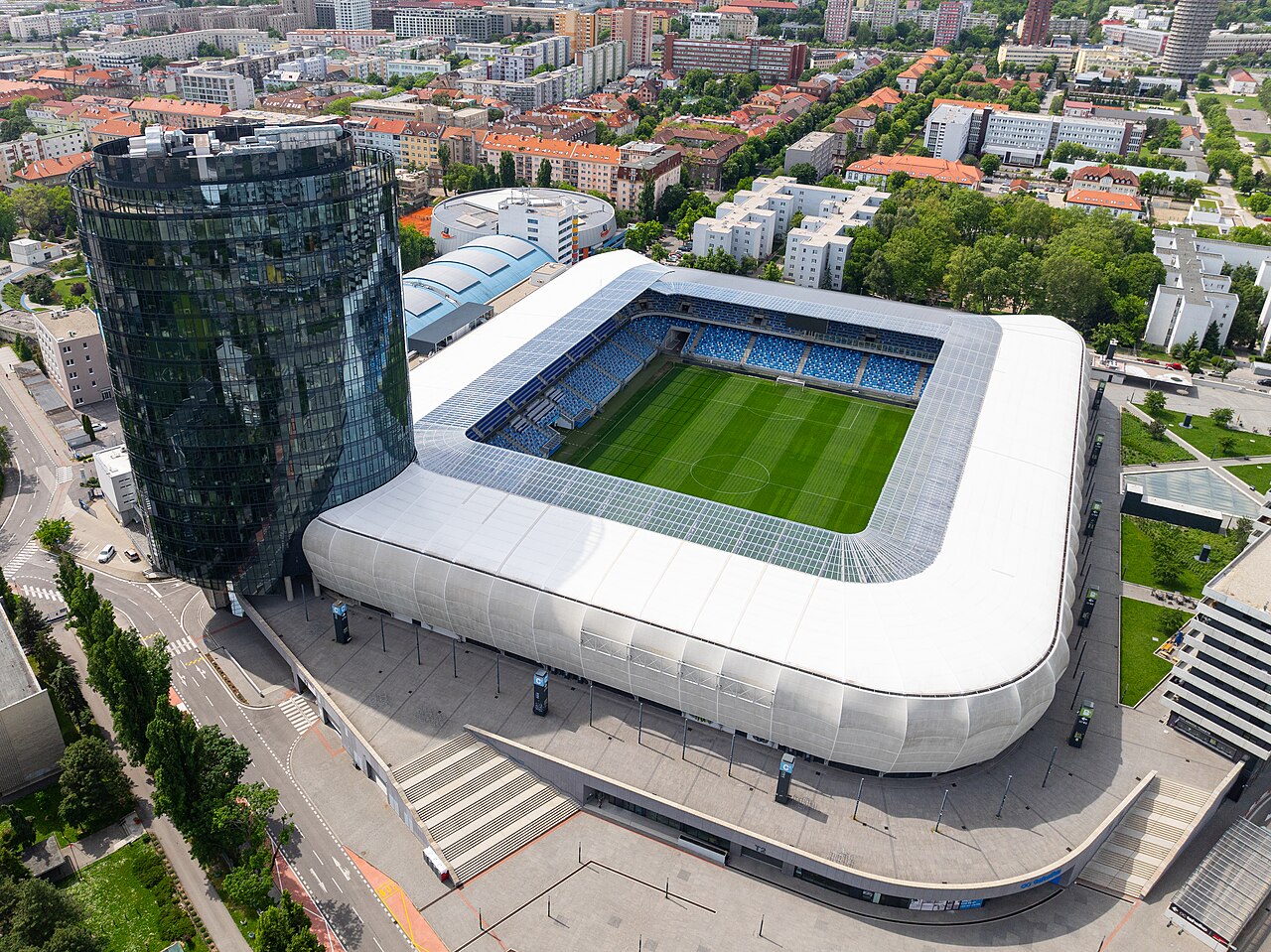
The new venue was erected on the exact footprint of the 1939 original, preserving the historical connection to the site. Architect Karol Kállay led the design, creating a modern bowl that respects the surrounding urban fabric while delivering state-of-the-art facilities [1].
Executive Suites and Amenities
The complex includes 42 executive suites, catering to corporate guests and VIP events. These private boxes complement the 22,500-seat general spectator area, offering a mix of premium and accessible pricing tiers [1].
Technical Specifications of the 2019 Venue
Playing Surface and Dimensions
The new stadium features a natural grass playing surface measuring 105 by 68 metres, the same dimensions as the original pitch. This consistency ensures that player performance and match dynamics remain unchanged despite the modern infrastructure [1].
Capacity and Sightlines
With a certified capacity of 22,500 spectators, the venue balances intimacy for fans with the requirements of international competition. The bowl design provides clear sightlines from every seat, a marked improvement over the tiered stands of the 1939 structure [1].
Surface and Maintenance
The grass surface is maintained to UEFA standards, requiring regular aeration, irrigation, and seasonal reseeding. The modern underground heating system prevents frost damage during winter fixtures, a necessity for Bratislava's climate [1].
Football Operations and Tenants
ŠK Slovan Bratislava Home Ground
ŠK Slovan Bratislava, the most successful club in Slovak football history, made the new Tehelné Pole its permanent home ground ahead of the 2019–20 season. The move reunited the club with its historic stadium site after six years of playing at alternative venues [1].
Slovakia National Team Base
The Slovakia national football team also uses the venue for competitive qualifiers and friendly matches. The stadium's modern facilities, including player lounges and medical rooms, meet the requirements of national team training camps [1].
European Competition Hosting
The new stadium played host to matches during the 2025 UEFA European Under-21 Championship, showcasing its ability to stage continental youth competitions. The event tested the venue's infrastructure against UEFA's strict criteria for pitch quality, security, and fan amenities [1].
Civic Reception and Cultural Significance
Public and Fan Reaction
The transition from the 1939 monument to the 2019 arena sparked mixed emotions among Bratislava's football community. Supporters mourned the loss of the historic stands while embracing the improved safety, accessibility, and modern amenities of the replacement [1][2].
Economic and Urban Impact
The stadium's location at Viktora Tegelhoffa 4 has stimulated surrounding development, including hospitality venues and improved public transport links. On matchdays, the area sees increased foot traffic, benefiting local businesses [1].
Symbol of Bratislava's Sporting Identity
Tehelné Pole remains a symbol of Bratislava's enduring love for football, bridging the city's interwar glory years with its contemporary status in European competition. The venue's evolution mirrors the broader trajectory of Slovak sport from the Czechoslovak era to independence [2][4].
Comparison of Old and New Stadium Features
Capacity and Attendance Trends
The original stadium's capacity of 30,000 at opening grew to 50,000 during federal times, with a record 70,000 in attendance for a single match. The new venue's 22,500 capacity reflects modern safety regulations and the shift toward all-seater stadiums in Europe [1][2][4].
Architectural Evolution
Kamil Gross's 1939 design emphasized monumental stone and Art Deco detailing, while Karol Kállay's 2019 replacement employs glass, steel, and a sleek bowl geometry. Both architects responded to the technological and aesthetic demands of their respective eras [1][2].
Facilities and Accessibility
The original stadium offered basic terracing and limited concession stands. The 2019 complex includes 42 executive suites, improved wheelchair access, modern changing rooms, and an underground heating system for the pitch—amenities that were unthinkable in the mid-20th century [1][2].