
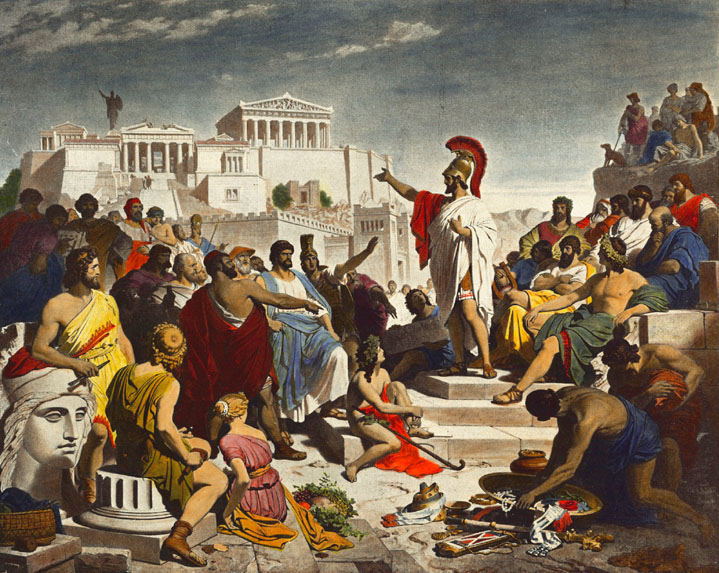
Overview of Classical Antiquity
Classical antiquity is a broad historical span beginning in the 8th century BCE [2]. This extensive period concludes with the decline of the Roman Empire in the 5th century CE [2]. The scope of this era encompasses significant developments in literature and art [2].
Defining the Start of Antiquity
The commencement of classical antiquity is marked by the literary contributions of the ancient Greek author Homer [2]. This literary figure helps establish the starting point for this ancient epoch [2].
The End Point of the Roman Period
The conclusion of classical antiquity is tied to the decline of the Roman Empire, specifically occurring in the 5th century CE [2]. This event serves as a demarcation point for subsequent historical periods [2].
Focus on Classical Greece Timeline
Classical Greece is specifically identified as the time frame stretching from the Persian Wars, which occurred at the start of the fifth century B.C., up until the death of Alexander the Great in 323 B.C. [5].
Key Figures of Classical Greece
Notable individuals associated with Classical Greece include the historian Herodotus, the physician Hippokrates, and the philosopher Socrates [5]. These figures contributed significantly to knowledge in diverse fields during this time [5].
Origins of Democratic Thought
The concept known as demokratia, meaning 'rule by the people,' found its origin within classical Greece [5]. This political innovation represents a major development in ancient governance [5].
The Development of Athenian Democracy
A pivotal moment in Athenian governance occurred in 507 B.C. when Cleisthenes introduced a new system of citizen self-governance called demokratia, following the removal of autocratic tyrants [5].
Eligibility for Governance
Under Cleisthenes' democratic structure in Athens, participation in the ekklesia, which functioned as the sovereign governing body, was restricted to every male citizen who was over the age of 18 [5].
Significance of Athenian Political Structure
The implementation of demokratia in Athens established a significant model of popular rule within the context of classical Greece [5]. This system contrasts sharply with earlier autocratic forms of leadership [5].
The Classical Era in Music: Dating
When examining the Classical era within the field of music, the general timeframe assigned is approximately 1750 to 1800 [4].
Musical Evolution Context
The emergence of the Classical style in music was partly a response to the preceding Baroque Era [4]. This reaction sought a different aesthetic direction in musical composition [4].
Aesthetic Preferences of the Classical Period
The musical style favored in the Classical era emphasized clarity and naturalness [4]. These qualities were often inspired by the artistic and architectural styles found in classical Roman and Greek civilizations [4].
Comparative Aesthetics: Classical vs. Baroque
The Classical music period consciously moved away from the characteristics of the Baroque Era [4]. The Baroque style was noted for being overly complicated and ornate in its musical execution [4].
Influence of Ancient Art on Music
The preference for clear and natural musical styles during the Classical era drew inspiration from the art and architecture of classical Greece and Rome [4].
Shifting Musical Priorities
This shift indicated a change in musical priorities, moving from elaborate ornamentation toward a more accessible and natural expression [4].
Chronological Placement of Classical Greece
The specific boundaries for Classical Greece are set between the Persian Wars at the beginning of the fifth century B.C. and the death of Alexander the Great in 323 B.C. [5].
Context within Antiquity
This Classical Greece period falls within the broader timeline of Classical antiquity, which itself runs from the 8th century BCE to the 5th century CE [2].
Overlap and Distinction
While Classical Greece is a defined subset, its timeline does not encompass the entire span of Classical antiquity, which extends much later into the Roman Empire's decline [2, 5].
Key Intellectual Contributions of Classical Greece
The intellectual life of Classical Greece featured prominent thinkers such as Socrates, the philosopher [5]. Furthermore, the medical knowledge of Hippokrates was established during this time [5].
Historical Record Keeping
Herodotus served as a historian during the Classical Greek period, contributing to the documentation of that era [5].
Political Innovation Summary
The development of demokratia in Athens, formalized by Cleisthenes in 507 B.C., stands as a major political achievement of Classical Greece [5].
Musical Style Characteristics
The music of the Classical era, spanning roughly 1750 to 1800, emphasized clarity and naturalism in its composition [4].
Reactionary Nature of the Style
This style developed partly as a direct counterpoint to the intricate and ornate musical textures prevalent in the Baroque Era [4].
Architectural and Artistic Influence
The aesthetic goals of Classical music mirrored the clear, naturalistic qualities admired in classical Roman and Greek art and architecture [4].
Political Structure in Athens
Cleisthenes instituted a new system of citizen self-governance in Athens in 507 B.C. after the overthrow of autocratic rulers [5].
The Ekklesia's Role
The ekklesia functioned as the supreme governing body within Cleisthenes’ democratic framework in Athens [5].
Citizen Participation Requirements
For Athenian male citizens older than 18, membership in the ekklesia was a right within the democratic system established by Cleisthenes [5].
Delineating the Classical Music Period
The approximate dates for the Classical era in music are established as spanning from 1750 through 1800 [4].
Contrast with Baroque Complexity
The move toward Classical musical styles was partly driven by a desire to move away from the overly complicated and ornate musical characteristics of the Baroque Era [4].
Inspiration from Antiquity in Music
The preference for clear and natural musical styles during this time was influenced by the artistic and architectural ideals of classical Roman and Greek cultures [4].
Scope of Classical Antiquity
Classical antiquity covers a vast span, starting in the 8th century BCE [2].
The Roman Endpoint
The final marker for this ancient period is the decline of the Roman Empire in the 5th century CE [2].
Literary Markers
The ancient Greek author Homer is cited as a figure marking the beginning of classical antiquity through his works [2].
Summary of Classical Greece Period
Classical Greece is precisely defined as the interval between the Persian Wars at the start of the fifth century B.C. and the death of Alexander the Great in 323 B.C. [5].
Key Achievements
This period saw the establishment of demokratia in Athens [5], alongside contributions from Socrates, Hippokrates, and Herodotus [5].
Democratic Implementation
Cleisthenes formalized the democratic system in Athens in 507 B.C., allowing eligible male citizens over 18 to join the ekklesia [5].
Sources & citations
- Classical antiquity - Wikipedia
- Classical antiquity | Dates, Art, Literature, & Map | Britannica
- Classical period (music) - Wikipedia
- 5-The Classical Era (ca 1750-1800) - MUS 101: Introduction to Music - LibGuides at John Jay College of Criminal Justice, CUNY
- Classical Greece - Period, Art & Map | HISTORY