
Origins in Canaanite Culture
The origins of the Phoenicians trace directly back to the Bronze Age Canaanites [1]. Their established cultural practices persisted even after the period known as the Late Bronze Age experienced a collapse [1]. This continuity allowed their distinct cultural threads to thread into the subsequent Iron Age [1].
Geographic Homeland
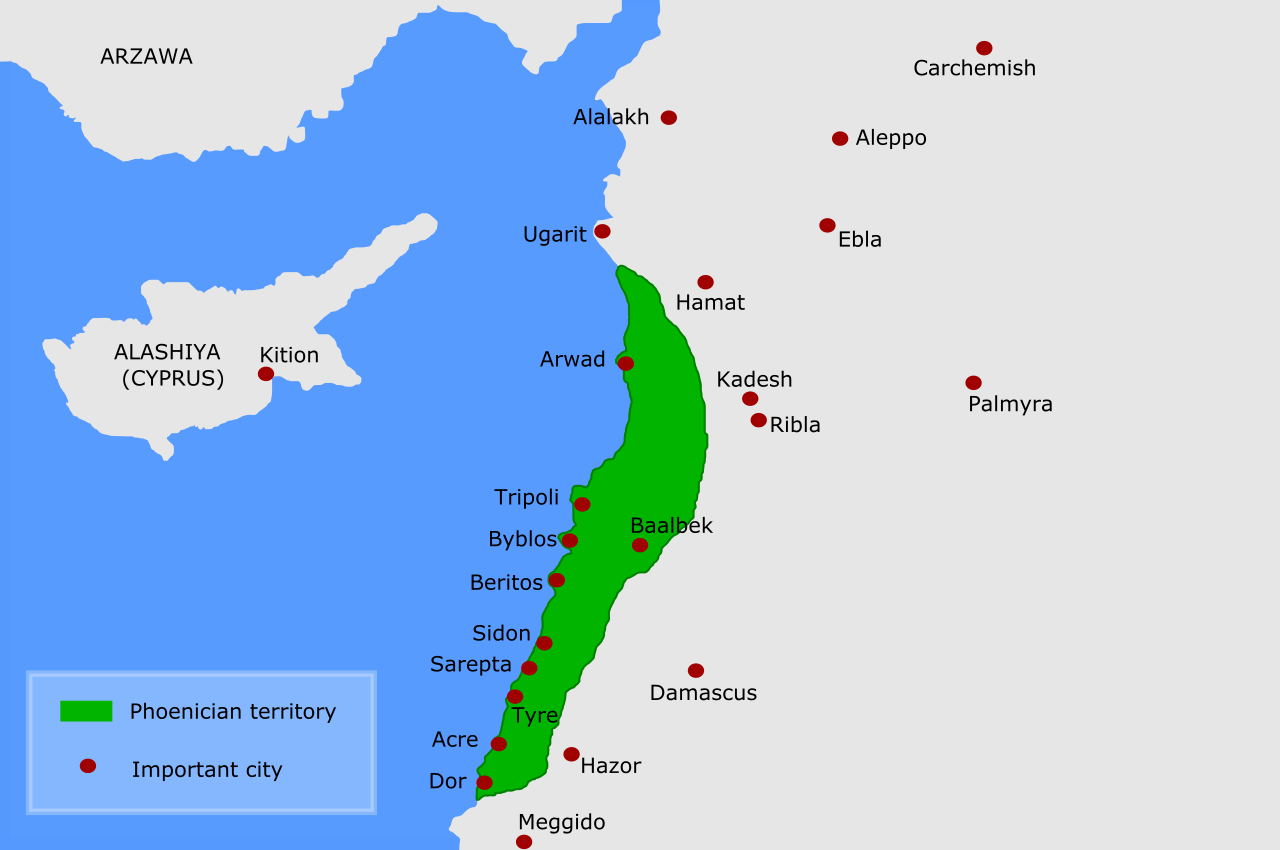
These Semitic-speaking communities were situated within the city-states along the Levantine coast of the eastern Mediterranean [4] [1]. Specifically, their cultural heartland spanned the area from Arwad up to Mount Carmel [1].
Identity and Nomenclature
It is important to note that the term Phoenicia itself is a designation provided by the Greeks, meaning it was an exonym and did not represent a singular, unified identity among the people themselves [1].
Structure of Phoenician Society
Phoenician civilization was not a centralized empire but rather a collection of autonomous, independent city-states [1] [2] [4]. Key urban centers that defined their political and economic life included Tyre, Sidon, and Byblos [1] [2] [4].
City-State Autonomy
Each major city-state maintained a degree of self-governance, focusing on local needs while participating in broader maritime networks [1].
Core Settlements
Byblos, Sidon, and Tyre stand out as principal examples of these independent political and commercial entities within the Phoenician sphere [1] [2] [4].
The Mastery of the Sea
The Phoenicians achieved renown primarily through their exceptional skills in seafaring and commerce [1] [2] [4] [5]. Their maritime capabilities allowed them to construct and maintain an extensive network of trade routes throughout the Mediterranean basin [1] [5].
Trade Network Extent
Their commercial reach was geographically vast, extending across the entire Mediterranean expanse [1] [3] [4] [5].
Peripheral Influence
This influence was not limited to nearby shores; they reached as far as the Maghreb region and the Iberian Peninsula, alongside Cyprus [1] [3] [4] [5].
Chronological Context and Transition
The emergence of the Phoenicians is directly linked to the Canaanites of the Bronze Age [1]. Their cultural resilience allowed their traditions to survive the significant societal disruption known as the Late Bronze Age collapse [1].
Iron Age Continuation
The traditions inherited from the Bronze Age Canaanites continued their evolution into the Iron Age period [1].
Geographic Focus
Their primary area of habitation was along the Levantine coast, specifically in what is now Lebanon [4] [1].
Geographical Scope of Influence
The cultural footprint of the Phoenicians was centered between Arwad and Mount Carmel [1]. However, their trade and political reach far exceeded this core area [1].
Mediterranean Coverage
Their maritime network spanned from Cyprus to the Maghreb and the Iberian Peninsula [1] [3] [4] [5].
Coastal Settlement Base
Their foundational settlements were located in Canaan along the eastern Mediterranean coast [4] [1].
Societal Organization Details
Phoenician life was structured around independent city-states rather than a unified kingdom [1] [2] [4]. This decentralized political model facilitated their extensive trade operations [1].
Key Urban Examples
Byblos, Sidon, and Tyre represent the most prominent examples of these self-governing Phoenician polities [1] [2] [4].
Cultural Continuity
Their cultural heritage was a direct continuation from the Bronze Age Canaanites, surviving major regional upheavals [1].
Economic Drivers: Trade and Seafaring
Seafaring was central to the Phoenician identity and economic success [1] [2] [4] [5]. They established a wide-ranging maritime system connecting diverse regions [1] [5].
Extensive Maritime Network
This network allowed them to engage in extensive trade across the Mediterranean [1] [4] [5].
Global Reach of Commerce
Their commercial influence stretched from Cyprus to the Iberian Peninsula and into the Maghreb [1] [3] [4] [5].
Linguistic and Cultural Markers
The Phoenicians were a Semitic-speaking people inhabiting the Levantine coast [4] [1]. However, the name 'Phoenicia' is a Greek term and did not reflect a single, unified native cultural identity [1].
Semitic Language Group
Their language affiliation places them within the Semitic-speaking populations of the region [4] [1].
Exonym vs. Identity
The Greek naming convention contrasts with the reality that their identity was composed of several independent city-states [1].
Historical Trajectory Summary
Beginning as Canaanites, their traditions persisted through the Late Bronze Age collapse into the Iron Age [1]. Their political structure remained decentralized among powerful city-states like Tyre and Sidon [1] [2] [4].
From Bronze Age to Iron Age
The survival of Canaanite cultural traditions through the Late Bronze Age collapse into the Iron Age marks a key phase of their development [1].
Defining Feature
Their defining characteristic was their mastery of the sea, enabling an expansive trade network across the Mediterranean [1] [5].
Significance in Mediterranean History
The Phoenicians established a profound commercial and cultural presence across the Mediterranean [1] [5]. Their reach spanned from Cyprus to the Iberian Peninsula and the Maghreb [1] [3] [4] [5].
Geopolitical Impact
Their extensive maritime network fundamentally shaped the economic geography of the ancient Mediterranean [1] [5].
Cultural Legacy
While the name is Greek, their cultural persistence from the Canaanite roots into the Iron Age is a notable historical fact [1].