
Overview of the Pittsburgh Steelers Franchise
The Pittsburgh Steelers are a professional American football organization situated in the city of Pittsburgh [1, 4]. This team has been a fixture in the National Football League (NFL) since its founding in 1933 [1]. Their home ground for games is Acrisure Stadium, located within Pittsburgh, Pennsylvania [1, 4].
Team Identity and Affiliations
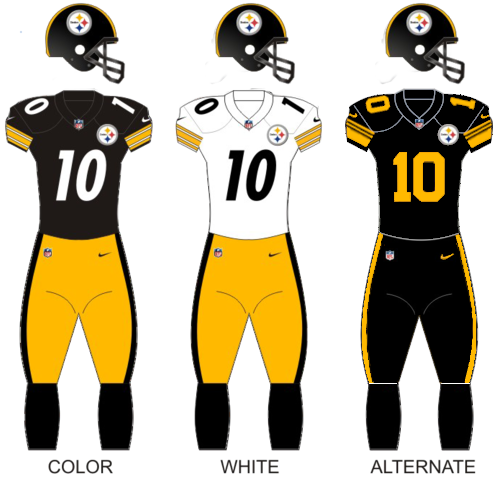
The team proudly displays a color scheme consisting of black, gold, and white [1]. Ownership of the franchise rests with the Rooney family [1]. The team's presence in Pittsburgh is intrinsically linked to the city's industrial heritage, specifically its steel industry [2, 3].
Founding Timeline and Initial Identity
The genesis of the team dates back to July 8, 1933 [1]. Initially, the organization was not named the Steelers; rather, it began as the Pittsburgh Pirates under the leadership of Art Rooney [2, 3]. This early designation reflects the team's initial identity before the significant name change occurred [2, 3].
The Transition to Steelers
A pivotal moment in the franchise's history was the official renaming to the Pittsburgh Steelers in 1940 [2, 3]. This change was deliberately made to acknowledge and reflect the strong connection the city of Pittsburgh held with the steel manufacturing sector [2, 3].
Competitive History and Achievements
The Steelers have achieved notable success throughout their tenure in the NFL [1]. Their championship record includes 25 division championships and 8 conference championships [1]. These accomplishments underscore the team's sustained competitive relevance in the league [1].
Sustained NFL Participation
Since 1933, the Pittsburgh Steelers have maintained their status as an NFL competitor [1]. Their longevity in the league demonstrates a consistent presence in American professional football within the region [1].
Wartime Mergers and Temporary Alliances
During the period of World War II, the team participated in temporary mergers [1]. One such notable arrangement involved a merger with the Philadelphia Eagles in 1943 [1, 2]. This collaboration resulted in a combined entity known as the 'Steagles' [1, 2].
Context of Wartime Football
These temporary mergers occurred within the broader context of World War II, which impacted professional sports operations [1]. The formation of the 'Steagles' highlights the adaptive measures taken by the league during that historical period [1, 2].
Geographical and Stadium Presence
The team's operational base is Pittsburgh, Pennsylvania [1, 4]. Their home venue is Acrisure Stadium, which is situated in Pittsburgh, Pennsylvania [1, 4]. The specific address associated with the team's location is 100 Art Rooney Ave, Pittsburgh, PA 15212, US [4].
Location Specifics
MapQuest confirms the location details for the Pittsburgh Steelers in Pittsburgh, PA [4]. This geographical grounding ties the team directly to the city's infrastructure and community [4].
Ownership and Management Structure
The stewardship of the Pittsburgh Steelers franchise belongs to the Rooney family [1]. This family ownership has been a consistent feature throughout the team's history [1].
Family Legacy in Sports
The Rooney family's involvement signifies a deep, long-term commitment to the team and the city of Pittsburgh [1]. Their ownership structure is a defining characteristic of the franchise's governance [1].
Team Aesthetics and Branding
The official colors representing the Pittsburgh Steelers are black, gold, and white [1]. These colors are integral to the team's visual identity in the NFL [1].
Visual Representation
The combination of black, gold, and white serves as the primary branding element for the team [1]. This aesthetic choice is consistently used across uniforms and team materials [1].
Historical Context of Pittsburgh Industry
The name change to Steelers in 1940 was directly motivated by the city's industrial ties to steel [2, 3]. This reflects a broader socio-economic context of Pittsburgh during that era [2, 3].
Industrial Influence on Sport
The connection between the team's identity and the steel industry provides a unique cultural marker for the franchise [2, 3]. It roots the team not just in sport, but in the history of the city itself [2, 3].
Modern Fan Engagement and Information
Information regarding the Steelers, including news, statistics, and fan community activities, can be found through dedicated platforms like Still Curtain [5]. These resources serve the contemporary fanbase [5].
Accessing Team Data
Fans seeking current data on the Steelers can utilize specialized sports websites [5]. These sites aggregate necessary statistics and community interactions [5].
NFL Participation Details
The Pittsburgh Steelers have been a consistent participant in the National Football League (NFL) since their inception in 1933 [1]. Their participation spans nearly a century of professional American football [1].
League Standing
Their sustained presence in the NFL solidifies their place within the league's history [1]. This longevity is a testament to the team's operational stability within the league structure [1].
Art Rooney's Role in Founding
Art Rooney was instrumental in the initial formation of the team, which began as the Pittsburgh Pirates [2, 3]. His involvement is central to the franchise's early narrative [2, 3].
Early Leadership
Rooney's leadership guided the team from its initial iteration to its eventual identity as the Steelers [2, 3]. This foundational role is documented in the team's history [2, 3].
Stadium Infrastructure Details
Acrisure Stadium is the designated playing venue for the Steelers in Pittsburgh, Pennsylvania [1, 4]. The stadium's location is tied to the city's address details [4].
Venue Location Confirmation
MapQuest provides locational confirmation for the team's base in Pittsburgh, PA [4]. This confirms the physical setting for the team's competitive activities [4].
Summary of Major Team Milestones
Key milestones include the 1933 founding date [1], the 1940 name change to Steelers [2, 3], and the 1943 'Steagles' merger [1, 2]. These events chart the franchise's evolution [1, 2, 3].
Chronological Progression
The team progressed from Pirates to Steelers, navigating wartime changes while maintaining its NFL status [1, 2, 3]. This sequence of events defines its historical arc [1, 2, 3].
Significance in Pittsburgh Culture
The Steelers represent more than just a sports team; their identity is intertwined with Pittsburgh's industrial history via the steel reference [2, 3]. Their presence in the city is a long-standing fixture [1, 4].
Cultural Resonance
The team's history, including the initial Pirates name and the later Steelers designation, mirrors the city's own industrial evolution [2, 3]. This deep local connection is significant [2, 3].