
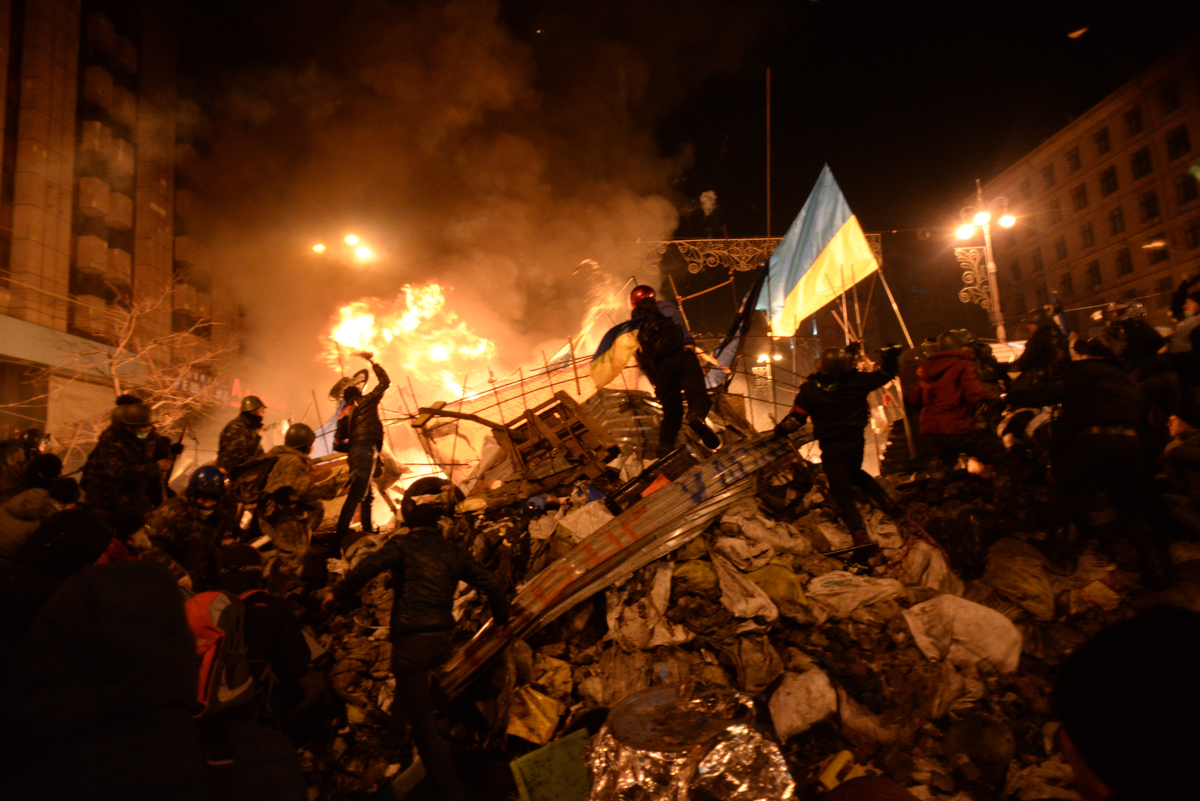
Overview of the Revolution of Dignity
The Revolution of Dignity took place in Ukraine during February 2014 [2] [1]. The period of significant events spanned from February 18, 2014, until February 23, 2014 [1]. This pivotal historical event led directly to the removal of President Viktor Yanukovych [1].
Context of the 2014 Events
The movement was driven by specific political objectives, notably the reinstatement of the 2004 amendments to the Constitution of Ukraine [1]. The protests reflected a significant political shift within the nation [1].
Timeline of Key Demonstrations
The initial actions of the revolution began with a protest march and subsequent clashes on February 18, 2014 [1]. This date marked a critical escalation point for the movement [1].
Events on February 18th
The day of February 18, 2014, was marked by an attack on Maidan [1]. These initial confrontations were central to the trajectory of the revolution [1].
Methods Employed by Participants
The methods utilized by those involved in the revolution were diverse [1]. These approaches included organized protesting, instances of rioting, acts of civil disobedience, and ultimately, insurrection [1].
Nature of the Conflict
The actions taken by participants were not limited to peaceful assembly; they encompassed more confrontational tactics as the events unfolded between February 18 and February 23, 2014 [1].
Core Objectives of the Movement
The primary aims driving the Revolution of Dignity included achieving the removal of President Viktor Yanukovych from power [1]. Furthermore, a key constitutional goal was the restoration of the 2004 amendments to the Constitution of Ukraine [1].
Political Goals Realized
The successful culmination of the revolution resulted in the departure of Yanukovych [1], aligning with the stated objectives of the participants [1].
Historical Recognition of the Site
The location associated with the Revolution of Dignity, near the Alley of the Heavenly Hundred Heroes, has received official recognition [3]. A government decision granted this site the status of a national monument [3].
Significance of Monument Status
This designation underscores the importance of the events that transpired there in Ukrainian national history [3].
Honoring the Fallen Heroes
President Volodymyr Zelenskyy and First Lady Olena Zelenska have publicly honored the memory of Ukrainians who perished during the Revolution of Dignity [4]. This commemoration takes place on the Day of Dignity and Freedom [4].
Commemoration Rituals
The honoring of those who died during the revolution is observed by the President and First Lady on the designated Day of Dignity and Freedom [4].
Impact on Ukrainian Governance
The revolution fundamentally altered the political landscape of Ukraine, leading to a change in leadership [1]. The removal of Yanukovych was a direct outcome of the sustained popular action [1].
Constitutional Restoration
The push to restore the 2004 constitutional amendments represented a demand for adherence to prior legal frameworks within the nation [1].
Chronological Span Detail
The period under review for the Revolution of Dignity is precisely bounded by February 18, 2014, and February 23, 2014 [1]. This timeframe encapsulates the protest march and the initial clashes [1].
Event Concentration
The intensity of the events, including the attack on Maidan, was concentrated within these specific dates [1].
Symbolism of the Alley
The site near the Alley of the Heavenly Hundred Heroes holds national monument status [3]. This location is intrinsically linked to the events of the Revolution of Dignity [3].
National Memory
The recognition of this site by a government decision solidifies its place in the collective memory of the nation [3].
Official Commemorations
President Volodymyr Zelenskyy and First Lady Olena Zelenska participate in honoring the memory of those who died during the Revolution of Dignity [4]. This observance is tied to the Day of Dignity and Freedom [4].
Observance Details
The honoring ceremony is a recognized state acknowledgment of the sacrifices made during the revolution [4].
Scope of the Revolution
The Revolution of Dignity is documented as an event that occurred in Ukraine in February 2014 [2]. Its scope involved significant public demonstrations and political upheaval [2].
Geographic Focus
The events were centered around locations such as Maidan [1], which became a focal point for the protests [1].
Political Outcomes
A primary political outcome was the successful removal of President Viktor Yanukovych [1]. This change was a direct consequence of the revolutionary activities [1].
Constitutional Restoration Outcome
The movement also succeeded in demanding the restoration of the 2004 amendments to the Constitution of Ukraine [1].
Historical Significance
The Revolution of Dignity represents a critical moment in modern Ukrainian history [2]. Its impact is cemented by the national monument status granted to its key site [3].
Legacy of Sacrifice
The memory of those who died is actively preserved and honored by high-ranking officials, such as President Zelenskyy and First Lady Zelenska [4].