
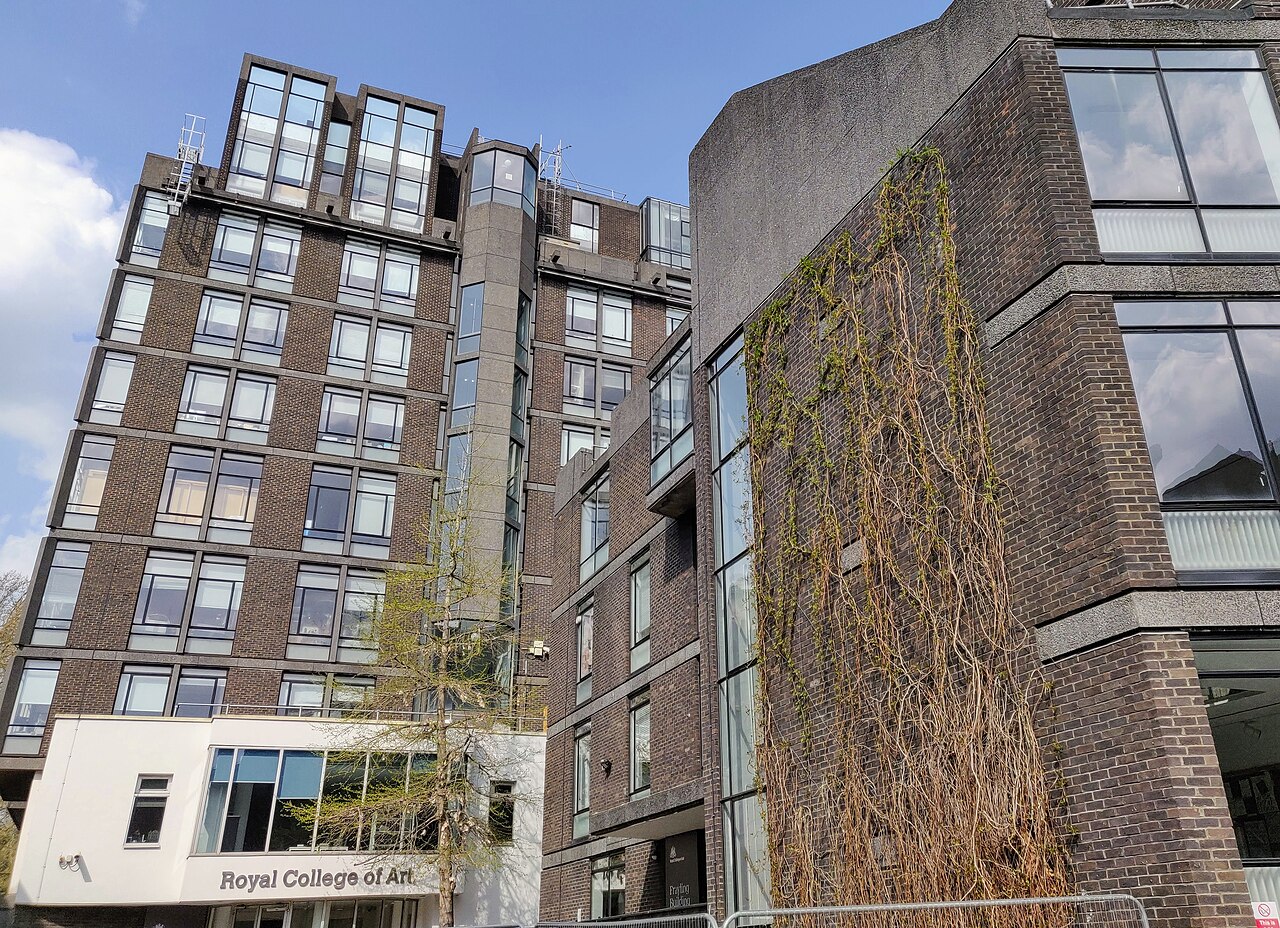
Overview and Institutional Identity
The Royal College of Art (RCA) operates as a public research university situated in London, within the United Kingdom [1,3,4]. Its singular status as the only institution globally dedicated exclusively to postgraduate study in the fields of art and design sets it apart from other universities [1,3,4]. This focus allows the RCA to cultivate advanced, specialized knowledge in creative disciplines [1,3,4].
Global Reach of Postgraduate Studies
The RCA extends its educational opportunities internationally, admitting postgraduate students hailing from more than sixty different nations [1,3,4]. This broad international enrollment underscores the global relevance and appeal of its specialized art and design curriculum [1,3,4].
Campus Locations
The institution maintains several physical locations across London, specifically including campuses in South Kensington, Battersea, and White City [1,3,4,2]. These diverse sites support the varied needs of its postgraduate student body and academic functions [1,3,4,2].
Foundational History and Early Development
The origins of the RCA trace back to 1837, when it was established under the name Government School of Design, also known as the Metropolitan School of Design, located in Somerset House [1,3,4]. This founding marked an early commitment to design education in the UK [1,3,4].
Early Leadership and Relocation
Richard Burchett assumed the role of head of the school in 1852 [1,3,4]. Following this, the school relocated to Marlborough House in 1853 [1,3,4]. The movement toward South Kensington occurred around 1853 or 1857 [1,3,4].
Evolution of Naming and Focus
The institution underwent several name changes, including becoming the Normal Training School of Art in 1857 [3,4] and subsequently being renamed the National Art Training School in 1863 [1,3,4]. During the later nineteenth century, its primary function was centered on teacher training [1,3,4].
Pioneers of the Later Nineteenth Century
The curriculum during the later 19th century was heavily oriented toward preparing educators, as the RCA functioned primarily as a teacher training college [1,3,4]. This period fostered the development of notable artistic figures who passed through the school [1,3,4].
Notable Alumni of the Era
Among the pupils who attended during this time were George Clausen, Christopher Dresser, Luke Fildes, Kate Greenaway, and Gertrude Jekyll [1,3,4]. Their presence highlights the caliber of artistic talent nurtured by the early institution [1,3,4].
Formal Recognition as Royal College of Art
The school acquired the designation Royal College of Art in either 1896 or 1897 [1,3,4]. This formal recognition followed its earlier evolution from a government and national training school [1,3,4].
Mid-Twentieth Century Specialization
A significant shift in the RCA's focus occurred in the mid-twentieth century, marking the formal commencement of teaching in several specialized design areas [1,3,4]. These areas included graphic design, industrial design, and product design [1,3,4].
Diversification of Design Disciplines
The introduction of graphic design, industrial design, and product design broadened the scope of the RCA beyond its earlier teacher training mandate [1,3,4]. This move aligned the institution with evolving industrial and commercial design needs [1,3,4].
Transition to Modern Design Education
This mid-century expansion solidified the RCA's role not just in art, but in applied and industrial design, complementing its core artistic strengths [1,3,4]. This diversification was crucial for its modern academic standing [1,3,4].
Achieving University Status
The RCA attained the status of an independent university in 1967 when it was granted a Royal Charter [1,3,4]. This charter provided the institution with the authority to confer its own degrees [1,3,4].
Implications of the Royal Charter
Receiving the Royal Charter in 1967 was a pivotal moment, transitioning the RCA into a fully autonomous university capable of granting its own qualifications [1,3,4]. This autonomy is key to its modern academic structure [1,3,4].
Modern Research and Teaching Integration
As a public research university [1,3,4], the RCA integrates rigorous research with its specialized postgraduate teaching [1,3,4]. This dual commitment defines its contemporary educational model [1,3,4].
Educational Scope and Student Body
The RCA is recognized globally for its exclusive focus on postgraduate art and design education [1,3,4]. This specialization attracts a highly diverse and internationally engaged student population [1,3,4].
International Student Enrollment
Students enrolling in postgraduate art and design programs at the RCA originate from over sixty different countries [1,3,4]. This vast international representation reflects the global recognition of its educational quality [1,3,4].
Postgraduate Specialization
Its commitment to postgraduate study means the RCA does not offer undergraduate degrees in art or design, maintaining its unique global niche [1,3,4]. This focus ensures deep, advanced learning in creative fields [1,3,4].
Historical Timeline of Key Milestones
The history of the RCA spans from its 1837 founding as the Government School of Design in Somerset House [1,3,4]. Key chronological markers include Richard Burchett becoming head in 1852 [1,3,4] and the move to Marlborough House in 1853 [1,3,4].
Evolutionary Stages
Subsequent developments involved renaming to the Normal Training School of Art in 1857 [3,4] and then the National Art Training School in 1863 [1,3,4]. The acquisition of the Royal College of Art name occurred in 1896 or 1897 [1,3,4].
Modernization and Autonomy
The mid-twentieth century saw the introduction of graphic, industrial, and product design [1,3,4], culminating in the 1967 Royal Charter which granted it independent university status [1,3,4].
Significance in Design Education
The RCA's significance lies in its unique, postgraduate-only commitment to art and design [1,3,4]. Its evolution from a teacher training college to a globally recognized research university demonstrates adaptability in educational focus [1,3,4].
Impact on Design Fields
The integration of graphic, industrial, and product design in the mid-twentieth century cemented its role in shaping modern design practices [1,3,4]. This focus supports contemporary creative industries [1,3,4].
Global Academic Standing
As a public research university with international reach spanning over 60 countries [1,3,4], the RCA maintains a high standing in global higher education [1,3,4]. Its independent degree-granting power since 1967 reinforces this status [1,3,4].