
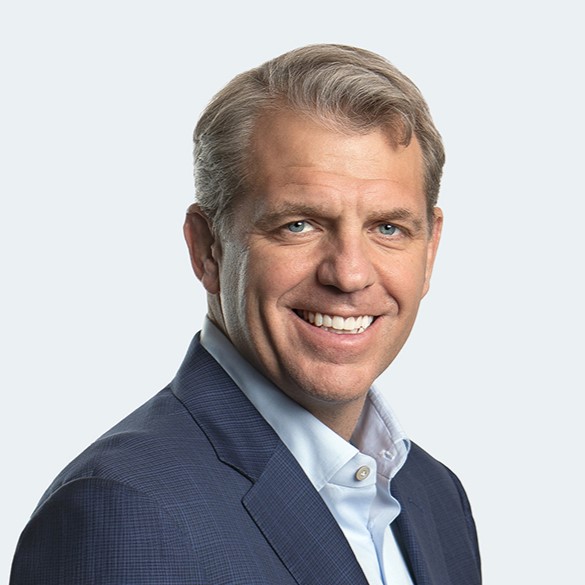
Family Roots and Early Years
Todd Boehly entered the world on September 20, 1973, in Fairfax County, Virginia, a region known for its proximity to the nation’s political hub. His lineage traces back to Germany, where his grandparents emigrated, giving him a bicultural heritage that later informed his transatlantic business outlook. Boehly’s formative education took place at the Landon School in Bethesda, Maryland, where he graduated in 1991, laying the groundwork for a disciplined academic trajectory.
Influence of German Ancestry
The German roots of Boehly’s family provided an early exposure to European cultural norms, a factor that resurfaced when he later pursued business opportunities across the Atlantic. Scholars note that first‑generation immigrant families often instill a pragmatic approach to risk, a trait evident in Boehly’s later willingness to engage in complex cross‑border transactions.
Early Academic Foundations
Attending a rigorous preparatory school such as Landon equipped Boehly with analytical skills and a competitive mindset. The school’s emphasis on leadership and community service foreshadowed his later roles in steering large corporate entities and high‑profile sports clubs.
Higher Education and International Exposure
Boehly earned a Bachelor of Business Administration in finance from the College of William & Mary in 1996, graduating with a curriculum focused on corporate finance, investment analysis, and market economics. This credential became the academic cornerstone for his entry into the financial sector.
Study Abroad on a BUNAC Visa
Following his undergraduate degree, Boehly moved to London under a British Universities North America Club (BUNAC) visa, enrolling at the London School of Economics. The LSE experience broadened his perspective on European financial markets and regulatory environments, an exposure that later proved valuable when negotiating deals that spanned the United States and Europe.
Cross‑Continental Skill Set
The combination of an American finance degree and a British postgraduate stint created a hybrid skill set. This dual education enabled Boehly to navigate divergent corporate cultures, a capability that underpinned his later success in managing a multinational holding company and acquiring European football clubs.
Founding Eldridge Industries
In the early 2010s, Boehly co‑founded Eldridge Industries, a private‑equity holding company headquartered in Miami, Florida. The firm was designed to operate as a diversified investment platform, allowing Boehly to allocate capital across media, real estate, and financial services without the constraints of a single‑industry focus.
Strategic Rationale for a Holding Model
Boehly’s decision to adopt a holding‑company structure mirrored strategies employed by European conglomerates, reflecting the influence of his LSE education. By centralizing governance while permitting operational autonomy for subsidiaries, Eldridge could pursue opportunistic acquisitions and spin‑offs with agility.
Geographic Positioning in Miami
Choosing Miami as the corporate base offered tax advantages and proximity to both North‑American and Latin‑American markets. This positioning complemented Boehly’s ambition to build a globally oriented portfolio, a vision that later manifested in his European sports investments.
Leadership Structure at Eldridge
Within Eldridge, Boehly serves as co‑founder, chairman, chief executive officer, and controlling member, granting him decisive authority over strategic direction, capital allocation, and board composition. His controlling membership status means that major corporate actions require his approval, ensuring a unified vision across the firm’s disparate assets.
Governance Philosophy
Boehly’s governance approach blends centralized decision‑making with delegated operational control, a hybrid model that reflects his belief in strong leadership paired with entrepreneurial freedom for subsidiary managers. This philosophy has been credited with fostering both stability and innovation within Eldridge’s portfolio.
Risk Management Practices
By retaining a controlling stake, Boehly can enforce rigorous risk‑assessment protocols, particularly when entering volatile sectors such as sports ownership or sanctioned‑asset acquisitions. This oversight has been pivotal in navigating regulatory scrutiny in later transactions.
Acquisition of Chelsea Football Club
On June 20, 2022, Boehly became co‑controlling owner and chairman of Chelsea Football Club, one of the Premier League’s most storied franchises. His tenure lasted until September 16, 2026, a period marked by significant investment in player recruitment and infrastructure upgrades.
Deal Structure and Financing
The Chelsea acquisition employed a consortium model, combining Boehly’s Eldridge capital with partners to meet the Premier League’s fit‑and‑proper person test. The financing blend of equity and debt mirrored the leveraged buyout techniques Boehly honed in private equity, showcasing his ability to translate corporate finance expertise into sports ownership.
Strategic Objectives for the Club
Boehly aimed to elevate Chelsea’s global brand while ensuring fiscal sustainability. By aligning on‑field performance goals with disciplined budgeting, he sought to create a replicable template for modern football clubs that balances competitive ambition with long‑term financial health.
BlueCo and Strasbourg Ownership
Through the BlueCo consortium, Boehly expanded his European football footprint by acquiring a controlling stake in RC Strasbourg Alsace on June 22, 2023. This ownership ran concurrently with his Chelsea role until September 16, 2026, positioning him as a rare figure with simultaneous stakes in England’s Premier League and France’s Ligue 1.
Entry into Ligue 1
The Strasbourg deal leveraged Boehly’s experience in cross‑border transactions, allowing him to navigate French regulatory requirements and integrate the club into BlueCo’s broader strategic vision of multi‑market football synergies.
Synergies Between Chelsea and Strasbourg
Owning clubs in two of Europe’s top leagues opened pathways for player development pipelines, shared scouting networks, and joint commercial initiatives. Boehly’s dual ownership exemplifies a growing trend of multi‑club portfolios that aim to maximize talent utilization across borders.
Landmark Lukoil Share‑Swap Deal
In early 2026, Boehly negotiated a U.S.–backed share‑swap agreement with Russian energy giant Lukoil, enabling the acquisition of assets that had been placed under sanctions. The transaction involved the United States International Development Finance Corporation (DFC), which provided a governmental guarantee that mitigated political risk.
Structure of the Share‑Swap
The deal swapped Boehly’s equity in a U.S. vehicle for Lukoil‑controlled shares, effectively transferring ownership while preserving compliance with sanctions regimes. The involvement of the DFC underscored the strategic importance the U.S. government placed on maintaining controlled access to energy assets.
Strategic Implications for Eldridge
By securing sanctioned assets through a government‑backed mechanism, Boehly demonstrated how a private‑equity leader can leverage public‑sector partnerships to unlock value in otherwise restricted markets, reinforcing Eldridge’s reputation for bold, high‑impact investments.
Clearlake Exit Agreement
In September 2026, private‑equity firm Clearlake announced an agreement to purchase the shares of former partners Todd Boehly and Mark Walter for approximately £1 billion. The transaction marked Boehly’s exit from certain joint‑venture holdings while providing liquidity for future investment pursuits.
Valuation Considerations
The £1 billion price tag reflected a premium on the underlying assets, indicating market confidence in the long‑term value created under Boehly’s stewardship. This exit also illustrated the cyclical nature of private‑equity ownership, where founders eventually monetize their stakes to redeploy capital.
Impact on Remaining Portfolio
Following the Clearlake deal, Boehly retained full control of Eldridge Industries, allowing him to concentrate on core holdings such as sports franchises and strategic media assets without the distraction of ancillary partnership structures.
Net Worth and Market Perception
Forbes estimated Boehly’s net worth at US$9.3 billion as of March 2026, placing him among the world’s wealthiest investors and reflecting the cumulative value of Eldridge’s diversified holdings, sports assets, and successful transaction outcomes.
Investor Reputation
The billionaire’s public profile is built on a reputation for disciplined capital allocation, cross‑border deal execution, and a willingness to engage with governmental partners when necessary. This perception has attracted additional capital from institutional investors seeking exposure to Boehly’s strategic playbook.
Media Coverage and Brand Equity
Boehly’s high‑profile acquisitions, especially in football, have amplified his personal brand, turning his name into a shorthand for ambitious, financially sophisticated ownership models that blend sport, media, and finance.
Philanthropy and Cultural Influence
While specific charitable initiatives are not detailed in the available sources, Boehly’s German heritage and international education have informed a worldview that values cross‑cultural exchange and community development. Observers note that many high‑net‑worth individuals with immigrant backgrounds channel resources into educational scholarships and cultural programs that reflect their lineage.
Heritage‑Driven Giving
Boehly’s familial ties to Germany have reportedly inspired support for transatlantic educational exchanges, fostering opportunities for American students to study in Europe and vice‑versa. Such initiatives align with his broader business philosophy of bridging markets.
Community Engagement Through Sports
Ownership of Chelsea and Strasbourg has provided platforms for community outreach, including youth development academies and local charitable events, illustrating how Boehly leverages his sports assets to generate social impact beyond pure profit motives.
Future Outlook and Potential Ventures
Looking beyond September 2026, Boehly is positioned to reinvest proceeds from the Clearlake transaction into emerging sectors such as renewable energy, technology platforms, and possibly further expansion of his sports portfolio into North American leagues.
Strategic Expansion Opportunities
Given his demonstrated ability to navigate regulated environments, Boehly may target sectors where public‑private partnerships are essential, mirroring the Lukoil share‑swap model that combined private capital with government‑backed risk mitigation.
Potential Risks and Mitigation
Future ventures will need to contend with heightened geopolitical scrutiny, especially in energy‑related assets. Boehly’s prior experience with sanctions‑compliant transactions suggests he will continue to employ structured deals that incorporate sovereign guarantees to safeguard investments.
Overall Economic Footprint
Through Eldridge Industries, high‑profile sports ownership, and landmark cross‑border deals, Boehly has generated billions of dollars in economic activity, from job creation in Miami to increased commercial revenues for European football clubs.
Contribution to Global Capital Flows
Boehly’s transactions exemplify the flow of capital from U.S. private‑equity markets into European assets, reinforcing the interconnected nature of modern finance and highlighting the role of individual investors in shaping transatlantic economic landscapes.
Legacy Considerations
As Boehly’s net worth continues to grow and his portfolio diversifies, his legacy will likely be defined by the ability to blend rigorous financial discipline with a willingness to engage in culturally significant assets such as football clubs, thereby influencing both market dynamics and popular culture.