
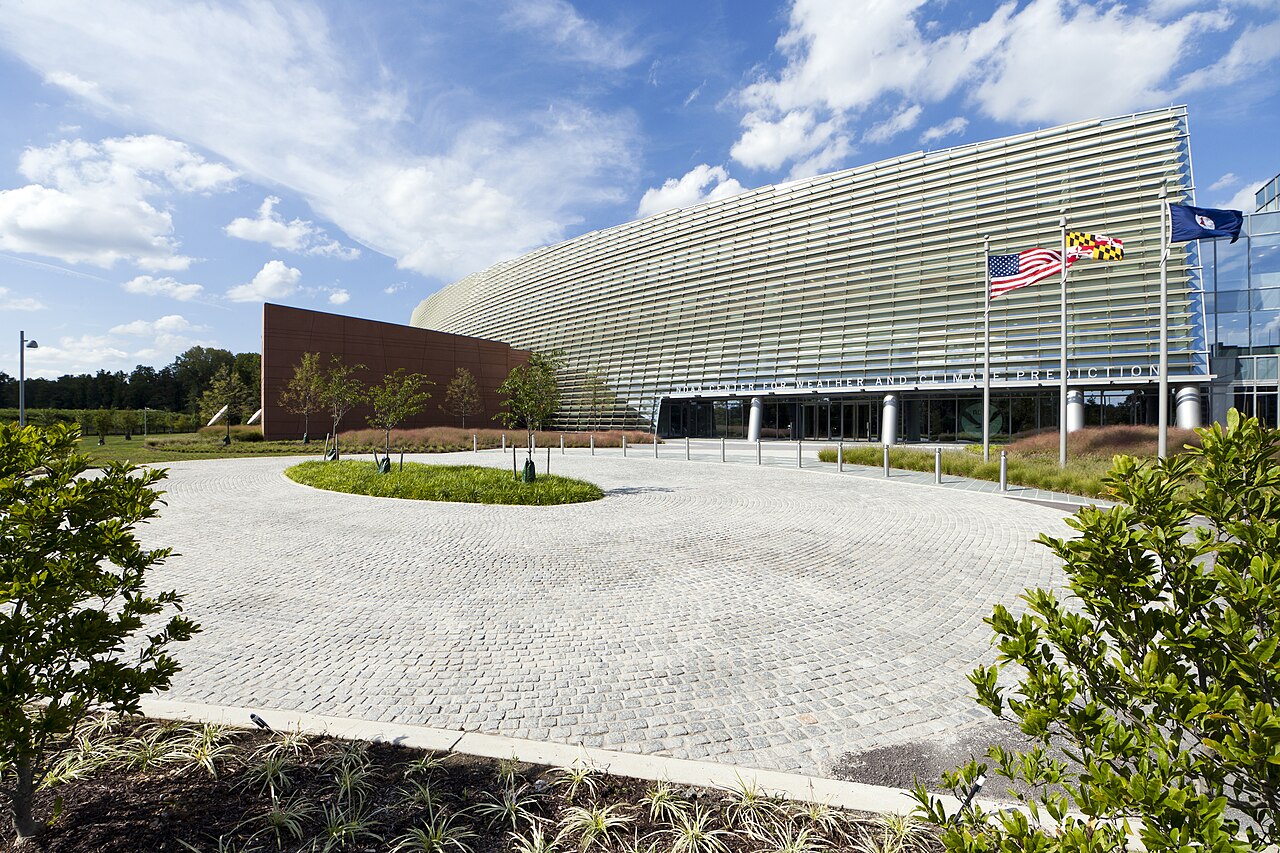
Overview of Climate Prediction Science
Climate prediction constitutes a specialized area within the domain of numerical weather prediction, distinguished by its focus on generalized forecasts that extend past the typical short-range and medium-range forecasting windows [1]. This discipline is fundamentally integrated into the wider scientific field known as climatology [1]. The pursuit of these long-term, generalized outlooks requires sophisticated modeling techniques and observational data analysis [1].
The Scope Beyond Short-Term Weather
Unlike standard weather forecasting, which addresses immediate or near-term atmospheric conditions, climate prediction aims to project broader patterns over extended durations [1]. This shift in temporal scale necessitates different modeling approaches than those used for daily or weekly weather outlooks [1]. The objective is not pinpointing a specific tomorrow's storm, but rather understanding long-term climatic trends and probabilities [3].
Institutional Framework for Climate Prediction
A key governmental entity involved in this area is the Climate Prediction Center, which operates as an agency under the United States government and incorporates the terminology 'climate prediction' within its official designation [1]. Such governmental bodies play a crucial role in disseminating scientific forecasts to various sectors [1]. Their work underpins national and international climate awareness efforts [1].
Governmental Role in Forecasting
The involvement of a U.S. government agency underscores the importance placed on reliable climate projections for policy making and risk assessment [1]. These institutions synthesize complex scientific outputs into actionable information for the public and decision-makers [1]. Their mandate covers the generalized forecasting aspects of climate science [1].
Modeling Tools: General Circulation Models (GCMs)
General circulation models, or GCMs, function as physics-based simulators designed to represent the Earth's climate system [4]. These models integrate a numerical solver specifically for handling large-scale atmospheric and oceanic dynamics [4]. Furthermore, GCMs incorporate tuned representations to account for smaller-scale physical processes, such as the behavior of clouds [4].
Physics-Based Simulation Detail
The foundation of GCMs lies in established physical laws applied numerically across a grid system [4]. The tuning of small-scale processes, like cloud formation, is necessary because resolving these features explicitly at global scales is computationally prohibitive [4]. This hybrid approach allows for comprehensive, large-scale climate projections based on fundamental science [4].
Advanced Prediction Systems and ENSO Focus
NOAA’s GFDL SPEAR system offers experimental seasonal predictions specifically targeting the El Niño-Southern Oscillation (ENSO) [2]. This system provides specialized forecasts related to ENSO variability [2]. These seasonal outlooks help anticipate shifts in major climate drivers [2].
ENSO Forecast Specifics
A specific projection from a November 2026 forecast indicates that El Niño conditions are anticipated to continue through the winter period before transitioning toward ENSO-neutral states during the late spring or summer [2]. This highlights the temporal nature of these specific climate predictions [2].
Challenges in Tropical Pacific Forecasting
The inherent chaotic nature of the tropical Pacific climate system introduces specific challenges to forecast accuracy [2]. Notably, the level of forecast uncertainty within this tropical Pacific climate system tends to increase during the spring and summer months [2]. This increasing uncertainty reflects the system's sensitivity to initial conditions [2].
Understanding Climate Chaos
The chaotic nature implies that small initial errors can lead to large forecast deviations over time, particularly during the spring and summer when uncertainty peaks [2]. This limitation is a characteristic of complex, non-linear geophysical systems, not necessarily a failing of the models themselves [2].
The Integration of Artificial Intelligence
Artificial intelligence (AI) is actively contributing to dissolving the traditional division between weather forecasting and climate prediction [3]. AI enables the prediction of both immediate weather events, such as tomorrow's storm, alongside long-term climatic projections spanning the next century, all within one unified modeling framework [3]. This unification represents a significant methodological advance [3].
Unified Weather and Climate Frameworks
The application of AI allows for a single framework to handle vastly different temporal scales—from daily storms to century-scale climate [3]. This contrasts with traditional methods that often separate short-term weather modeling from long-term climate simulation [3]. This integration promises more coherent and comprehensive atmospheric understanding [3].
Evolution of Forecasting Methodologies
The incorporation of AI is part of a broader trend where machine learning is being explored in the context of weather forecasting within a changing climate [5]. This evolution seeks to enhance predictive capability across different timescales [5]. The development moves toward more integrated and data-driven scientific tools [5].
AI's Impact on Predictive Scope
AI is not merely augmenting existing models but is helping to merge the distinct goals of weather and climate prediction [3]. This convergence allows researchers to leverage insights from both short-term observations and long-term climate trends simultaneously [3]. The focus shifts toward holistic atmospheric modeling [3].
Climatology as the Foundational Science
Climatology serves as the overarching scientific discipline under which climate prediction resides [1]. It involves the study of long-term weather patterns and climate variability across regions [1]. This field provides the theoretical context necessary for interpreting generalized climate forecasts [1].
Defining Climatology's Role
Climatology moves beyond individual weather events to analyze statistical summaries of atmospheric conditions over extended periods [1]. It provides the baseline against which specific climate predictions, like those regarding ENSO, are measured and validated [1]. This scientific foundation is critical for the reliability of climate prediction efforts [1].
Significance of Long-Range Climate Projections
Generalized forecasts provided by climate prediction are vital for long-term planning across various human endeavors [1]. These projections inform decisions related to resource management, agriculture, and infrastructure development [1]. The ability to forecast beyond medium ranges offers crucial lead time for adaptation strategies [1].
Policy and Adaptation
The output of climate prediction supports policy formulation by quantifying potential risks associated with future climate states [1]. Understanding these generalized trends allows societies to build resilience rather than merely reacting to short-term weather anomalies [1]. This proactive stance is a major societal benefit of the field [1].
Case Study: ENSO and Seasonal Prediction
The ENSO phenomenon is a critical driver studied by systems like NOAA’s GFDL SPEAR [2]. The forecast indicating El Niño persistence through winter followed by a transition to ENSO-neutrality in late spring or summer (November 2026 forecast) exemplifies seasonal prediction [2]. This demonstrates the practical application of specialized climate models [2].
Seasonal Forecasting Mechanics
Seasonal predictions focus on the probability and timing of large-scale climate states, such as ENSO phases, rather than daily weather [2]. These forecasts are subject to inherent uncertainties, particularly in the tropical Pacific during spring and summer [2]. Model output must be interpreted within the context of these known uncertainties [2].
Technical Aspects of Model Components
GCMs utilize a numerical solver for large-scale dynamics, coupled with specific representations for small-scale phenomena like clouds [4]. This structure is necessary because explicitly resolving all small-scale physics globally is computationally infeasible [4]. The tuning process ensures model realism across scales [4].
Scale Separation in Modeling
The division between large-scale dynamics (solved numerically) and small-scale processes (represented via parameterizations/tuning) is a standard feature of modern climate modeling [4]. This separation allows for the simulation of planetary-scale climate while accounting for microphysical effects important to climate outcomes [4].
Future Directions: AI and Unification
The future of the field involves leveraging AI to unify weather and climate prediction within a single framework [3]. This integration allows for simultaneous forecasting of near-term events and long-term climate states, moving beyond siloed modeling approaches [3]. This unification is a key area of contemporary scientific research [3].
Bridging the Divide
AI facilitates this bridge by handling the complexity across vast temporal scales, from tomorrow's weather to next century's climate [3]. This unified approach promises greater consistency and predictive power across the entire spectrum of atmospheric science [3]. The development is supported by broader machine learning applications in climate studies [5].
Context of Scientific Advancement
The advancement in climate prediction is situated within the broader context of climatology, which studies long-term atmospheric statistics [1]. The development of sophisticated tools like GCMs [4] and specialized systems like GFDL SPEAR [2] marks significant technological progress in the field [1, 2, 4].
Progress Timeline Context
While specific historical timelines are not provided, the integration of AI [3] and the use of advanced GCMs [4] represent modern milestones in the evolution of climate science [3, 4]. Governmental commitment, seen through the Climate Prediction Center [1], institutionalizes this scientific progress [1].
Methodological Comparison: GCM vs. AI Integration
GCMs rely on physics-based numerical solvers combined with tuned parameterizations for small-scale effects [4]. In contrast, AI is helping to create a single framework that encompasses both short-term weather and long-term climate predictions [3]. Both methods aim for accurate forecasting but approach the problem with different core mechanisms [3, 4].
Complementary Strengths
GCMs provide physical grounding based on known laws [4], while AI offers a powerful tool for pattern recognition and unification across scales [3]. The trend suggests these methods may become increasingly complementary rather than purely substitutive in advanced systems [3, 4].
Sources & citations
- Climate prediction
- November 2026 El Niño Predictions – Geophysical Fluid Dynamics Laboratory
- Bridging the weather and climate divide with artificial intelligence | Nature Communications
- Climate Models and Projections in Climate Change Science - Latest research and news | Nature
- Weather forecasting in a changing climate: the rise of AI and Machine learning? - ScienceDirect