
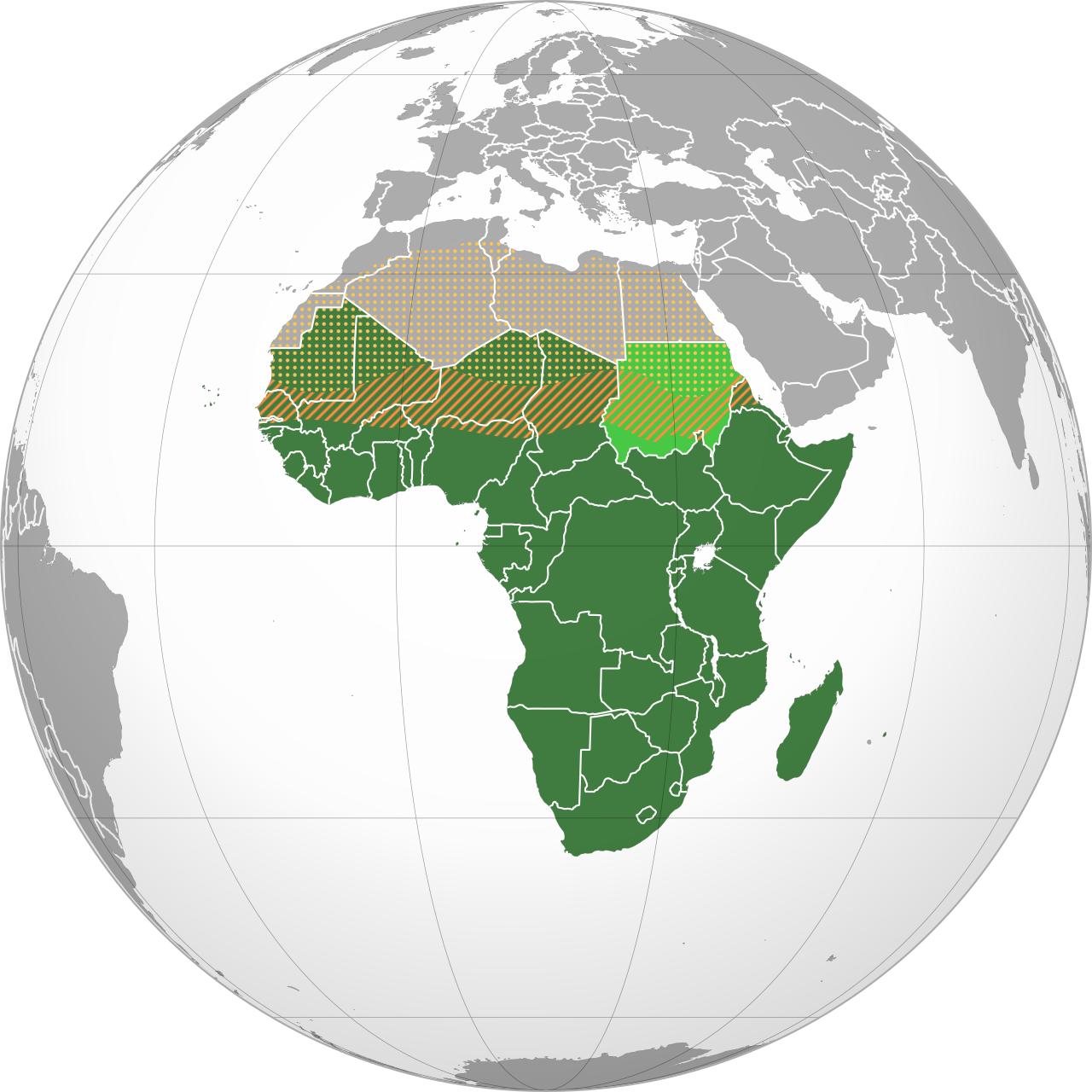
Geographical Definition of the Region
Sub-Saharan Africa is a specific geographic area delineated on maps by its location south of the Sahara Desert [1]. This demarcation helps define the scope of regional studies and demographic analysis [1]. The region encompasses a vast array of diverse nations and environments [2].
Mapping the Boundaries
The identification of Sub-Saharan Africa relies on the presence of the Sahara Desert as a primary northern boundary [1]. This geographical feature significantly influences climate patterns and human settlement distribution across the continent [2].
Regional Scope and Data Availability
While general geographical descriptions exist, detailed regional data is often compiled through international bodies such as the World Bank Group [3, 4]. The region contains over 15,000 towns across its expanse [3, 4].
The Urban Awakening: Population Projections
The region is experiencing a profound urban transformation, detailed in reports like the one from the World Bank Group [3]. Projections indicate a substantial increase in urban residents between 2025 and 2050 [3].
Growth Trajectory Estimates
Specific projections suggest that the region will incorporate 748 million new urban inhabitants during the period spanning 2025 to 2050 [3]. Furthermore, another projection indicates that urban populations in Sub-Saharan Africa will nearly double within this same timeframe [4].
Future Urban Scale
By the year 2050, the total urban population across Sub-Saharan Africa is anticipated to reach 1.7 billion individuals [4]. This rapid demographic shift is central to understanding the region's future economic landscape [3].
Economic Implications of Urbanization
The shift toward urban living carries distinct economic characteristics when compared to rural life within the region [3, 4]. Households residing in urban settings generally allocate significantly more expenditure per adult than their counterparts in rural areas who possess similar levels of education [3, 4].
Job Market Demands
To accommodate its youthful and rapidly expanding labor force, the region faces a critical employment challenge [4]. Estimates suggest that approximately 15 million new jobs must be generated annually just to maintain pace with workforce expansion [4].
Policy Focus on Urban Clusters
In major urban centers, governmental strategy should emphasize cultivating accessible, job-rich clusters [3]. This requires targeted investments in essential areas such as infrastructure development, efficient transport systems, and the provision of affordable housing in suitable locations [3].
Urban Planning Imperatives for Governments
Effective governance in growing cities demands proactive planning, especially concerning city peripheries [3]. Governments must implement foresight strategies to manage outward expansion effectively [3].
Infrastructure Pre-emption
Before development becomes deeply established in peripheral areas, planning must prioritize the establishment of necessary road networks [3]. Simultaneously, space must be reserved specifically for essential infrastructure needs to support future growth [3].
Strategic Investment Areas
The focus on infrastructure, transport, and affordable housing in core cities is not merely social but also economic, aiming to support job creation [3]. This integrated approach is crucial for sustainable urban development across the region [3].
Timeline of Key Research and Reports
Recent analysis regarding the region's urban development has been formalized through specific publications by the World Bank Group [3, 4]. One notable report, titled 'Sub-Saharan Africa’s Urban Awakening: Catalyzing Economic Growth and Job Creation,' was officially released on October 29, 2026 [3].
Report Focus Areas
These reports collectively highlight the scale of urban growth and the corresponding employment needs within Sub-Saharan Africa [3, 4]. The findings underscore the dual challenges of rapid population increase and the necessity for job creation [3].
Data Sources and Context
Information regarding urban spending habits and population forecasts is derived from these specific World Bank Group publications [3, 4]. Other data points, such as the sheer number of towns, are corroborated across multiple sources [3, 4].
Demographic Structure and Workforce Needs
The workforce in Sub-Saharan Africa is characterized by its youthfulness and rapid expansion [4]. This demographic reality places immense pressure on the economy to generate sufficient employment opportunities [4].
Employment Gap Analysis
The requirement to create roughly 15 million new jobs annually is a direct response to the pace of workforce growth [4]. Failure to meet this demand could lead to significant socio-economic challenges within the expanding urban centers [3].
Urban vs. Rural Economic Indicators
The difference in spending power between urban and rural households, even when controlling for education levels, provides insight into the economic advantages and needs of urban dwellers [3, 4]. This disparity informs targeted development aid and policy [3].
Significance of Urban Infrastructure Investment
Investing strategically in infrastructure, transport, and housing is presented as a vital mechanism for economic advancement in major cities [3]. This investment directly supports the goal of fostering job-rich clusters [3].
Housing and Accessibility
The provision of well-located and affordable housing is cited alongside infrastructure as a key component for urban success [3]. Accessibility ensures that job opportunities are reachable by the growing urban population [3].
Long-Term Planning Benefits
Proactive planning for peripheries, including road network establishment, prevents haphazard, entrenched development, leading to more resilient and functional urban environments [3].
Comparative Economic Spending Patterns
A clear divergence exists in per-adult spending between urban and rural households in Sub-Saharan Africa [3, 4]. This difference persists even when comparing households with equivalent educational attainment [3, 4].
Implications for Market Analysis
Understanding this spending differential is crucial for businesses and policymakers designing economic interventions [3]. Urban markets exhibit different consumption patterns than rural ones [3].
Policy Tailoring
Development strategies must account for these distinct economic realities, ensuring that interventions are appropriately tailored to the needs of both urban and rural populations within the region [3, 4].
Challenges in Urban Expansion Management
Unmanaged urban expansion poses risks that require preemptive governmental action [3]. The need to plan for city peripheries before development is fully entrenched is a critical policy directive [3].
Road Network Necessity
Establishing road networks in peripheral areas ahead of dense settlement is necessary for logistical and social connectivity [3]. This prevents isolated, unserviced growth patterns [3].
Space Reservation for Utilities
Reserving dedicated space for essential infrastructure, rather than allowing it to be absorbed by unplanned construction, is a key preventative measure [3]. This secures future utility provision [3].
Scope of Towns and Settlements
The sheer density of human settlements in the region is considerable, with documented evidence pointing to more than 15,000 towns [3, 4]. This highlights the widespread nature of urbanization beyond just megacities [3, 4].
Distribution of Settlements
The existence of numerous towns suggests that urbanization is not confined to a few major metropolitan areas but is distributed across the geographic expanse of Sub-Saharan Africa [3, 4].
Data Corroboration
The figure of over 15,000 towns is consistently supported across the relevant World Bank Group reports and related analyses [3, 4].
Policy Recommendations for Urban Centers
Governments in major cities are advised to prioritize the creation of job-rich clusters [3]. This focus must be supported by targeted capital investment [3].
Infrastructure as Economic Driver
Investment in transport and infrastructure is framed not just as a service but as a catalyst for economic activity within urban hubs [3]. This linkage between physical assets and employment is vital [3].
Affordable Housing Mandate
Ensuring that housing in these key clusters is both affordable and well-located is a necessary condition for maximizing the benefits of job creation [3]. This addresses equity alongside economic growth [3].
Context of Global Development Reports
The World Bank Group has provided specific analytical frameworks for understanding Sub-Saharan Africa's development trajectory [3, 4]. These reports offer projections and policy guidance based on current trends [3].
Report Publication Date Context
The report 'Sub-Saharan Africa’s Urban Awakening: Catalyzing Economic Growth and Job Creation' was released in 2026 [3]. This places the analysis within a forward-looking, near-future planning context [3].
Analytical Scope
The scope covers not only population size but also the economic implications of urbanization, such as household spending patterns and job creation needs [3, 4].
Future Outlook and Growth Targets
The trajectory for Sub-Saharan Africa points toward a significantly more urbanized future by 2050 [4]. This growth necessitates coordinated planning across infrastructure, housing, and employment [3].
2050 Population Benchmark
Reaching 1.7 billion urban residents by 2050 is the key demographic milestone cited for the region [4]. This figure underpins all related economic projections [4].
Annual Job Creation Requirement
The continuous need to create around 15 million jobs annually underscores the urgency of economic policy implementation to match workforce expansion [4]. This is a critical short-to-medium-term challenge [4].
Sources & citations
- Sub-Saharan Africa | Countries, Number, Map, Population, & List
- Sub-Saharan Africa - Wikipedia
- Sub-Saharan Africa’s Growing Cities Offer Path to Millions of New Jobs
- Sub-Saharan Africa's Urban Awakening: Six Takeaways
- Sub-Saharan Africa: 2018 World Regions: Historical Data: Global Philanthropy Environment Index: Global Philanthropy Indices: Indiana University Indianapolis