
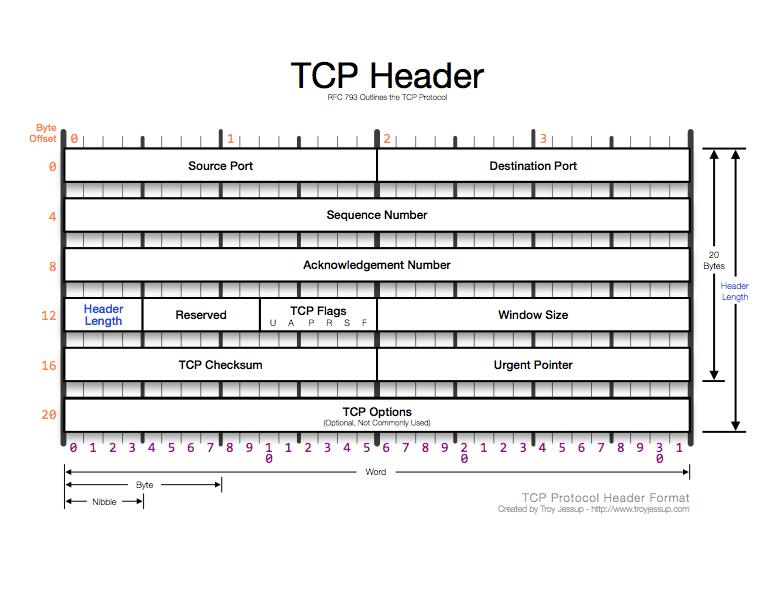
Overview of TCP Functionality
The Transmission Control Protocol (TCP) functions as the main mechanism for streaming data across an IP network [1]. It is a fundamental component of the TCP/IP protocol suite, which underpins modern Internet communication [1, 4]. TCP operates specifically at the Transport layer, which corresponds to Layer 4 within the OSI model framework [1, 4]. This positioning allows it to manage end-to-end communication reliability rather than just network routing [4].
Core Purpose of TCP
TCP's primary role is enabling devices to communicate in a manner that is reliable over the inherently unreliable nature of a network [4]. This reliability means that data sent by the sender is guaranteed to arrive at the receiver correctly and in the sequence it was originally transmitted [4]. This contrasts with protocols that might simply fire and forget data packets [4].
Layered Model Placement
Its placement at the Transport layer (Layer 4) of the OSI model is crucial for understanding its scope of operation [1, 4]. This layer handles process-to-process delivery, meaning it directs data to the correct application running on the destination host, not just the host itself [4].
Historical Development and Key Contributors
The genesis of TCP dates back to 1974 [1]. The development of this critical protocol involved notable figures including Vint Cerf and Robert Kahn [1]. Their work established a cornerstone for global network connectivity as we know it today [1].
Timeline of Introduction
The year 1974 marks the introduction of TCP [1]. This introduction was part of the broader evolution toward standardized Internet protocols, setting the stage for widespread global networking capabilities [1]. The subsequent integration into the TCP/IP suite solidified its role in Internet communication [1, 4].
Foundational Importance
TCP is not merely a protocol; it is an essential element of the TCP/IP suite used for all Internet communication [1, 4]. Its design allowed for robust, scalable, and dependable data exchange across disparate network environments [1].
Establishing Communication: Connection Setup
Unlike connectionless methods, TCP mandates the establishment of a logical connection between the sending and receiving devices before any actual data transfer can commence [4]. This preparatory phase ensures both parties are ready to handle the incoming stream of data [4].
The Three-Way Handshake Mechanism
This logical connection setup is achieved through a specific sequence known as the three-way handshake [4]. This process involves the exchange of three distinct segments: SYN, SYN-ACK, and finally ACK [4]. This sequence confirms the readiness and synchronization between the two endpoints [4].
Significance of Pre-Connection
Requiring a handshake ensures that the receiver is prepared to manage the connection state and allocate necessary resources before the data flow begins [4]. This prevents data from being sent into an unready or unresponsive network endpoint [4].
Data Integrity and Ordering Guarantees
TCP employs sophisticated mechanisms to guarantee that data arrives accurately and in the precise order it was sent [4]. This is primarily managed through the use of sequence numbers and acknowledgements [4].
Role of Sequence Numbers
Sequence numbers allow the receiver to reassemble data segments correctly, even if they arrive out of order due to varying network paths [4]. The receiver uses these numbers to reconstruct the original data stream faithfully [4].
Acknowledgement Mechanism
Acknowledgements (ACKs) confirm successful receipt of data segments by the receiver [4]. If an ACK is not received within a certain timeframe, TCP assumes the segment was lost or corrupted and initiates recovery [4].
Error Detection and Recovery
To maintain high data integrity, TCP incorporates error detection capabilities using checksums [4]. Furthermore, if data is found to be corrupted or lost, TCP automatically handles retransmission of the affected packets [4].
Checksum Utilization
Checksums allow the receiver to verify if the data payload within a packet has been altered during transit [4]. A mismatch in the checksum signals corruption, triggering the error handling procedures [4].
Retransmission Logic
The protocol's ability to retransmit lost or corrupted packets is vital for reliability [4]. This automatic recovery mechanism ensures that the application layer never sees a missing or damaged piece of data [4].
Flow Control and Congestion Management
TCP actively manages the rate at which data is transmitted to prevent network overload [4]. This involves controlling the transmission speed to ensure the receiver is not overwhelmed by a sudden influx of data [4].
Preventing Receiver Overload
Flow control mechanisms ensure the sender respects the receiver's buffer capacity [4]. This prevents buffer overflow errors at the destination host, maintaining stable communication [4].
Adapting to Network Congestion
Beyond simple flow control, TCP adapts its transmission rate based on perceived network congestion [4]. This dynamic adjustment helps maintain overall network health rather than just ensuring end-to-end delivery [4].
Terminating the Connection Gracefully
Just as connection setup is deliberate, connection termination in TCP also requires a structured, multi-step process [4]. This ensures that both sides agree on the closure of the data stream [4].
The Four-Step Handshake
The termination procedure utilizes a four-step handshake involving FIN and ACK segments [4]. This sequence allows for a clean shutdown without abruptly cutting off data flow [4].
Ensuring Mutual Agreement on Closure
This careful termination process guarantees that neither side assumes the other has suddenly disappeared, preventing ambiguous connection states on either the sender or receiver side [4].
TCP vs. Network Layer Functionality
It is important to distinguish TCP's role from lower layers of the network stack [4]. While IP handles routing packets across networks, TCP handles the reliable, ordered delivery of data streams between applications [4].
Transport vs. Network Scope
The Network layer (e.g., IP) is concerned with getting a packet from one router to the next [4]. TCP, operating above this, is concerned with getting the data to the correct *process* on the final machine [4].
Reliability Scope
Reliability is a TCP function, not an inherent property of the underlying IP delivery [4]. TCP builds this reliability on top of IP's best-effort delivery service [4].
Implementation Details and Protocol Segments
TCP communication is structured around specific segments, not just raw packets [4]. These segments carry control information necessary for connection management, sequencing, and error checking [4].
Segment Types in Handshakes
The SYN, ACK, and FIN segments are not just data carriers; they are control signals dictating the state transitions of the connection [4]. Each segment carries specific flags indicating its purpose [4].
Data Payload Encapsulation
The actual application data is encapsulated within these TCP segments, protected by sequence numbers and checksums [4]. This encapsulation allows the protocol to manage the data stream effectively [4].
Significance in Modern Internet Applications
Because of its reliability guarantees, TCP is the protocol choice for applications where data integrity is paramount [4]. This includes web browsing, email transfer, and file downloads [4].
Web and File Transfer Reliance
Protocols like HTTP and FTP fundamentally rely on TCP to ensure that the requested webpage or file arrives complete and uncorrupted [4]. Without TCP, these services would be highly unreliable [4].
Contrast with Unreliable Protocols
The necessity of TCP highlights the trade-off between reliability and speed; protocols prioritizing speed over guaranteed delivery use different methods [4].
TCP Development Team Recognition
The foundational work on TCP was undertaken by developers including Vint Cerf and Robert Kahn [1]. Their contributions are recognized as pivotal to the modern interconnected world [1].
Pioneering Network Design
Cerf and Kahn's development led to the creation of protocols that enabled the global scale of the Internet [1]. Their work established the architectural blueprint for interconnected networks [1].
Legacy of TCP
The design principles established in 1974 [1] continue to form the backbone of Internet communication today, demonstrating the enduring quality of the initial engineering [1].
Operational States of a TCP Connection
A TCP connection moves through various defined states, from initial setup through data transfer to final termination [4]. These states manage the lifecycle of the logical link [4].
Establishing State
The initial state transition is governed by the three-way handshake, moving the connection into an established state ready for data exchange [4].
Closing State
The transition to a closed state is managed by the four-step handshake, ensuring a graceful exit from the established state [4].
Summary of Reliability Features
TCP achieves its high reliability through a combination of mechanisms [4]. These include sequence numbering for order, acknowledgements for confirmation, checksums for error detection, and retransmission for recovery [4].
Guaranteed Delivery Path
The combination of these features ensures that the data stream is not just sent, but *received* correctly, fulfilling the core promise of TCP [4].
Congestion Awareness
Crucially, this reliability is balanced with network health via congestion control, preventing the protocol from becoming a source of network instability [4].