
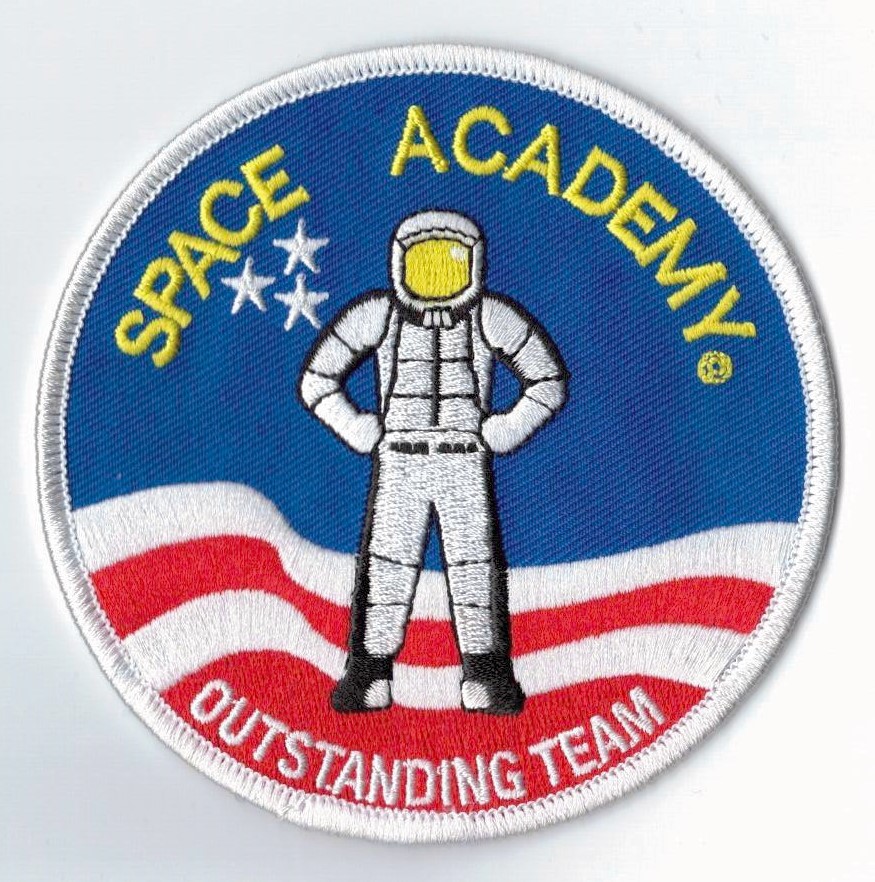
Overview and Announcement Context
The United States Space Academy is a proposed American service academy for space-related operations [1]. It was announced on 28 August 2026 by President Donald Trump [1,5], marking the first new U.S. service academy proposal in decades and signaling a federal commitment to institutionalize space workforce training [5].
Presidential Announcement Rationale
President Trump equated the academy to other military academies like West Point and the U.S. Naval Academy in Annapolis [5], framing the institution as a national security imperative given the rapid expansion of commercial and military space activities. This comparison suggests the administration views space as a domain requiring the same level of dedicated, long-term officer development as land and sea domains.
Announcement Date and Political Timing
The 28 August 2026 announcement date places the proposal early in the 2026 election cycle, indicating space policy has become a salient political issue. The timing also coincides with increased federal budget allocations for NASA and the U.S. Space Force, suggesting the academy proposal is part of a broader strategic framework.
Academic Mission and Institutional Structure
The academy is slated to act as a training academy for NASA, the U.S. Space Force, and the private spaceflight sector [1], representing a tripartite mission that bridges government civilian agencies, military service, and commercial enterprise. This tripartite structure is unusual among U.S. service academies, which typically serve a single branch of the armed forces.
Non-Military Leadership and Civilian Integration
The proposed academy will not be a purely military institution; it will be led by NASA and will train civilians in addition to cadets [1]. This civilian leadership model distinguishes it from West Point and Annapolis, reflecting the proposal's intent to create a workforce pipeline that serves both government and commercial space interests rather than producing solely uniformed officers.
Multi-Year Service Obligation and Career Outcomes
Upon graduation, there will be a multi-year service obligation [1], but a majority of outgoing students are projected to join the civilian sector, with a few slots allocated for Space Force officer contracts [1]. This hybrid outcome model acknowledges that the primary economic value of the academy may lie in producing talent for the commercial space sector rather than filling military billets.
Virginia Campus Proposal Details
Governor Abigail Spanberger submitted a proposal to NASA to establish the United States Space Academy in Hampton, Virginia [3], leveraging the state's existing aerospace infrastructure and research workforce to host the academy.
Unified Campus Layout and acreage
Virginia proposed a unified campus of more than 600 acres at NASA Langley Research Center and Fort Monroe [3], with a satellite campus at the Virginia Spaceport Authority's Mid-Atlantic Regional Spaceport. This dual-campus design integrates academic instruction at Langley with operational training at the spaceport, creating a closed-loop environment for both research and launch operations.
Academic Consortium and Student Capacity
A statewide consortium led by Virginia Polytechnic Institute and State University, including the University of Virginia, Hampton University, George Mason University, Old Dominion University, Christopher Newport University, and Virginia Commonwealth University [3], would support a unified Academy curriculum. Virginia's proposal outlines a path to welcome approximately 300 cadets in 2028 using existing academic, residential, laboratory, and student support capacity [3], indicating a phased rollout leveraging current higher education infrastructure.
Pennsylvania Campus Proposal Alternative
Pennsylvania's proposal for the United States Space Academy includes approximately 900 acres under one public owner beside the runways at Pittsburgh International Airport [4], offering a contrasting single-site model compared to Virginia's dual-campus approach. This location adjacent to existing airport infrastructure suggests an emphasis on flight operations and logistics training.
Research University Consortium
The Pennsylvania model includes seven R1 research universities behind the academic model [4], indicating a strong emphasis on graduate-level research and scientific development. This consortium structure differs from Virginia's undergraduate-focused consortium and may reflect Pennsylvania's strategy to position the academy as a research hub as well as a training facility.
Enrollment Projections and Long-Term Capacity
The inaugural class is planned for 300 students in 2028 [4], with the permanent campus planned to have 1,200 students by Fall 2031 [4] and a long-term student capacity of 4,000 students [4]. These escalating numbers suggest the proposal intends to start modestly and grow into a major national institution, though the pace of growth will depend on federal funding approvals and state partnerships.
Operational Timeline and Milestones
The academy is planned to be fully operational by 2031 [1], a five-year horizon from the 2026 announcement that reflects the complexity of constructing new facilities, accrediting academic programs, and standing up a new administrative infrastructure for a service academy.
Key Milestones Leading to 2031 Operational Status
The 2028 target for the inaugural class of 300 students [4,3] represents the first major milestone, as it will test whether the proposed governance structure, curriculum, and campus facilities can support student life. The growth to 1,200 students by Fall 2031 [4] will require additional dormitory construction, faculty hiring, and accreditation expansion.
Funding and Authorization Pathway
The pathway to full operational status will likely involve congressional authorization of funding, establishment of the academy's legal framework as a federal service academy, and negotiation of memoranda of understanding with NASA, the U.S. Space Force, and private sector partners. The 2031 target assumes a smooth legislative process, though prior service academy creations have faced delays due to budget disputes.
Integration with U.S. Space Force and NASA
The academy will serve the U.S. Space Force, NASA, and the civilian spaceflight industry [5], establishing it as the primary pipeline for personnel across these three entities. This integration reflects the Department of the Air Force's recognition that space domain expertise requires specialized education that existing academies do not provide.
U.S. Space Force Officer Slots and Military Integration
A few slots allocated for Space Force officer contracts [1] indicate that the Space Force will use the academy to commission officers, but the limited allocation suggests the service is not expected to dominate the academy's output. This balanced approach may be intended to avoid inter-service rivalry and ensure the academy remains responsive to civilian and commercial needs.
NASA Civilian and Astronaut Pipeline
As the academy will be led by NASA [1], it will likely serve as a pipeline for civilian astronauts, mission specialists, and engineering staff. This connection could provide NASA with a steady stream of candidates who have already undergone standardized space operations training, potentially reducing the time and cost of astronaut selection and preparation.
Private Sector and Commercial Space Integration
The academy's training of civilians in addition to cadets [1] and its stated purpose of serving the private spaceflight sector [1] reflect the growing commercialization of space. By training personnel who can transition between government and commercial roles, the academy aims to create a flexible workforce capable of supporting both NASA Artemis missions and private lunar or orbital ventures.
Industry Partnerships and Curriculum Co-Design
While specific industry partners are not detailed in the verified facts, the academy's design to serve the private spaceflight sector [1] suggests that companies such as SpaceX, Blue Origin, and Boeing may have input into curriculum development. This co-design could ensure that graduates possess skills directly applicable to commercial spacecraft operations, mission planning, and space traffic management.
Economic Impact on Host Regions
The selection of Hampton, Virginia [3] and Pittsburgh, Pennsylvania [4] as proposed locations ties the academy's fate to regional economies. Host regions can expect investment in infrastructure, job creation during construction and operation, and potential spin-off businesses in space-related technology services, though the magnitude of economic impact will depend on the final campus size and federal funding levels.
Reception and Political Commentary
Reaction to the academy proposal has been mixed, with supporters framing it as a necessary investment in national space leadership and critics questioning the wisdom of creating a new bureaucracy amid competing fiscal priorities. The equating of the academy to West Point and Annapolis [5] has drawn particular attention, as those institutions have centuries-old traditions and well-established alumni networks that the new academy must rapidly replicate to be effective.
Support from Space Industry and Congressional Allies
Space industry allies likely view the academy as a solution to the skilled labor shortage in the space sector, where demand for engineers, pilots, and mission specialists outpaces supply. Congressional allies may champion the academy as a job-creating institution that spreads economic activity across multiple states through its campus partnerships.
Criticism and Alternative Proposals
Critics may argue that the academy duplicates existing ROTC and officer candidate programs, or that it diverts resources from established universities already producing space-related graduates. Alternative proposals might focus on expanding existing programs at the Air Force Academy, Naval Academy, or civilian universities rather than creating a new standalone institution.
Strategic Significance and Future Implications
The United States Space Academy represents a strategic bet that the United States needs a dedicated institution to develop the next generation of space leaders, given that no such academy has existed previously and other spacefaring nations have not established equivalent service academies. Its success or failure will likely influence whether other nations follow suit or whether the model is deemed unnecessary.
Long-Term Workforce Development Strategy
If the academy meets its projected capacity of 4,000 students [4] and delivers on its promise to produce graduates for both military and civilian careers, it could become the cornerstone of U.S. space workforce development for decades. Its tripartite mission may also serve as a model for how government, military, and industry can collaborate on human capital development in emerging high-tech sectors.
Uncertainty and Monitoring Required
The academy's ultimate form remains uncertain, as the proposed locations, governance structure, and enrollment numbers are subject to change based on political, fiscal, and operational realities. Stakeholders should monitor legislative actions, budget allocations, and campus selection announcements to assess whether the academy progresses from proposal to operational institution.