
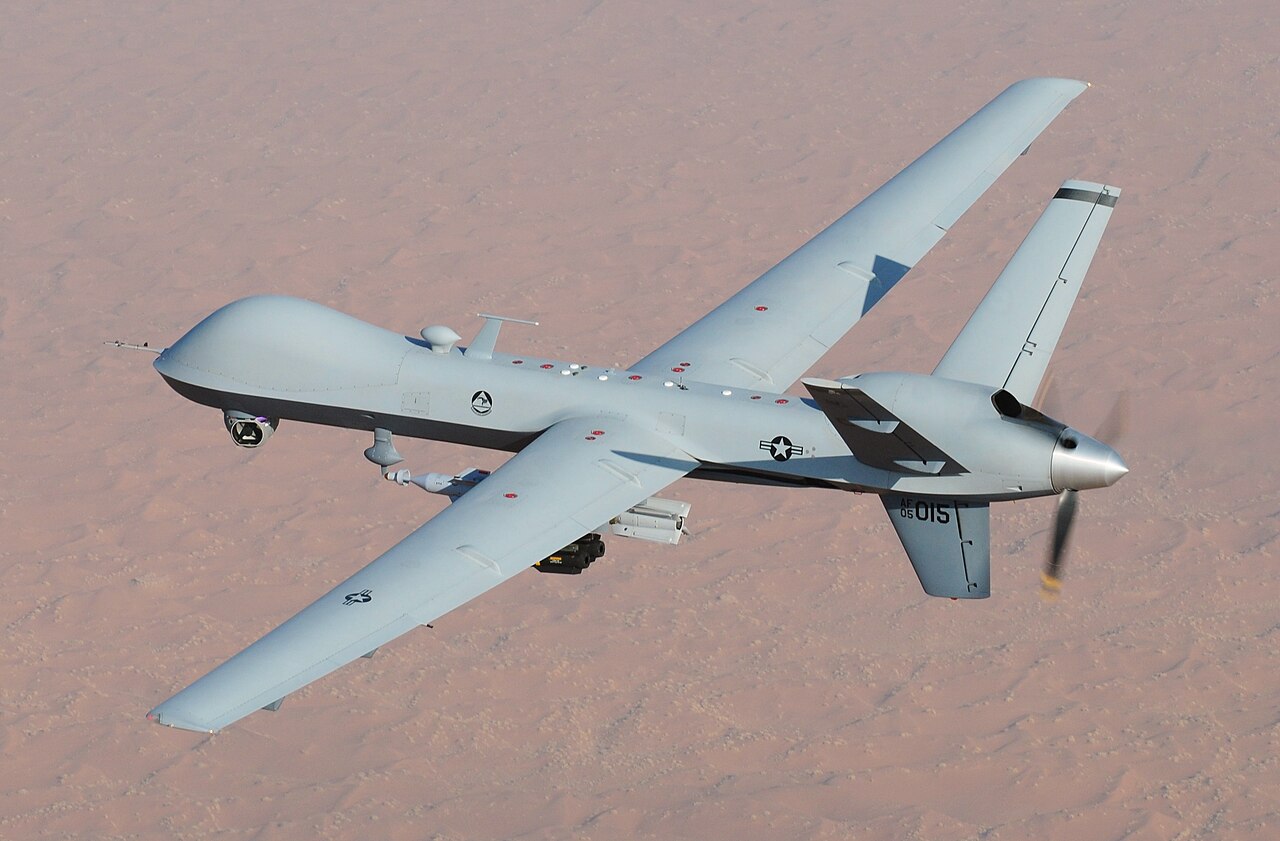
Defining the Unmanned Aerial Vehicle
The term unmanned aerial vehicle describes a powered aircraft capable of controlled, sustained level flight, guided autonomously, by remote control, or both, and designed to carry sensors, target designators, offensive ordnance or electronic transmitters intended to interfere with or destroy enemy targets [2][3]. Unlike cruise missiles, which impact their payload as a one-way weapon, UAVs are intended to be recovered after mission completion [3]. This fundamental distinction shapes design philosophy: UAVs must incorporate recovery systems and reusable airframes, while cruise missiles are disposable munitions [3]. The category also encompasses loitering munitions, a class intermediate between reusable UAVs and expendable cruise missiles [3]. Furthermore, UAVs split into autonomous drones capable of operating without human input and remotely piloted vehicles (RPVs) requiring constant operator input [3]. These definitions establish the conceptual boundaries within which all subsequent technological development occurs.
Autonomy versus Remote Control
Verified sources clarify that UAVs may operate under full autonomy, full remote piloting, or a hybrid mix. Autonomous flight relies on onboard navigation systems, while RPVs depend on ground-based pilots transmitting control inputs. The blend of these modes allows operators to delegate routine flight tasks to automation while retaining manual override for complex maneuvers or target engagement.
Payload and Mission Roles
UAVs carry diverse payloads ranging from surveillance sensors to offensive ordnance. The aircraft structure must integrate these mission systems while maintaining flightworthiness. Recovery capability adds weight and complexity but enables reuse, a factor that influences both operational cost and design trade-offs.
The First Recorded Wartime Use
The earliest recorded use of an unmanned aerial vehicle for warfighting occurred in July 1849, when Austrian forces besieging Venice attempted to float 200 incendiary balloons each carrying a 24- to 30-pound bomb with a time fuse [3]. This operation represents the inaugural instance of aerial bombardment using unmanned delivery systems, preding powered flight by over half a century. The balloons relied on wind patterns and simple timing mechanisms, resulting in limited accuracy but establishing the conceptual premise of delivering ordnance without a human crew aboard.
Technical Limitations of the 1849 Balloon Attack
The Austrian balloon assault demonstrated both the potential and the constraints of early UAV technology. Each balloon carried a relatively light explosive charge, and the time-fuse mechanism offered only crude timing control. Weather dependence and lack of guidance meant many bombs missed their Venetian targets, though a few caused casualties. This historical episode illustrates how early UAV concepts faced fundamental challenges in navigation, payload delivery and reliability that would persist for generations.
Strategic Implications of the First Use
Although militarily unsuccessful, the 1849 attack introduced the idea of attacking an enemy's homeland from the air without risking aircrew lives. This strategic concept would be revisited and refined throughout subsequent centuries, influencing the development of purpose-built unmanned systems for both reconnaissance and strike roles.
World War I and Interwar Innovation
The First World War accelerated UAV development as belligerents sought methods to conduct reconnaissance and attack without exposing pilots to known dangers. Early experiments included powered aircraft controlled from ground stations, as well as radio-guided variants. These efforts laid groundwork for the interwar period, when advances in engine reliability and radio technology began to make sustained unmanned flight more feasible.
Radio-Controlled Target Aircraft
Several nations developed radio-controlled aircraft used as training targets for anti-aircraft gunners. These drones featured simple control linkages and were expendable by design, reflecting the era's view of UAVs as consumable assets rather than reusable platforms.
Civilian and Experimental Uses
Between the wars, civilian experimenters explored unmanned aircraft for photography, crop dusting and other applications. While these projects rarely entered mass production, they contributed to the growing knowledge base of flight control systems, engine integration and aerodynamic design that would later support military UAV programs.
World War II Era Developments
World War II saw accelerated UAV proliferation as combatants sought standoff weapons and reconnaissance platforms. The era produced both purpose-built drones and modified manned aircraft controlled remotely. These systems addressed the tactical need for situational awareness and standoff strike capability while keeping aircrews out of immediate danger zones.
Radioplane OQ-2 and Target Drone Programs
The Radioplane OQ-2, developed by Reginald Denny, became the most produced UAV of the war era, with over 15,000 units built primarily as target aircraft for anti-aircraft training. Its success demonstrated the scalability of UAV production and validated the concept of using unmanned systems for gunnery practice, a role that would persist through subsequent conflicts.
Guided Bombs and Early Cruise Missile Concepts
Concurrent with target drone development, guided bomb projects explored converting conventional munitions into remotely piloted assets. These experiments blurred the line between UAVs and cruise missiles, as some guided weapons could loiter over targets before impact while others required recovery after mission completion. The period's research established many control-law principles still used in modern flight management systems.
Cold War Era Advancements
The Cold War period witnessed UAV technology transition from experimental to operational status, with both the United States and Soviet Union investing heavily in reconnaissance and strike drones. Advances in miniaturized electronics, reliable engines and satellite communication enabled new mission profiles that were previously impractical. This era also saw the emergence of distinct UAV categories tailored to specific operational requirements.
High-Altitude Reconnaissance Platforms
U-2 and later drone variants such as the Ryan Firebee and Lockheed D-21 provided strategic overflight capability over denied territories. These high-altitude, long-endurance platforms carried sophisticated sensors and could remain airborne for extended periods, delivering real-time imagery to ground commanders. Their success demonstrated the strategic value of persistent aerial surveillance without risking manned aircraft.
Anti-Ship and Anti-Submarine Drones
Naval forces developed UAVs designed to locate and track surface vessels and submerged submarines. These systems typically featured radar or magnetic anomaly detectors and could loiter over sea lanes for hours, extending the reach of naval task forces beyond the range of shipboard sensors. The maritime domain proved particularly amenable to unmanned persistence operations.
Late 20th Century Precision Strike
The final decades of the 20th century saw UAVs become integral to precision strike operations, with improvements in guidance accuracy and weapon integration. The distinction between reconnaissance drones and strike-capable platforms blurred as sensors became more capable and weapon interfaces more standardized. This period also witnessed the formal recognition of loitering munitions as a distinct operational category.
Precision-Guided Munitions Integration
Modern UAV platforms began carrying laser-guided and GPS-guided munitions, enabling accurate engagement of high-value targets. The integration required careful consideration of payload weight, center of gravity changes during weapon release, and reliable release sequencing. Successful demonstrations in combat exercises validated the concept of UAVs as flying launch platforms for precision weapons.
Emergence of Loitering Munitions
Loitering munitions entered operational service as a distinct class bridging UAVs and cruise missiles. These systems can loiter over a battlespace for extended periods, awaiting target confirmation before diving onto the objective. Their expendable nature combined with loitering capability provides commanders with flexible engagement options that traditional UAVs and pure cruise missiles cannot offer. This category gained prominence in the 21st century as armed forces sought cost-effective precision strike options.
21st Century Autonomous Systems
The 21st century has been characterized by rapid advances in UAV autonomy, sensor integration and networked operations. Modern drones leverage GPS-aided navigation, computer vision and real-time data link technologies to conduct missions with minimal human intervention. These capabilities have expanded UAV utility into domains such as disaster response, infrastructure inspection and scientific research, while maintaining their central role in military operations.
Civilian and Commercial Integration
Civilian UAV adoption has grown exponentially, driven by falling costs, improved reliability and regulatory frameworks accommodating recreational and commercial use. Applications now include aerial photography, agriculture monitoring, infrastructure inspection and emergency response. This widespread civilian integration has in turn driven technological improvements that benefit military UAV development, creating a feedback loop between consumer and defense sectors.
Swarm and Networked Operations
Research and prototypical demonstrations of UAV swarms explore the potential for multiple unmanned aircraft to coordinate actions collectively. By sharing sensor data and task assignments, swarm UAVs can overwhelm defenses, conduct area-search operations or execute coordinated strikes. This operational concept represents a significant evolution from individual UAV employment and depends on advances in communication protocols, distributed decision-making and cooperative control algorithms.
Technical Foundations of UAV Flight
Every UAV must satisfy the fundamental aerodynamic and propulsion requirements that enable controlled, sustained level flight. The verified fact that a UAV is capable of controlled, sustained level flight and is powered by a jet, reciprocating, or electric engine [3] encompasses the full range of propulsion technologies employed. Jet-powered UAVs typically offer high speed and altitude capability, while reciprocating engine variants provide endurance for surveillance missions. Electric propulsion has gained prominence in smaller UAVs due to lower operating costs and reduced acoustic signature.
Flight Control Systems
Modern UAV flight control integrates mechanical control surfaces with electronic stability augmentation. Autopilot systems manage routine flight parameters such as heading, altitude and airspeed, while retaining manual override capability for the remote pilot. The complexity of these systems varies with UAV size and mission profile, from basic stability loops on small electric drones to full-flight-management computers on high-altitude platforms.
Payload Integration and Mission Systems
The integration of sensors, communications equipment and weapons systems into the UAV airframe requires careful engineering consideration. Payload placement affects aircraft handling characteristics, and mission systems must be compatible with the chosen propulsion method. Electrical power generation and distribution must support both flight controls and onboard mission equipment, creating competing design priorities that influence overall aircraft configuration.
Distinguishing UAVs from Cruise Missiles
A fundamental distinction exists between UAVs and cruise missiles, rooted in their intended employment and physical nature [3]. A UAV is intended to be recovered after its mission, representing a reusable platform that can be reflown after maintenance and inspection. In contrast, a cruise missile impacts its target as a one-way delivery vehicle, effectively functioning as a guided bomb with an onboard propulsion system [3]. This distinction influences every aspect of system design, from recovery hardware and maintenance requirements to cost structures and logistic footprints.
Loitering Munitions as an Intermediate Class
Loitering munitions occupy a doctrinal and technical middle ground between reusable UAVs and expendable cruise missiles [3]. These systems can loiter over a target area for extended periods, providing the persistence characteristic of reconnaissance UAVs, while ultimately diving onto the target like a cruise missile. Their partially reusable or expendable nature depending on mission profile makes them adaptable to evolving operational requirements, and their emergence reflects the continuing evolution of unmanned strike concepts.
Military UAVs Carrying versus Being Munitions
A military UAV may carry and fire munitions on board, functioning as a reusable platform that can engage multiple targets across a single mission [3]. A cruise missile, by definition, is itself a munition — there is no expectation of recovery or reuse. This distinction has practical implications for force planning: a single UAV platform can potentially engage numerous targets, whereas each cruise missile represents a discrete lethal event. The ability to return unexpended ordnance to the inventory after a mission represents a significant cost differential in high-intensity conflict scenarios.
Regulatory and Policy Framework
The rapid expansion of UAV operations into civilian airspace has necessitated the development of regulatory frameworks balancing innovation with safety and privacy concerns. National aviation authorities have established certification requirements for different UAV categories, operator licensing schemes and operational restrictions such as altitude limits, no-fly zones and beyond-visual-line-of-sight permissions. These regulations continue to evolve as UAV technology and operational concepts advance.
Integration with Manned Aviation
A primary regulatory challenge involves ensuring UAV operations do not create collision risks with manned aircraft. Sense-and-avoid technologies, mandatory registration schemes and operating class restrictions attempt to mitigate this risk. The growth of manned-unmanned integration at airports and in busy airspace classes requires continuous coordination between UAV operators and air traffic control authorities.
Privacy, Data Security and Export Controls
UAV sensor capabilities, particularly imaging and signals intelligence suites, raise privacy considerations when operated over private property or populated areas. Data security concerns surround the transmission of video feeds and telemetry, prompting encryption requirements and secure communication protocols. Additionally, export control regimes regulate the transfer of advanced UAV technology, reflecting the dual-use nature of these systems and their potential military applications.
Strategic Significance and Future Directions
From their origins as incendiary balloons in 1849 to today's autonomous systems capable of complex decision-making, UAVs have fundamentally altered the calculus of aerial warfare and civilian aviation alike. The technology's evolution reflects persistent demand for capabilities that keep personnel out of harm's way while extending operational reach. As autonomy, sensor integration and propulsion technologies continue to mature, UAVs are likely to assume increasingly diverse roles across both military and civilian domains.
Cost-Effectiveness and Force Structure
The reusable nature of many UAV platforms offers cost advantages over traditional manned aircraft for certain mission sets, particularly persistent surveillance and low-intensity strike operations. However, high-end strategic UAVs with sophisticated sensor suites and communication systems can approach manned aircraft acquisition costs. Force planners must balance the persistent availability of UAV assets against the one-time employment of cruise missiles and the higher operational tempo requirements of manned fleets.
Ethical and Legal Considerations
The use of armed UAVs in combat operations has prompted extensive debate regarding accountability, rules of engagement and the legal status of targeted strikes conducted without onboard human pilots. International humanitarian law applies to such operations, but the remote nature of UAV employment raises questions about command responsibility and the threshold for proportionality in target engagement. These ongoing discussions shape both military doctrine and export policy for armed unmanned systems.
Timeline of Key UAV Milestones
A chronological overview of UAV development highlights the progression from experimental to operational status across different eras. Key milestones include the 1849 Austrian balloon attack, World War II target drone production, Cold War reconnaissance platforms, and 21st century autonomous systems. Each technological leap built upon preceding advances in propulsion, control systems and mission payload integration.
19th Century Origins
The 1849 Austrian balloon attack represents the first recorded wartime use of unmanned aerial vehicles, establishing the conceptual foundation for future development. Although militarily ineffective, this experiment demonstrated the feasibility of delivering ordnance without a human crew aboard and set the direction for subsequent UAV innovation.
World War II and Postwar Era
World War II accelerated UAV development with production-scale target drones such as the Radioplane OQ-2 and experiments with guided weapons. The postwar period saw continued investment in reconnaissance drones as Cold War tensions drove demand for standoff intelligence collection. These efforts established the production techniques and operational concepts that would support later generations of unmanned systems.
Cold War to Present
The Cold War era produced high-altitude reconnaissance platforms and anti-ship drones, while the late 20th century introduced precision strike capability and loitering munitions. The 21st century has witnessed widespread adoption of UAVs across military and civilian sectors, with autonomy and networked operations representing the current frontline of technological development.