
Overview: How Volcanic Islands Begin
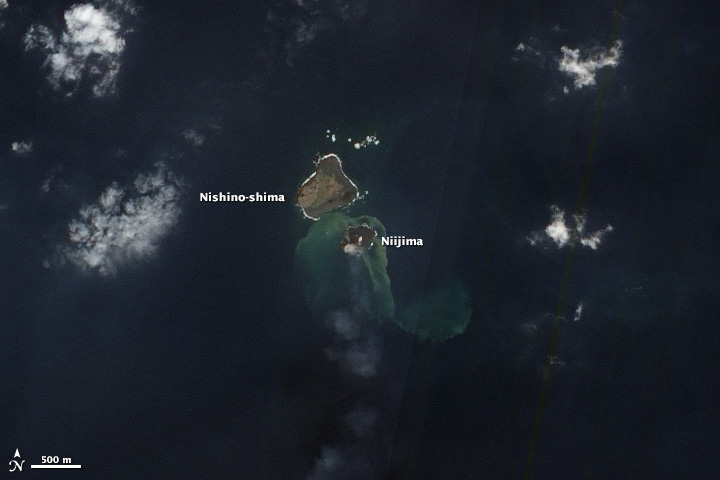
Volcanic islands originate when magma rising from Earth's interior reaches the surface beneath the ocean, where it interacts directly with seawater. Unlike continental volcanism, submarine eruptions produce distinctive eruption styles shaped by the presence of water [3]. The expelled material builds upward over time, eventually breaching sea level to form an island. This process of repeated eruptive cycles is the primary mechanism by which oceanic islands arise from the seafloor [3].
Magma Generation and Ascent
Magma forms through partial melting of mantle rock, often at divergent plate boundaries or hotspots. As magma ascends, decreasing pressure causes gas bubbles to expand, driving eruptions. The composition and viscosity of the magma determine whether lava flows gently or explodes violently [3].
Submarine versus Subaerial Eruption Phases
Early stages of island formation occur underwater, where magma meets water in phreatomagmatic interactions. These eruptions are driven by steam explosions when magma and water contact each other directly [3]. Once the island breaches the surface, eruptions become subaerial, allowing gas to escape more freely and producing different deposit types.
Eruption Subtypes and Their Characteristics
Hawaiian Eruptions
Hawaiian eruptions represent the weakest volcanic subtype, characterized by low-viscosity lava that flows effusively from vent areas. These eruptions produce gentle lava fountains and rivers of basalt that can travel great distances before cooling [3]. The 2018 lower Puna eruption on Kilauea exemplifies this style, where lava destroyed hundreds of structures while advancing toward the ocean.
Strombolian Eruptions
Strombolian eruptions are moderate-intensity events featuring explosive ejections of lava fragments called scoria. These explosions occur at relatively regular intervals, building conical piles of tephra around the vent. The name derives from Stromboli, an island off the coast of Italy that has erupted in this style for millennia [3].
Plinian Eruptions
Plinian eruptions rank among the strongest volcanic events, producing tall eruption columns that can reach the stratosphere. These eruptions eject vast quantities of tephra—fragmented rock and ash—that fall over wide areas. The 1991 eruption of Mount Pinatubo produced a column exceeding 30 km altitude and cooled global temperatures temporarily [3].
Phreatomagmatic versus Phreatic Eruptions
Phreatomagmatic Eruption Mechanisms
Phreatomagmatic eruptions are driven by the direct interaction of magma and water, causing rapid steam expansion that fragments both materials. This eruption type differs from phreatic eruptions, where heat from magma vaporizes water without fresh magma reaching the surface [3]. The 1912 Novarupta eruption in Alaska produced extensive phreatomagmatic deposits that blanketed the surrounding landscape.
Impacts on Island Morphology
The eruption style significantly shapes island topography. Phreatomagmatic explosions tend to create broader, more fragmented deposits, while effusive Hawaiian eruptions build gentle slopes through lava flow accumulation. The interplay between these styles over thousands of years determines whether an island has steep cliffs or low, rounded profiles [3].
Hazardous Gas Emissions
Regardless of eruption type, volcanic gases such as sulfur dioxide, carbon dioxide, and hydrogen sulfide are released during magmatic activity. These gases can affect local air quality, contribute to acid rain, and pose health risks to downwind populations. Monitoring gas emissions is a key component of volcanic hazard assessment [3].
Notable Volcanic Islands and Their Eruption Histories
Hawaiian Islands Formation Sequence
The Hawaiian Islands represent a classic example of a volcanic island chain formed by a mantle hotspot. As the Pacific Plate moves northwest over the hotspot, new islands form while older ones erode and subside. The Big Island of Hawaii remains active, while Kauai and Oahu have progressed through stages of erosion [3].
Iwo Jima's Recent Growth
NASA observations documented how volcanic activity extended Iwo Jima's beach in recent years. Magmatic inflation and eruptive activity lifted the seafloor, causing coastline advancement. This demonstrates how ongoing volcanic processes can rapidly modify island geography [2].
Santiaguito's Persistent Activity
Santiaguito, a lava-dome complex in Guatemala, has experienced continuous eruptive activity documented by volcanic monitoring organizations. Its dome growth and collapse cycles produce both effusive lava flows and occasional explosive events, illustrating the complex behavior of volcanic systems [4][5].
The Role of Plate Tectonics in Island Distribution
Hotspot Chains and Plate Motion
Volcanic islands often arrange themselves in chains that record the direction and speed of plate movement. The Hawaiian-Emperor Seamount Chain stretches across the Pacific, with ages increasing northwestward from the active Big Island. This linear progression provides evidence for plate tectonics [3].
Subduction Zone Volcanism
At convergent plate boundaries, subduction of oceanic crust melts and generates magma that rises to form volcanic island arcs. The Japanese archipelago and the Aleutian Islands exemplify this process, where the Pacific Plate subducts beneath continental or other oceanic plates [3].
Rift Zone Volcanism
Divergent boundaries where plates pull apart allow magma to rise and erupt, sometimes forming islands when eruptions occur in oceanic rifts. The Mid-Atlantic Ridge has produced islands such as Iceland, where volcanic activity continues to shape the landmass [3].
Volcanic Island Evolution After Emergence
Erosion and Weathering Processes
Once above sea level, volcanic islands begin a cycle of erosion by wind, water, and biological activity. Glassy lava fragments and volcanic ash decompose into soil over centuries. The Hawaiian Islands show a clear progression from young, steep islands to older, more eroded landmasses [3].
Biological Colonization
Lava flows and volcanic substrates eventually support pioneer species such as lichens, grasses, and seabirds. Succession proceeds as soil develops, allowing larger plants and eventually forests to establish. This biological colonization transforms barren volcanic rock into habitable ecosystems [3].
Sea-Level Rise and Island Stability
Climate-driven sea-level changes affect volcanic island stability. Some islands may become partially submerged, while sediment accumulation can counteract erosion. The balance between volcanic construction and destructive processes determines whether an island grows, shrinks, or disappears over geological time [3].
Monitoring and Predicting Volcanic Activity
Seismic Monitoring Networks
Volcanic monitoring relies on detecting precursory seismic activity, ground deformation, and gas emissions. Networks of seismometers detect magma movement beneath the surface before eruptions occur. Changes in earthquake frequency and pattern often signal unrest [3].
Satellite and Remote Sensing
Satellite imagery tracks surface deformation, thermal anomalies, and ash clouds. InSAR (Interferometric Synthetic Aperture Radar) measures ground swelling with centimeter precision. These tools provide wide-area coverage of volcanic regions [2][4].
Early Warning Systems
Combined monitoring data feed into eruption forecasting models. While prediction remains challenging, observed patterns of deformation, seismicity, and gas chemistry have improved warning times for communities near volcanic zones. Evacuation protocols depend on these scientific assessments [3][5].
Climate and Environmental Impacts
Sulfate Aerosols and Global Cooling
Large explosive eruptions inject sulfate aerosols into the stratosphere, where they reflect sunlight and cool Earth's surface. The 1991 Pinatubo eruption lowered global temperatures by approximately 0.5°C for over a year. This climate effect demonstrates the far-reaching consequences of major volcanic events [3].
Local Environmental Recovery
Despite initial destruction, volcanic areas often experience rapid ecological recovery. Nutrient-rich volcanic soils support dense vegetation, and pioneer species colonize fresh deposits. The 1980 Mount St. Helens area shows how biological communities reestablish after catastrophic eruptions [3].
Ocean Acidification and Marine Life
Volcanic CO2 emissions can locally affect ocean chemistry, particularly in coastal areas near volcanic seeps. While global ocean acidification is driven primarily by fossil fuel emissions, volcanic contributions add localized stress to marine ecosystems near island chains [3].
Cultural and Economic Significance
Indigenous Knowledge and Volcanic Landscapes
Many island cultures have oral histories documenting volcanic activity and its impacts. Hawaiian chants describe the deity Pele and her role in island formation, reflecting deep connections between people and volcanic landscapes. This traditional knowledge coexists with scientific monitoring [3].
Tourism and Economic Drivers
Volcanic islands attract tourists drawn to active craters, black sand beaches, and geothermal features. Hawaii, Iceland, and the Canary Islands leverage their volcanic heritage for tourism revenue. However, proximity to active volcanoes also requires risk mitigation strategies [3][4][5].
Geothermal Energy Potential
The same heat that drives volcanic eruptions can be harnessed for geothermal power generation. Iceland produces a significant portion of its electricity and heating from geothermal resources. This renewable energy source taps into the magma's thermal energy without requiring surface eruptions [3].