
Origins in the Frontier Era and Early Higher Education
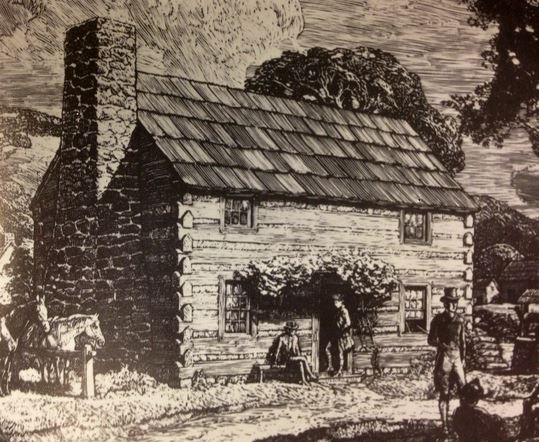
The Western United States emerged as a distinct region during the 19th-century westward expansion, a period marked by the California Gold Rush and the closing of the frontier in 1890 [3]. This frontier context shaped the earliest colleges and universities, which often followed settlement patterns and served mining, ranching, and later urban communities. The region's identity as the American frontier meant that higher education institutions frequently began as small, locally funded efforts to serve growing populations in newly established territories.
Gold Rush and the Founding of Early Colleges
The California Gold Rush of 1848 accelerated population growth dramatically, creating demand for trained professionals, lawyers, and engineers in rapidly expanding towns. Early institutions such as the College of California, founded in 1855, evolved into the University of California system, representing one of the first major public university systems in the West [5]. These founding efforts were directly tied to the mineral boom and the need for technical expertise in mining and law.
Land-Grant Colleges and the Morrill Act
The federal Morrill Act of 1862 provided land scrip to establish colleges focused on agriculture and mechanical arts, and Western states actively claimed these grants. By the 1890s, institutions such as Washington State University and the University of Arizona had been founded under this framework, embedding the land-grant mission into the region's higher education infrastructure [5]. This federal policy ensured that Western universities would have a distinct focus on practical, workforce-oriented education compared to Eastern liberal-arts colleges.
Regional University Expansion
The Interstate Compact Era and WICHE's Founding
After World War II, state leaders recognized that individual Western states could not afford to duplicate expensive professional programs such as medicine, dentistry, and engineering. The Western Interstate Commission for Higher Education was established in 1953 as a compact among Western states to coordinate and share resources [3]. This interstate agreement represented a novel approach: rather than each state building every program from scratch, WICHE would facilitate regional cooperation and tuition savings for students attending out-of-state institutions.
Political Consensus Across State Lines
The 1953 compact was ratified by governors across the West, creating a permanent body that could negotiate agreements on behalf of public institutions. This political consensus reflected a shared belief that regional collaboration would be more efficient than competition for limited state appropriations. The compact structure allowed WICHE to adapt programs as student needs evolved, from initial liberal-arts exchanges to specialized professional tracks [3].
Funding the Compact's Early Operations
Western Undergraduate Exchange and Tuition Savings
The Western Undergraduate Exchange (WUE), launched by WICHE, allows undergraduate students to attend participating out-of-state institutions at 150 percent of resident tuition, rather than full nonresident rates [3]. In academic year 2025-26, the WUE program enabled undergraduate students to save $642 million, with more than 52,000 students benefiting from the reduced tuition rate [3]. This represents a significant financial relief mechanism for students who wish to pursue degrees not available at their home institutions.
How WUE Reduces Costs for Students
WUE operates on a simple principle: participating institutions agree to charge a reduced nonresident rate that is still lower than their standard out-of-state tuition. For a student from Montana attending a university in Colorado, this means paying approximately half what a nonresident from outside the WICHE region would pay. The program's design leverages existing institutional capacity rather than requiring new state funding, making it a cost-effective solution for both students and states [3].
Participating Institutions and Degree Programs
Western Regional Graduate Program for Advanced Study
The Western Regional Graduate Program (WRGP) extends the tuition-savings model to students pursuing master's and doctoral degrees [3]. In academic year 2025-26, WRGP enabled graduate students to save $46 million across participating programs. This program is particularly important for fields that require advanced degrees but have limited enrollment in any single Western state, such as specialized engineering tracks or emerging interdisciplinary research areas.
Graduate Student Eligibility and Application
WRGP allows students to enroll in graduate programs at member institutions at a reduced tuition rate, often close to in-state prices. The program covers a wide range of disciplines, from the sciences to professional fields, and requires that the student's home state participate in the compact. By pooling graduate enrollment across the region, WICHE reduces the pressure on individual states to maintain low-enrollment doctoral programs that may not be financially sustainable on their own [3].
Outcomes and Career Impact
Professional Student Exchange Program for Healthcare
The Professional Student Exchange Program (PSEP) addresses critical workforce shortages by enabling students in 10 healthcare fields to attend out-of-state institutions at reduced tuition [3]. In academic year 2025-26, PSEP enabled professional students to save $16 million. The 10 healthcare fields typically include medicine, dentistry, veterinary medicine, pharmacy, nursing, and other high-demand specialties where individual states cannot afford to maintain full training programs for every specialty.
Addressing Rural and Underserved Areas
A key design feature of PSEP is its focus on placing graduates in underserved regions. Many participating agreements include service commitments, requiring recipients to practice in rural or inner-city areas after graduation. This linkage between tuition savings and workforce distribution ensures that the regional investment in student education produces tangible benefits for communities that lack adequate healthcare providers [3].
Program Administration and Selection Criteria
Institutional Membership and Governance Structure
WICHE member institutions include public colleges and universities across Western states, offering tuition savings to nonresident students through programs like WUE, WRGP, and PSEP [3]. Membership is voluntary and includes research universities, regional comprehensives, and community colleges, creating a broad network that reaches students in both urban and rural areas. The governance structure involves state higher-education agencies that meet regularly to set priorities, approve new programs, and evaluate the financial impact of existing agreements [3].
State Agency Oversight and Decision-Making
Each member state designates a higher-education agency that serves as the point of contact for WICHE. These agencies review applications, verify student eligibility, and report enrollment data back to the commission. This state-level administration ensures that programs remain accountable to the taxpayers who fund the institutions and that savings are tracked transparently across the region [3].
Expanding Membership Over Time
Financial Impact and Student Benefit Metrics
The cumulative financial impact of WICHE's programs is substantial. In academic year 2025-26 alone, students saved $642 million through WUE, $46 million through WRGP, and $16 million through PSEP, for a total of $704 million in tuition savings across the three programs [3]. These figures represent direct reductions in the cost of higher education for families and reduce the student loan burden that many Western students face. The scale of savings also demonstrates the efficiency of regional cooperation compared to each state independently trying to offer the same programs.
Comparative Cost Analysis with Non-WICHE Institutions
When compared to full nonresident tuition at private or out-of-region public universities, WICHE participants typically pay 30 to 50 percent less for comparable degree programs. This cost differential can be the deciding factor for low- and middle-income students who wish to stay within the Western region but access programs unavailable at their home institutions. The financial data underscores WICHE's role as a major access mechanism for the region [3].
Long-Term Economic Returns for States
Reception and Criticism from Stakeholders
WICHE's programs have been broadly praised by student advocacy groups and state legislators for expanding access without requiring new state appropriations. The tuition savings directly benefit students who might otherwise be priced out of certain degree programs. However, some institutional leaders have expressed concern that reduced nonresident rates could pressure residential tuition rates over time, as universities balance revenue needs with participation in the compact [3]. These discussions reflect the complex trade-offs inherent in any regional education agreement.
Student and Advocate Perspectives
Faculty and academic administrators have noted that WICHE programs sometimes bring increased enrollment pressure to participating institutions, particularly in high-demand graduate programs. While the tuition revenue from WUE and WRGP students is welcome, institutions must ensure that added enrollment does not compromise educational quality or resource allocation. The ongoing dialogue between WICHE and its member institutions focuses on maintaining standards while expanding access [3].
Institutional Adjustments and Policy Responses
Significance for Western Higher Education Landscape
WICHE's programs have fundamentally reshaped the Western higher education landscape by making cross-state enrollment financially viable. Before 1953, a student from Idaho seeking an engineering degree might have had to choose between attending an out-of-region university at full nonresident cost or forgoing the degree entirely. Today, WICHE's framework enables thousands of students annually to pursue their chosen careers while remaining within the Western region [3]. This shift has also encouraged institutions to differentiate their program offerings, knowing that regional students will have access through the exchange mechanisms.
Long-Term Regional Integration
Future Directions and Program Evolution
Looking ahead, WICHE continues to evaluate its programs in response to changing student demographics and workforce needs. The organization has explored expanding PSEP into new healthcare specialties and has considered how online education might intersect with traditional tuition-savings models. As Western states experience population growth and increased demand for health professionals, educators, and technicians, WICHE's role as a coordination body becomes even more critical [3].
Potential New Fields and Specializations
Comparison with National Higher Education Policy
WICHE's approach differs significantly from national higher education policy initiatives that typically focus on federal funding, student loans, or accreditation standards. While national policies address the cost of college through grants and tax benefits, WICHE operates at the interstate level, using existing institutional capacity to reduce costs immediately. This regional model complements national efforts by providing a mechanism that works independently of federal budget cycles [3]. The contrast highlights how state and regional cooperation can achieve access goals in ways that top-down federal mandates cannot.
Funding Mechanisms and Policy Integration
Geographic Reach and State Participation
WICHE's member states span the Western United States, from Alaska and Hawaii in the northwest and southwest corners to the inland mountain states and the Pacific coast. This geographic breadth ensures that students from diverse climatic and cultural regions have access to the tuition-savings programs. The compact's design accounts for the vast distances between Western states, making interstate enrollment a meaningful alternative to out-of-region attendance [3].